Battery listings fail in two ways. Some oversell, promising range a pack this size cannot deliver.
The more annoying failure is smaller: a page that cannot keep its own product straight. That is the Zlvwem problem, and it is fixable once you know what you are looking at.
The Zlvwem 48V 20Ah battery sells at 205.00 with a 5% coupon on the page, and on our battery table it lands in the cheapest fifth of the 324 packs we track. The hardware underneath looks genuinely decent. The page around it is a mess of borrowed rows and missing basics, and one detail table that describes a different battery entirely.
I pulled the page, OCR'd the gallery cards and walked the variant ladder underneath it. Here is what is really for sale and what to confirm before your order does.
The details table describes the 36V sibling
The details table on this page tells you the battery is 36 volts. The model number row says 36V20Ah.
The title above it says 48V, and the first bullet says 960 watt-hours, which is what 48 times 20 gives. If the pack were really 36V, the 960 claim would be a lie, because 36 times 20 gives only 720 watt-hours.
The variant ladder hidden in the page code explains it. This listing is one shell of a six-pack family: 48V 13Ah, 52V 15Ah, 48V 10Ah, this 48V 20Ah, a 36V 20Ah, and a 36V 10Ah. The details table on the 48V 20Ah page was copied from the 36V 20Ah sibling and never updated.
The voltage row and the model number describe a battery you are not looking at.
This matters beyond pedantry, because it is a pattern. We caught the same fault on a helmet listing whose spec table printed another variant's ASIN, and on a downtube pack whose capacity row disagreed with its title.
When a details row contradicts the title, the row is usually the copy-paste error and the title describes what is in the box, but you confirm with the number that cannot be faked quietly: watt-hours.
960 checks out at 48V. 720 would be the 36V math. The title and the bullet agree with each other, and the table is the odd one out.
A perfect score on two wordless ratings
The star widget prints 5.0 from 2 ratings. There is no written text behind either one, no owner account of any kind. Two strangers clicked five stars and moved on.
I would love to tell you what those two owners experienced. I cannot, and neither can the page. That makes this a ratings-only record, the thinnest class of evidence a listing can carry and still show stars.
We have rebuilt several of these now, and the method holds: read the listing like a skeptic, check the arithmetic, and treat the score as presentation rather than proof. Two ratings cannot be wrong, exactly. They can be two people who never opened the box.
Same factory as the LGNUO pack, at 15 more
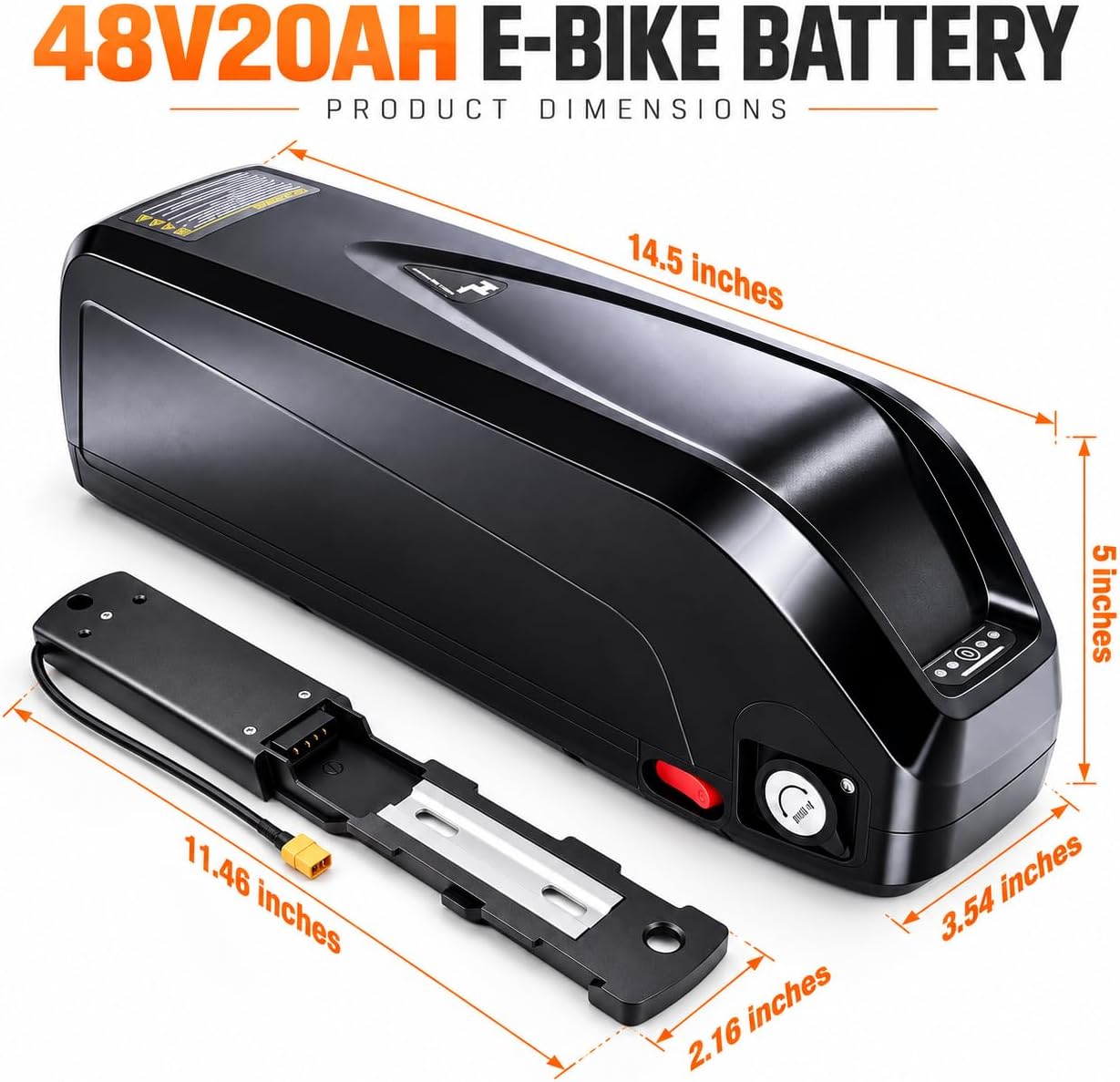
The manufacturer row names Huizhou Hengcheng Electronic Technology Co., Ltd. That is the same factory behind the LGNUO 48V 20Ah pack we reviewed alongside this one, behind LGNUO's 30A pack from earlier this month, and behind the Viset Li pack before that. The two listings this week share a 40A BMS, a 5-pin base, an XT60 plug and a footprint within a few tenths of an inch of each other.
Different brands, different sellers, near-identical hardware. I cannot prove they are the same cells in different cases, and I will not claim it. The factory overlap is context, not a verdict.
The differences that are on the page matter more. The LGNUO listing names its charger, a 54.6V 3A unit, and its card promises a 6-to-7-hour refill that matches the arithmetic. This Zlvwem page names no charger anywhere.
No package list exists at all. If a 3A charger ships, the refill floor is 6.7 hours. If it is the 2A unit the factory's other shells use, the floor is 10 hours.
You cannot know from this page, so you ask the seller before ordering, and you treat the answer as a condition of the purchase.
The Zlvwem page gives you two things the LGNUO page does not: an on/off switch the listing says eliminates standby drain, and a 5% coupon. The LGNUO page gives you a named charger, an IP65 rating where this one only says dust- and water-resistant, and a price 15 lower. Read those as the whole decision, because the packs underneath are this close.
The weight math closes on this one too, for what it proves. The battery row prints 8.5 pounds, which is 3.9 kilograms, and 960 watt-hours divided through lands near 0.25 kilowatt-hours per kilogram.
The Wikipedia lithium-ion battery article puts the best laboratory silicon cells near 0.35, so a mass-produced pack claiming the mid-0.20s is asking for ordinary cells in a real case. That is the plausible direction, the same one the LGNUO twin lands in, and unlike several packs this month it is not asking you to believe in chemistry nobody ships.
The USB port the page never explains
The title ends with a promise no other part of the page supports: a 5V 1A output. That is a USB port, the kind that lets you top up a phone on a ride.
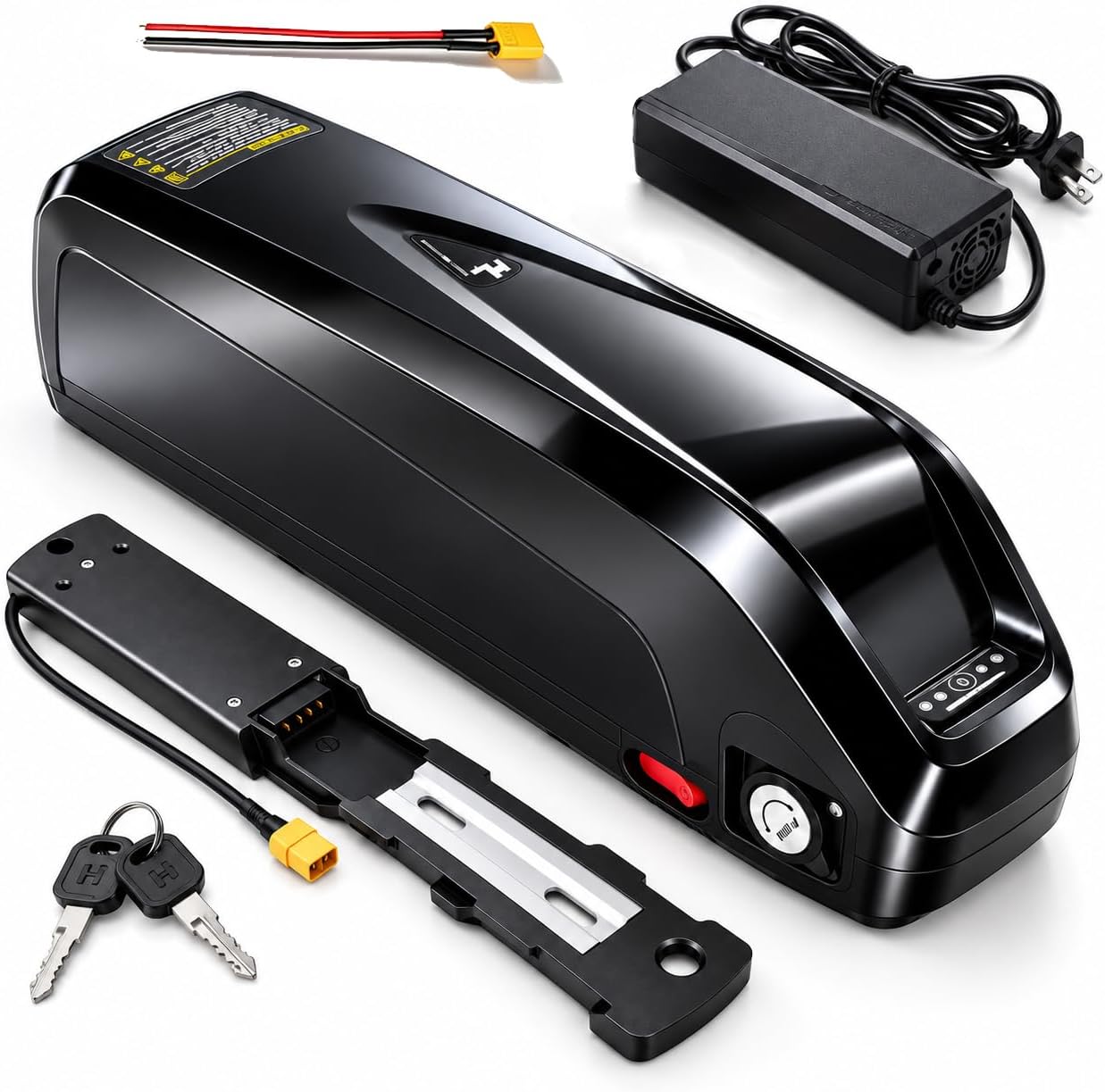
No bullet mentions it. The controls card in the gallery shows a level light, a keyed lock and a power switch, and no USB anywhere. The installation card walks the base-plate sequence with no USB step in it.
Maybe the port exists and the copywriter forgot it. Maybe the title was borrowed from another shell in the family.
The 36-volt table row already proved this page recycles sibling content, so a borrowed title feature is well within character. If the USB output is why you are here, get it in writing from the seller first, because the only evidence it exists is four words in a title.
The same pattern shows up in the kit card, which promises a complete battery kit with everything you need, ready to ride, on the one page that never names a charger. Marketing copy and box contents disagree. The box contents are what arrives.
Zlvwem 48V 20Ah FAQ
Is this a 36V or a 48V battery?
48V. The title, the first bullet and the 960 watt-hour figure all agree, and 960 only works at 48 volts times 20 amp-hours. The 36-volt row in the spec table and the 36V20Ah model number were copied from the 36V 20Ah sibling in the same variant family.
Does it come with a charger?
The page does not say, and that is the listing's biggest gap. The sibling LGNUO pack from the same factory ships a 54.6V 3A charger. Ask this seller before ordering, and confirm the charger voltage on arrival: a 48V pack should charge at 54.6 volts, never 42 or 58.8.
What motors can it run?
The 40A BMS ceiling works out to 1,920 watts at 48 volts, and the title's 100W to 1500W range draws about 31 amps at the top. The headroom is real and in the honest direction. Check that your controller's discharge plug matches the XT60 on the pack, or budget for an adapter.
How does the record stay so perfect?
Two ratings, no text. That is the whole record. It cannot prove anything except that two accounts clicked five stars.
The listing's own specs and arithmetic are the real evidence here, and the return window is your experiment.
Confirm three things before you order
The hardware case for this pack is sound: correct watt-hour math, a weight that closes against known cell chemistry, an honest BMS ceiling, and a factory we have now reviewed four times. The page around the hardware is the weak part, a details table describing the wrong sibling, a package list that names nothing, and one title feature nothing else mentions.
So order it with three confirmations: the charger question answered in writing, your frame's space against the printed footprint, and your controller's plug against the XT60. If the seller's answers come back clean, the Zlvwem pack at 205.00 with the coupon sits within 15 of its twin and buys you the power switch.
If they come back vague, the LGNUO listing of the near-same pack answers every question this page leaves open, and our review of it is the companion piece. The factory's other two shells are covered in the 30A LGNUO review and the Viset Li review.