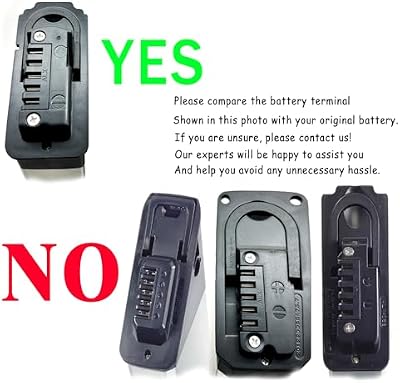
Replacement packs for the Lectric XP live or die on a question the title answers too easily: which generation of the bike is in your garage. The SDTYYP 48V 10.4Ah pack claims the XP 1.0, 2.0 and 3.0 step-over frames in one line, and its own review record then splits on exactly that line.
One owner bolted the pack into an XP 1.0 in late October, found it arrived fully charged, and ran an amp-hour test the same day. It held the full 10.4 amp-hours the title claims. Another owner, riding an XP 3.0, says the pack does not fit that bike at all and calls the listing bait and switch. Both texts carry purchase badges, and both were written within weeks of each other.
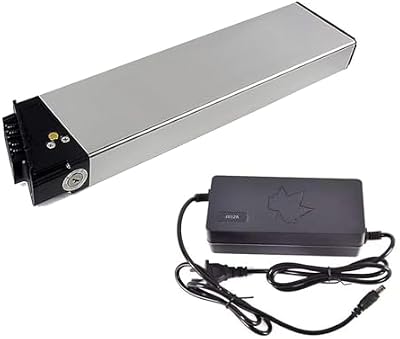
The pack inside the case comes out of this record better than the promise on the label does. Capacity has a meter behind it, the charge claim matches its own arithmetic, and the seller checks fitment with pictures before shipping. That three-bike promise is the part to doubt, and the rest of this page works out which bikes it actually suits.
The record splits by generation
Forty-eight people have rated this pack at 4.2 stars, and eight of them wrote anything down. All eight texts carry purchase badges, which is rarer in this market than it should be, and the span runs from March to late October 2026.
The most useful text is also the newest. Its author rides an XP 1.0, reports the pack sliding in smoothly, and says the battery arrived fully charged, so the amp-hour test happened on day one. It read the full 10.4 amp-hours, exactly what the title claims, and the reviewer promised an update if the pack failed within the year. That is the strongest evidence a listing record ever collects without a lab, one meter and one owner, and it passed.
The XP 3.0 text is the opposite verdict. Its author says the pack does not fit the bike, calls the listing falsely advertised, and describes a refund fight with no return label offered. A third owner, who never names the bike, sent the pack back as the wrong size. Two of eight written texts end in a fitment return, and both cuts of the record sit under one title.
The seller seems to know the fit is the risk. One buyer reports the seller reaching out to confirm the right battery, asking for pictures of the bike. On a listing where the written record divides by frame generation, that pre-sale check is worth more than any bullet on the page.
What the printed numbers hold
The BMS print is generous. Bullet one states a 30 amp maximum constant discharge, and 30 amps at 48 volts is 1440 watts of continuous feed, well above the 1000W motor ceiling the same bullet names. A 1000W motor draws 20.8 amps, so the protection board is not the constraint on any motor the title covers. If anything, the print outruns the motor band it sits above.
The charge arithmetic is honest, which is rare. A 2 amp charger into 10.4 amp-hours needs at least 5.2 hours from empty, and the listing prints 5 to 6 hours, a claim that matches its own math. Most listings in our table print a charge time their own figures cannot support. Overnight charging covers this pack with room to spare.
Then the details table falls apart in both directions. Its capacity row reads 14 amp-hours against the title's 10.4, a number nothing else on the page supports. Its battery weight row reads 50 grams, which would make this the lightest lithium pack ever built. The one plausible weight on the page is the 8.8 pound item weight, about what a cased 500 watt-hour pack carries. When a page argues with itself this plainly, the title and the bullets win, and the table loses.
Range on the scaled anchor
The listing promises 40 to 60 km per charge, which is 25 to 37 miles. I scale every pack against the em3ev 48V range table instead of any listing's promise. That table puts a 960 watt-hour tank at 30 to 40 miles on throttle alone and 50 to 65 with light pedal assist. At 499 watt-hours, this pack holds just over half the anchor, so the scaled bands land at about 15 to 21 miles on the throttle and about 26 to 34 with a light leg.
Set the printed promise against those bands and its bottom edge matches our pedal-assist middle, while its 37-mile top would need the pack to burn about 13.5 watt-hours per mile, a figure no riding style in our data supports. Plan on the low twenties with real pedaling and treat 40 km as the honest end of the claim. The one range comment an owner left, that battery life came in under expectations, fits that reading.
At 188 the pack works out near 38 cents per watt-hour, which puts it among the most expensive of the 324 packs we track. The comparison table shows the live position in the specs box. You are paying for the XP-specific case here, not for cheap energy.
The water claim, taken at face value
Bullet four says the fully sealed case can be used all day long, rain or shine, and bullet five adds sand and water protection. No IP code appears anywhere on the page, so none of that claims anything a buyer can test or compare. A maker who wanted the claim to stick would print the code.
The previous version of this article turned that sentence into moisture reasoning, weighing the sealed case against rain reaching cell terminals. Nothing in the record supports the reasoning, and nothing in the record tests it either. Eight owners, zero water reports, zero water failures. The honest position is that the claim is a marketing sentence, the pack carries no printed ingress rating, and no pack of this class should be parked in a puddle because a bullet sounded confident.
Frequently asked questions
Does it fit the Lectric XP 3.0?
The title says yes and one owner says no. The XP 1.0 fit is verified, the XP 3.0 return is on the record, and the seller's pre-sale picture check exists because the generations differ more than the title admits. If you ride a 3.0, message the seller with pictures of your bike before you order, and buy from a listing that accepts returns.
Is the 10.4Ah rating real?
One owner metered it. The pack arrived charged, the amp-hour test read the full 10.4, and the reviewer promised an update if it failed in the first year. One test on one pack does not settle a production run, but it is more capacity evidence than most listings in this class ever collect.
How long does charging take?
Five to six hours on the supplied 2 amp charger, and the arithmetic agrees for once: 10.4 amp-hours divided by 2 amps is a 5.2 hour floor before the taper every charger applies. A 3 amp third-party unit cuts that to about three and a half hours, if the connector matches.
Should you buy it
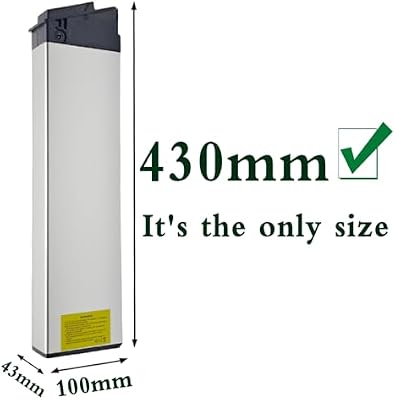
If you ride an XP 1.0 or 2.0 with the matching slot and your original pack has died, this is the case the record fits, with a metered capacity test behind it. Match the case length and the connector, not the logo, because the same brand's silver fish ladder covers completely different mounts. The DCH006-class folding cases we track separately show what the same case class costs elsewhere.
If you ride an XP 3.0, the record holds one vote against the fit and the title's word for it, so confirm before you order rather than after. And if cheap energy is the goal, this is the wrong page, because the price per watt-hour sits in the expensive band of the comparison table. The case is what you are buying, and for the right frame it does the one job the title promises.