A cheap 48V pack that promises 960 watt-hours at 169.00 is either the deal of its tier or a listing that hasn't measured its own battery. The LGNUO 48V 20Ah battery makes the promise on paper, and on paper the price works out to about 18 cents per watt-hour, which lands it in the cheapest tenth of everything we track on the battery table. I pulled the listing apart, OCR'd the parameter card, and ran every number the page prints against the others.
The short version: the voltages check out, the BMS math is honest, and two things don't close. The pack's printed weight can't carry the capacity it claims, and the warranty section on the page belongs to a different brand entirely.
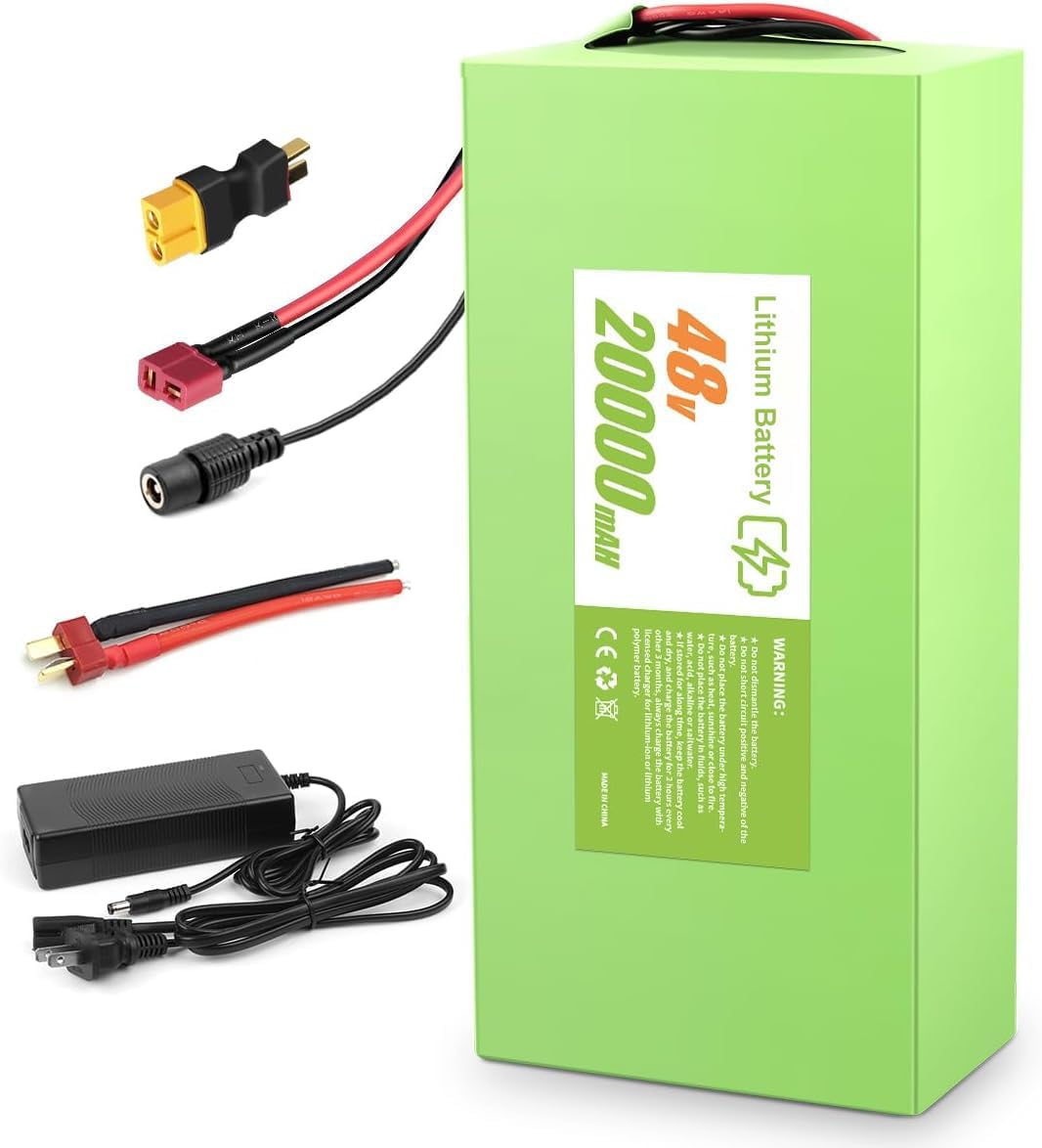
One Pack, Three Voltages in the Title
The title reads like a shelf. It names 32V, 48V and 52V on a single 20Ah pack, which is a variant-family title wearing one product's clothes. The bullets and the parameter card pin this page to one pack: 48V nominal, 20Ah, 13S6P.
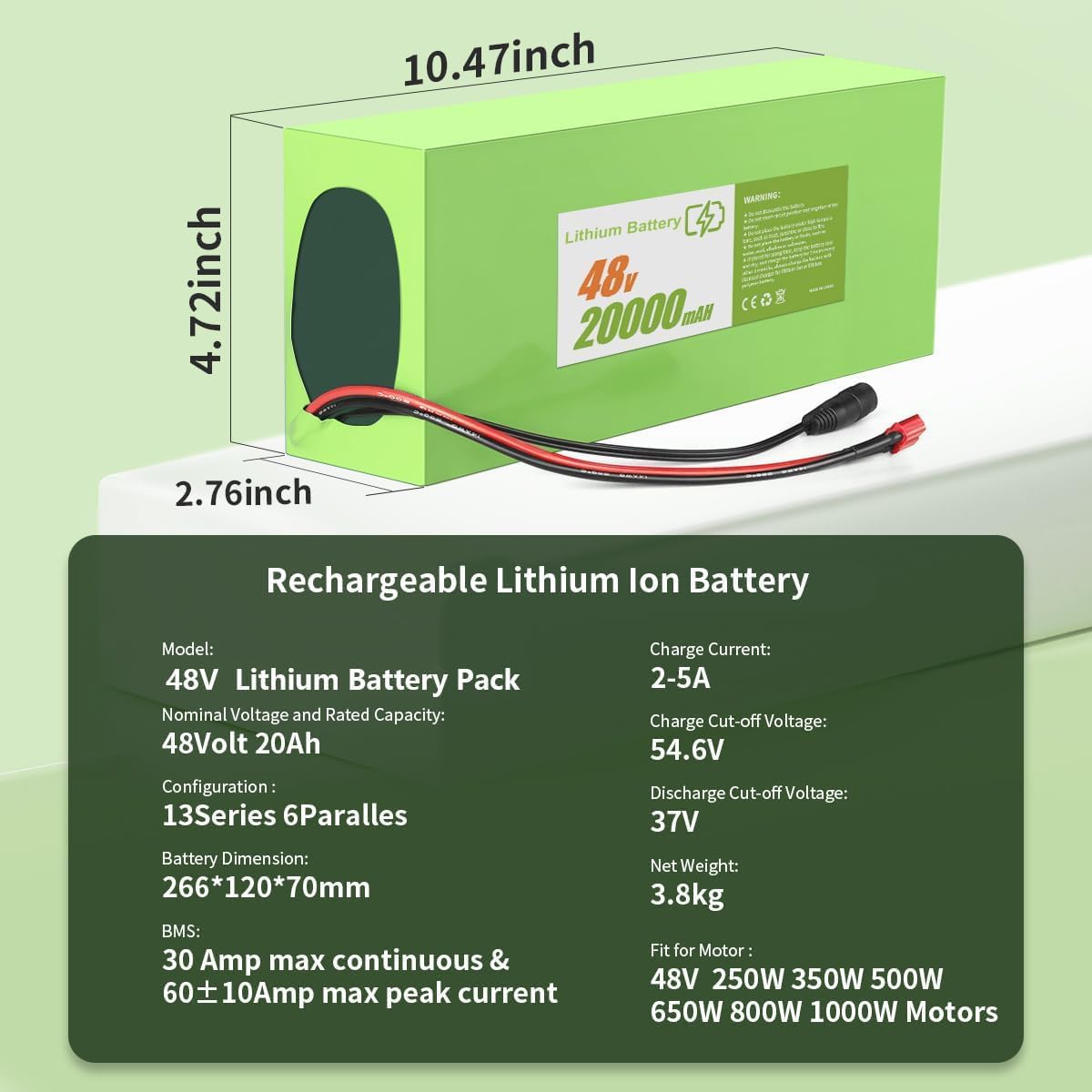
That configuration line is the most useful thing on the page. Thirteen cells in series explains every voltage the card prints, and the card agrees with itself everywhere it matters. The 54.6V charge cutoff is 13 times 4.2, the 37V discharge cutoff is 13 times 2.85, and both are exactly what a 13S lithium-ion pack should print. A lot of listings in this tier fail that check. This one doesn't.
Six cells in parallel per group is how you reach 20Ah from standard cells, and it also tells you the pack is built from about 78 cells total. Keep that number in mind, because the weight section comes back to it.
The case dimensions are 266 by 120 by 70 millimeters, a slim brick that suits a downtube mount or a custom build tray. The bullets never name a case style or a bike brand, so measure your bay against those numbers before you order rather than trusting a fitment claim the listing doesn't make.
The Numbers That Close
The BMS claim is honest in the direction that matters. A 30A continuous board at 48V carries about 1,440 watts, and the largest motor the card approves is 1000W, which draws around 21A. The motor claim sits inside the electrical ceiling with room to spare, so the board won't be the thing that limits a 750W or 1000W build. The card also prints a 60A plus 10A peak figure, which covers the startup surge a hub motor asks for.
The charge story is where the listing oversells. The box ships a 54.6V 2A charger, and the bullet calls it fast charging. Twenty amp-hours at 2A works out to a ten-hour floor before the taper phase, and that is an overnight charge by any definition. The card quietly allows up to 5A of charge current, so a faster charger is electrically permitted, but the charger in the box is not a fast charger and the word fast is doing marketing work on this page.
Range runs the honest direction. At a full-throttle 20 to 30 watt-hours per mile, 960 watt-hours carries a rider roughly 32 to 48 miles, and more under pedal assist. The listing declines to promise a range figure at all, which after the charge-time embellishment reads less like modesty and more like a listing that prefers not to be measured.
The Weight Line That Doesn't Close
The card prints the net weight at 3.8 kilograms, and the spec table repeats it. Run the capacity against that mass and the pack claims about 253 watt-hours per kilogram at the finished-pack level. Wikipedia's lithium-ion battery overview puts the best mass-produced cells near 0.26 kilowatt-hours in each kilogram at the cell level, before any case, board or wiring consumes a gram.
Do the division the other way and the problem gets sharper. At the top of the cell band, 960 watt-hours needs about 3.7 kilograms of bare cells, which leaves roughly a tenth of a kilogram for everything else in a finished pack. A hard shell, a 30A BMS, nickel strip and wiring weigh more than that by themselves.
This is the same wall several packs in this price tier run into, and each new listing seems determined to top the last one's impossible number. The honest readings I can offer: either the 20Ah figure is optimistic, or the 3.8 kilograms is, and nobody at this price has metered the difference in public. Weigh the pack when it arrives. If it comes in well under the printed weight, the capacity is the inflated half of the pair, and you can test that with a metered ride inside the return window.
A Warranty Page Belonging to Another Brand
The listing's own spec table promises a 1-year warranty, which is middling for the tier but stated. Then the warranty section further down the page goes wrong. It is written in another brand's voice, and it names that brand by name: OGRPHY will offer prepaid shipping labels if the battery needs to be sent back because of quality problems.
LGNUO and OGRPHY are different names, and nothing else on the page connects them. The likeliest explanation is borrowed A-plus content, a template block reused across a factory's storefronts with the brand name swapped in some places and missed in others. The manufacturer row on this page reads Huizhou Hengcheng Electronic Technology, and factory-shared listings are common enough in this tier that the same pack can wear several brands.
For a buyer the practical reading is simple. Before you rely on any warranty promise, message the seller and ask which company name will appear on the return label. The prepaid-shipping promise is worth having only if the brand on the label is the brand you bought.
What the Four-Rating Record Can Tell You
The page prints 5.0 from four ratings, and almost nothing else. The written reviews never loaded for my scrape, so I can't quote a single owner sentence, and four ratings is a record of almost nothing regardless. One detail worth knowing: when I first captured this listing earlier the same day, no star value rendered at all. The record is so young it assembled while I was working.
The best-seller rank sits around 210,000 in Automotive, which is consistent with a listing that has sold a handful of units. None of this proves anything bad. It proves that nobody has owned this pack long enough to have said so in public, and you would be buying on the listing's word alone.
There is one family clue. The manufacturer row matches the factory behind the viset-li 48V 20Ah pack we decoded recently, and that listing carried its own impossible weight arithmetic. Factory overlap is context, not proof of anything, but it fits a pattern of the same platform relisting the same hardware under rotating brand names.
Frequently Asked Questions
Is this the same LGNUO 48V 20Ah pack that older reviews covered?
The listing this page replaced carried the same brand, voltage and capacity, and this rebuild is based entirely on the live listing. One number changed between generations: the older page advertised a 40A BMS, and this one prints 30A continuous everywhere. Trust the page you'd actually be buying from, which is the 30A figure.
Will this pack work with my 52V bike?
Don't count on it. The title lists three voltages, but the parameter card describes one 13S pack that charges at 54.6V. A true 52V pack is wired differently and charges at a higher voltage. Match the card, not the title, and check what your controller and charger expect before ordering.
What charger should I plan around?
The included 2A unit needs about ten hours for a full charge, so treat charging as an overnight task. The card permits up to 5A, so a third-party 5A charger cut for 13S at 54.6V would halve that, if you verify the voltage profile before plugging anything in.
What should I check when the box arrives?
Three things. The pack's weight against the printed 3.8 kilograms, because that number can't be true as printed. The charger's label against 54.6V output. And a metered ride inside the return window, because the capacity question is the one only your own arithmetic can settle. The listing is where the return clock starts.