Shopping for a big 48V pack in early 2026, you would have found the Xunyunda 20Ah near the bottom of the price table we keep: 960 watt-hours, a 40A BMS, an XT60 plug, a lockable base and a 3A charger, sold for 170.
The listing is gone now. Amazon returns a page-not-found for it, and it had drawn no reviews when it died, so there's no owner record to fall back on either. What survives is the spec sheet and our own price data, and both say the same thing: on paper, this was one of the cheapest ways to buy a full-size 48V tank.
This article walks through what the record shows, where the claims hold up under arithmetic, and what to check if you're hunting for this class of pack now that this one is gone. Nothing here rests on a test ride, because nobody ever published one. Every figure below traces back to the recorded listing data, and where a claim stayed open, I say so.
On paper the value case was real. A 960 watt-hour pack that sold for 170 works out to about 18 cents per watt-hour, and that price put it in the cheapest fifth of everything we track on our comparison table.
For context, the cheapest 960Wh pack we have recorded sold a little under that, and most packs with a review record behind them sold for a third more again. The Xunyunda threw in the extras that budget listings usually strip: an LED charge indicator, a base that locks, and a 3A charger in the box instead of the usual 2A.
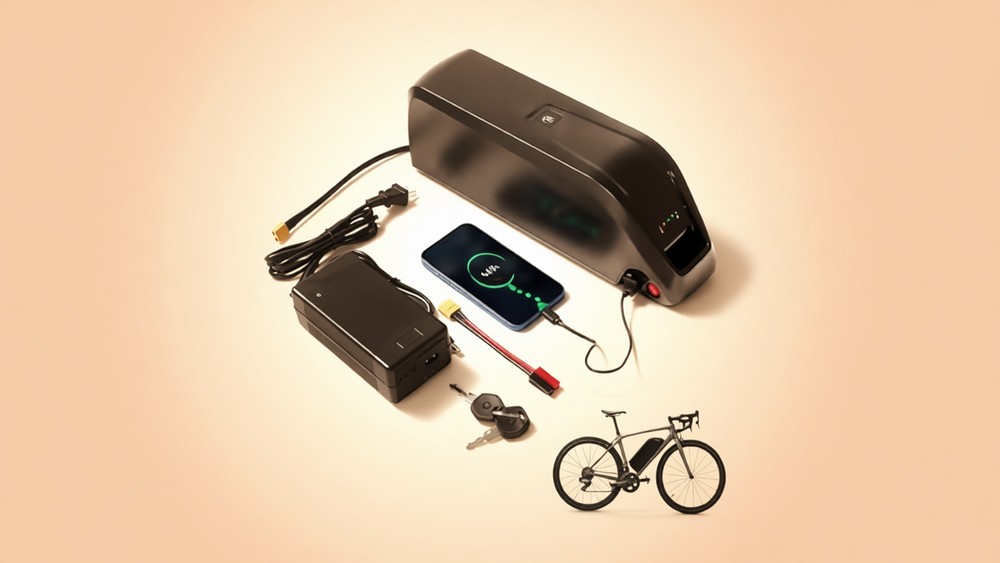
The power claims, run as arithmetic
The headline numbers were a 40A BMS and motors from 250W to 1440W, and those two claims deserve to be checked against each other rather than taken together.
Forty amps at 48 volts is 1,920 watts of continuous output. The 1440W motor ceiling works out to 30 amps at 48 volts, so the stated BMS carried headroom above the motor claim instead of a shortfall. That's the honest reading, and it matters, because some listings do it the other way: they advertise a motor wattage their BMS can't actually feed.
The lithium-hellas 48V 20Ah, the 960Wh sibling this pack was often priced against, stated a 30A BMS, so on the spec sheet the Xunyunda carried the stronger discharge ceiling of the two.
The charger math closes
The included charger was rated 54.6V at 3A, and that voltage is exactly what a standard 48V pack should charge at. A 48V battery is thirteen cell groups in series, and thirteen times 4.2 volts is 54.6. It closes cleanly, which is worth saying plainly on a beat where we have caught a 48V pack shipping a 58.8V charger, a mismatch that would leave a 13S pack chronically undercharged.
Twenty amp-hours divided by 3 amps is a bit under a seven-hour floor from empty, which matches the six-to-seven-hour claim the listing made. The em3ev range guide puts a standard 2A charger at about ten hours on a 20Ah tank, so the 3A unit in the box was a real upgrade, not decoration.
What the 1000-cycle claim is worth
The listing claimed 1000 cycles while still holding over 80 percent of its charge, plus a five-year BMS lifespan.
Lithium-ion chemistry in general is credited with 400 to 1,200 cycles, per Wikipedia's lithium-ion battery page, so the claim sits at the top edge of the band rather than above it. That's the gap between a marketing number you can discount and one you can check: the hellas 36V pack claimed 1500 cycles, above anything the chemistry class supports, while this one only promised the best case.
Treat 1000 as the ceiling, not the plan. The listing also named the chemistry as lithium-ion rather than LiFePO4, so the longer-cycle iron chemistry was never on offer here.

Reading an HL listing
The title called this a "48V HL" battery, and our own data row logs the form factor as Other, because the listing never named a style you could look up. HL is the naming habit for the Hailong class of downtube packs: a case that slides onto a base plate bolted to the frame, usually key-locked, with the discharge plug in the base.
Everything recorded about this pack fits that reading, the base plate, the lock, the key, the slide-on mount, but the listing never said the word, so the row stays Other. em3ev's guide draws the same split from the buyer's side: some packs slide into a rear rack, and Hailong-style packs sit on the down tube, and the mounting style decides handling before tank size does.
The practical check for a swap is the mount, not the brand. Measure the footprint of the base plate on your frame, note where the discharge plug sits, and count its pins. The kusayla 960Wh pack taught that lesson the hard way, because the five-pin port turned out to be the detail that decided whether it would drop onto a given bike.

What the record never settled
No review ever existed for this pack, so nobody measured how much charge it really held, metered its range, or reported whether the LED indicator was a single bar or a proper gauge.
The old write-up guessed multi-bar from similar packs, and that guess is all it ever was. The weight was never printed either, which leaves only the class band to work with: complete 48V 20Ah packs of this type generally run in the 10 to 12 pound range, per the em3ev guide's figures for the class, and this one would have had to sit somewhere in it.
One detail worth carrying forward: the listing named Airuxuan alongside the BMS, which suggests the BMS board came from a third-party supplier rather than the pack brand. That's common practice in battery assembly, and it isn't a fault on its own, but it's the kind of detail that matters the day you need a warranty swap.
The warranty itself was one year, handled through the seller, and the seller is gone with the listing.
Buying this class of pack now
The 960Wh budget tier didn't leave with this listing, and the way to shop it is the same either way. First, match the mount by tape: base plate footprint and where the discharge plug sits, exactly as described above. Second, match the connector: XT60 plugs and adapters are cheap, but a pack hardwired to a different plug costs you a solder job or a spliced adapter.
Third, demand the charger voltage in writing, and refuse anything above 54.6V on a 48V pack. Fourth, treat the LED dash and the lock as extras, not safety systems, and pay for watt-hours and a BMS amp figure instead. Titles sell motor watts, and a 1440W ceiling only means something once the seller states the amps behind it.
Two reviewed alternatives cover the same tank size. The sinigerel 48V 20Ah sold for less still and drew actual ratings, and the hellas sibling ships with a T-Plug rather than an XT60, which settles the connector question the other way. Check both on price per watt-hour before you spend, against the live sort on the comparison table.
Frequently Asked Questions
Was the Xunyunda 48V 20Ah a good value? On the recorded numbers, yes. About 18 cents per watt-hour at 960Wh put it in the cheapest fifth of the packs we track, with a 3A charger and a lockable base included at that price.
Did it ever get any Amazon reviews? No. The listing drew zero reviews across its whole life, so every claim in this article rests on the spec sheet and arithmetic, not on owner reports.
What motors could it run? The listing advertised 250W to 1440W. The stated 40A BMS works out to 1,920 watts of continuous output at 48 volts, so the motor ceiling sat inside the discharge headroom with room to spare.
What charger does this class of pack need? A 54.6V charger, which matches the thirteen-series layout of a standard 48V pack. The recorded 3A charger fills a 20Ah tank in a bit under seven hours from empty, against about ten hours on a 2A unit.
Was it a Hailong battery? The title's HL prefix and the lock-base wording read that way, but the listing never named the form factor and our data row logs it as Other. Match any swap by base plate footprint and where the plug sits rather than by name.
What replaced it? Nothing directly, since the listing is gone. The reviewed alternatives near the same price are the sinigerel and the lithium-hellas 48V 20Ah, both 960Wh packs with actual rating records behind them.