The Lithium Hellas 36V 20Ah sold for 119, and that figure works out to about 17 cents per watt-hour for 720 watt-hours. That's the cheapest 36V pack on our battery comparison table, the top of the 62 packs in that voltage class.
The listing is gone from Amazon now, so the bargain isn't available to anyone, which is half the reason to write it up. The other half is what the pack was for. It was a raw replacement pack, no case shape and no frame mount in the record, aimed squarely at people ripping three heavy lead-acid bricks out of a 36V bike, a scooter or a ride-on. That swap has real arithmetic behind it, and most of it survives the listing's death.
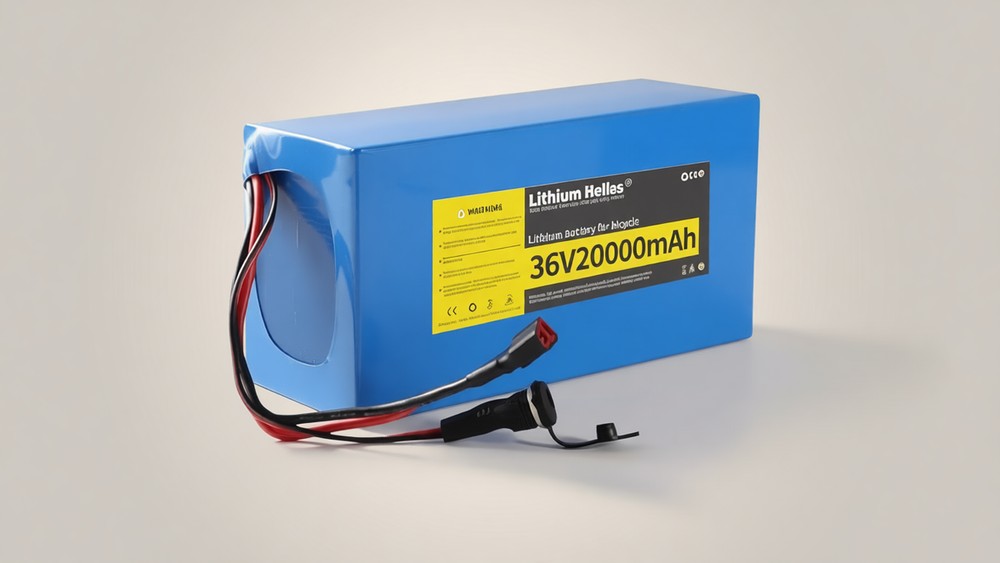
The cheapest 36V tank we tracked
Seventeen cents per watt-hour puts this pack in the cheapest fifth of everything we track, across all voltages, not just within its own voltage class. Cheap 36V packs usually buy that price with small tanks, and this one carried the full 720 watt-hours instead.
It got there by leaving things out. There was no downtube shell, no keyed lock, no LED gauge, no mounting plate in the record. The listing's own title calls it a 1-pack replacement with a 2A charger, a T-Plug and a 30A BMS, US stock. You were buying cells, a board and a charger, and wiring the rest yourself. For a lead-acid swap that's the right product shape, because the bike you're converting never had a battery bay built for anything anyway.
The board was 30A, which at 36 volts is a 1,080-watt ceiling. That covers every normal 36V motor class from 250 to 750 watts with room to spare, and even a 1,000W-class controller fits inside it. For the bikes this pack targeted, the board was never the bottleneck.

The lead-acid swap, in numbers
A 36V lead-acid setup is almost always three 12V sealed bricks wired in series, because SLAs only come in 6V and 12V increments. The ebike-school comparison of lithium and lead-acid packs records what that means in practice: SLA packs claim over 200 cycles, but many start fading near 100, they have no frame mounts so they ride in a rack bag, and they have to sit low because the weight ruins handling anywhere else.
The weight arithmetic is the heart of the swap, so I'll do it as math rather than pretend the listing printed a weight, because it never did. A 720 watt-hour pack built from cells in the published 0.16 to 0.30 kWh per kilogram band comes out somewhere between about 2.4 and 4.5 kilograms of cells alone, call it 5 to 10 pounds before any case.
Three 12V SLAs big enough to be worth replacing weigh roughly 10 pounds each, 24 to 30 pounds the set. The swap saves somewhere around 15 to 25 pounds off a bike that probably weighed 60. That change you feel on the first ride, in acceleration, in handling, and in whether the rack survives the year.
The cycle-life side closes the case. A lithium pack at even the bottom of the published 400 to 1,200 cycle band outlasts at least two SLA sets, and each SLA set fades long before its rated end.
Board, charger and range
The charger was 42.2V at 2A. The voltage is right, because a 36V 10S pack charges to about 42 volts, which the em3ev 36V guide fixes as the standard full-charge figure, and 42.2 sits on it. The amperage is the honest weakness. Twenty amp-hours divided by 2 amps is a ten-hour floor from empty, before the taper every charger applies. On a 720 watt-hour tank, 2A is an overnight charger in the literal sense. Third-party 3A or 5A units exist for this voltage class, and they'd cut the floor to five hours or less, but confirm voltage, chemistry and connector with the seller before plugging anything in.
Range is scaled math, labeled as such. The em3ev range table states 30 to 40 miles on the throttle and 50 to 65 on low pedal assist for a full-size 960 watt-hour tank, and compared with that anchor, 720 watt-hours is 75 percent, which scales to about 22 to 30 miles on the throttle and 37 to 49 on low assist.
One recorded owner account sits right where the math says it should. They ran the pack in a Razor SX500 with an upgraded 1,000W-class controller, with a rider of about 60 pounds aboard, and reported 25 mph on the stock gearing. A nine-mile ride run nearly entirely on throttle ended with 35 to 40 percent indicated remaining. Full-throttle riding belongs at the bottom of any range band, and that account landed there. A second recorded owner praised the 30A board as the reason they trusted the pack on a daily setup. That's two accounts at two-account strength, from a listing whose review count never grew past a handful of five-star ratings.

The 1500-cycle claim and the chemistry gap
The listing claimed 1,500 cycles, which is a number worth handling carefully. Published figures for lithium-ion cells run 400 to 1,200 full cycles, with cycle life defined as the point capacity falls to 80 percent, and 1,500 sits above that band. It only closes if the cells were lithium iron phosphate, the chemistry class rated 1,500 to 2,200 cycles, and the listing never stated its chemistry at all.
So read the claim one of two ways. Either the pack was LiFePO4, in which case the figure is plausible and the weight math above sits at the heavy end of the band, or it was ordinary lithium-ion and the claim was marketing. With the listing dead, there's no one left to ask, and that's the risk you accepted at this price: a great number on a pack with no documentation behind it.
Replacing it
What a replacement has to match, in order:
The connector. This pack ran a T-Plug, also called a Deans. If your controller's plug is XT60, Anderson or bullet, budget an adapter and check polarity before the first connection.
The charger voltage. Any 36V 10S replacement must charge at about 42 volts. The printed charger voltage is the figure that tells you what a pack really is.
The board. Thirty amps at 36 volts is a 1,080-watt ceiling. Match it to your controller, not to the motor's marketing watts.
The mount. No case shape was ever recorded for this pack, so plan your own strap or box mount and keep it low on the frame. That's the same discipline the lead-acid setup demanded, with a tenth of the weight.
Our reviews of the 48V 12Ah, 48V 20Ah and 52V 20Ah two-pack rungs show what the brand recorded at other voltages, and the comparison table lists what's currently trackable. Current 36V replacement packs live in the 36V 20Ah class on Amazon, and the cheapest fifth of our table is where the value ones sit.

FAQ: the 48V starvation answer, the T-Plug polarity check and the cycle claim that needs a chemistry
Can a 36V battery run on a 48V system?
No. A 48V controller expects a pack that charges to about 54.6 volts, and feeding it 42 volts leaves the system starved and the display reading wrong. Match the pack to the system voltage, and move to a 48V pack only if the whole drivetrain is 48V.
What connector did it use?
A T-Plug, also known as a Deans connector. Adapters to XT60, Anderson and common bullet plugs are cheap and widely available. Check polarity on the adapter before the first hookup.
Was it a direct lead-acid replacement?
Electrically, yes, if your bike's wiring could accept a T-Plug or an adapter. A 36V lead-acid set is three 12V bricks in series at about 42 volts full, and a 36V 10S lithium pack charges to the same place. The differences are weight, cycle life and the mount, which you built yourself.
How long did a charge take?
Ten hours from empty on the included 2A charger, before the taper. A confirmed 3A or 5A charger cuts that to five hours or less, but check voltage, chemistry and connector with the seller first.
Did it ship from the US?
The listing said US stock, which mattered on a pack this cheap, because overseas freight was where budget 36V packs hid their shipping time.
How much lighter was it than the lead-acid set?
The listing never printed a weight, so this is arithmetic. At 5 to 10 pounds against 24 to 30 for three SLA bricks, the swap saves roughly 15 to 25 pounds, and on a ride-on weighing 60 to 70 pounds that's about a quarter of the vehicle.
Was the 1500-cycle claim believable?
Only if the cells were lithium iron phosphate, the one chemistry rated 1,500 to 2,200 cycles. The listing never stated chemistry, and ordinary lithium-ion tops out near 1,200. Treat the claim as unproven, like everything else on a pack this cheap.