A 15.6Ah battery is an odd thing to find on a spec sheet. Packs almost always land on round numbers, 15Ah or 16Ah or 20Ah, because cells go into whole parallel groups. VEVOR's 48V rung sits between the two, at 748.8Wh, and the recorded spec box gives it a 30A BMS, a 3A charger, a key lock and an LED indicator.
The listing itself is gone from Amazon now. That changes what this review is for. You cannot buy this exact pack, so the useful question is what the recorded numbers tell a buyer who is shopping for a replacement in the same capacity band.
In short, this rung is priced per watt-hour exactly like VEVOR's own 20Ah sibling, and it weighs within half a pound of it. The arithmetic below works through what that leaves you.
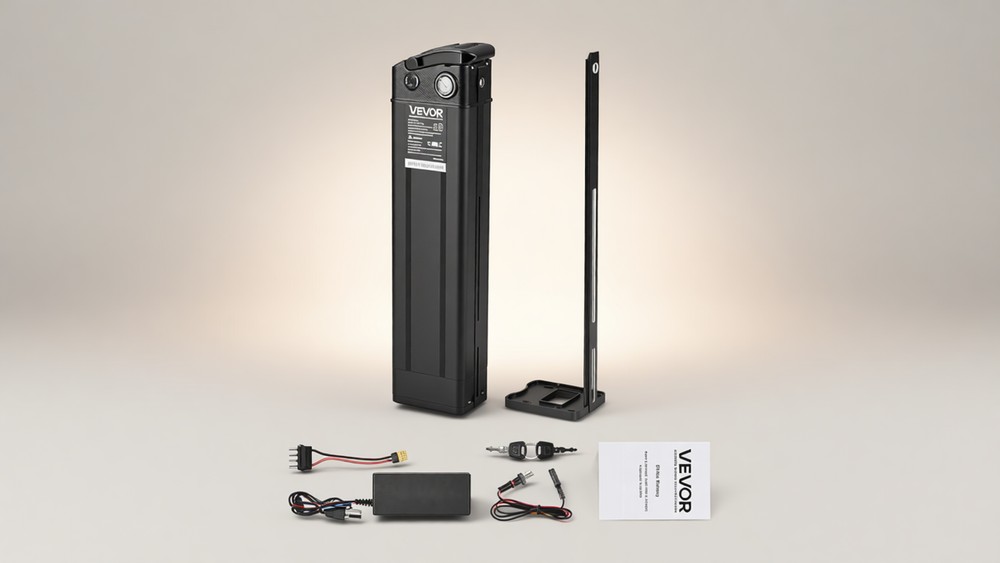
The VEVOR 48V 15.6Ah pack recorded a 30A BMS, a 3A charger, a key lock, an LED indicator and motor support up to 1000W. Its case measured 17.13 by 4.33 by 3.35 inches, and its weight came in at 11.68 pounds. That is the whole spec record.
No review count was ever captured, and the listing is gone, so the record below is frozen exactly as the pack left it.
What 15.6Ah buys, and what it does not
Capacity math first, because the odd number invites it. Fifteen point six amp-hours at 48V is 748.8Wh, and that sits between the two rungs most 48V buyers actually choose from. A standard 15Ah pack holds 720Wh, so this one carries 4 percent more.
The 20Ah tier holds 960Wh, which is 28 percent more than this pack, and that gap is the one that matters on a ride.
The odd number itself comes from cell wiring. Packs are built from cells in series and in parallel groups, and 15.6Ah falls out of some combination the listing never explained. Cell brand and count were never recorded either, so there's no way to reconstruct it.
What you can reconstruct is the difference on the road: about four percent more energy than the rung below, which is a mile of range at most, and a fifth less than the rung above.
The 30A board against the 1000W claim
Thirty amps at 48V is a 1,440W continuous ceiling. A 1000W motor draws about 21A at full tilt, so the claim sits inside the board with 440W to spare, about 44 percent of headroom. A 750W motor draws closer to 16A. Unlike the dayaoenne rebuild, where a 2000W claim ran about 40 percent past its 30A board, this claim doesn't outrun its own BMS, and there's nothing to argue about here.
Priced like its own sibling
Here is the part that settles the value question. VEVOR's 48V 20Ah pack, which we rebuilt separately, recorded the same price per watt-hour: 0.27. Same rate, more energy, and the 20Ah weighed 12.1 pounds against this pack's 11.68.
Choosing the 15.6Ah over the 20Ah saved about half a pound and gave up 22 percent of the sibling's energy.
That's not a value play. It's a capacity point that exists, priced at the same rate as its bigger sibling, and on our comparison table it sits close to the middle of everything we track.
The exact live figure renders in the specs box. If you're replacing this pack, treat it as a size decision, not a savings decision.
Charging: the estimate that survives
The recorded charger is 3A. Fifteen point six amp-hours divided by three gives a 5.2-hour floor from empty, and the old article's 5 to 6 hour estimate sits right on it.
That's worth a note because it's rare: the lolrko 20Ah folding pack, which we rebuilt earlier, carried an old 5 to 7 hour estimate that failed its own 10-hour floor at 2A. This one holds. If you're shopping for a successor pack, budget an evening for a charge and you won't be surprised.
The 54.6V label check
48V nominal means 13 cells in series, and 13 times 4.2V at full charge is 54.6V.
The charger's voltage was never recorded, so this is an expectation rather than a fact: whatever replacement you buy, its charger label should read 54.6V. A 58.8V label means 14 cells in series, a different system. It's the fastest check you can run on any listing photo.
Living with a 17-inch case
Seventeen point one three inches is long for an external 48V pack, and the recorded 4.33 by 3.35 inch cross-section is slim alongside it. That shape rules out some triangle bags and favors long-reach mounts or a rack.
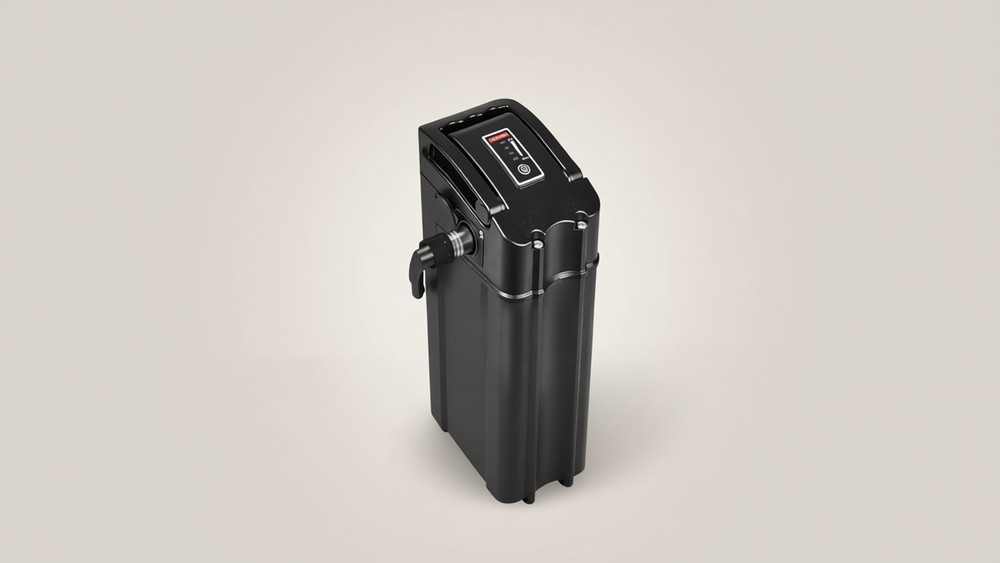
The title's "Detachable Replacement Kit with Discharge Socket" wording suggests the pack docks into a holder, but whether that holder is a cradle or a plate was never recorded, so check a successor listing's photos for the socket layout before you order.

Weight and the density check
Eleven point six eight pounds is 5.30 kg. At 748.8Wh that works out to 0.141 kWh/kg at pack level, just under the 0.18 to 0.21 band where modern complete packs usually land. It's the small-tank reading: honest cells inside a case with room to spare, the same pattern as the 20Ah sibling's 0.175. Nothing alarming, and nothing hidden.
Buying a replacement in this band
The listing is dead, and that reframes the whole page. Nothing here changes going forward: the record is frozen at zero reviews because no review was ever captured, not because buyers stayed quiet about problems. We can't tell you how this pack held up, and we won't lean on the old article's brand-trust paragraphs to settle it, because they named no verifiable source.
What a replacement buyer should check is unchanged by the death. Match the voltage to your system. Measure your cavity or your mount against 17.13 inches, because that length is the binding constraint.
Confirm the discharge socket layout and the charge port on the listing photos. Then check what the band delivers on range: em3ev's 48V guide puts a 960Wh pack at 30 to 40 miles on pedal assist and 50 to 65 with generous pedaling, and this pack's 748.8Wh scales down to roughly 23 to 31 miles on pedal assist, 39 to 50 with the same generous pedaling.
Cells age on the 400 to 1,200 cycle schedule common to lithium-ion, so meter an older pack before you trust it.
For the two standard rungs on either side, 15Ah options and 20Ah options both offer more choice than this odd capacity ever did. Our other rebuilds are in the reviews section.
FAQ: the 15.6Ah rung
Why did VEVOR build a 15.6Ah pack at all?
Because pack capacity comes from parallel cell groups times cell capacity, odd numbers fall out of real cell choices. A group of 3.9Ah cells four across gives 15.6. The exact cell was never recorded, so the honest answer is that the number is real, the reason is lost.
Is 748Wh enough of a step up from 720Wh to matter?
No. That's 4 percent, which is about a mile of range. The meaningful comparison in this family runs the other way, against the 20Ah sibling's 960Wh.
What motor sizes fit the recorded 30A board?
At 48V, anything up to 1000W draws about 21A or less, inside the 1,440W ceiling with about 44 percent of headroom. The claim and the board agree.
What charger does a replacement need?
Look for a 54.6V label, which is the 13S full-charge voltage, and expect a 3A-class charge to take about 5.2 hours from empty. Anything faster than the pack's recorded 3A is unverified for this design.
Did anyone ever review this pack?
Not that was ever recorded. The rating field stayed empty, and the listing died before a count could accumulate. That's a dead end in the record, and this page won't invent past it.