Budget mesh intercoms keep arriving with the same pitch: the group features of the name brands, at a fraction of the price. The THETREE X10 is the newest one we have pulled apart, and its listing makes the pitch more concretely than most. Ten riders on one mesh group, a 28-hour talk figure, an IP67 rating and Bluetooth 5.4, in a box that costs less than a tank of fuel.
The problem with every bargain in this category is the same problem every time. A mesh intercom is worth what its group connection is worth, and group connections are proven by groups, not by spec tables. A buyer has to decide whether a young record on an unknown brand tells them enough.
Here is how we read it. We scraped the live listing and both review sorts, matched the claims against the written texts, and set the whole thing beside our own intercom comparison table. What follows is the price story, the badge problem in the record, the one control fault nobody else documents, and what the cross-brand tests do and do not prove.
The verdict up front. The X10 sits in the cheapest fifth of the 192 intercoms we track by price per rider, and among the ten-rider units it is one of the cheapest we carry. That value position is real and it is the reason to keep reading.
The record behind it is small, young and mostly unbadged, and the deepest text in it found a control fault the listing does not mention anywhere.
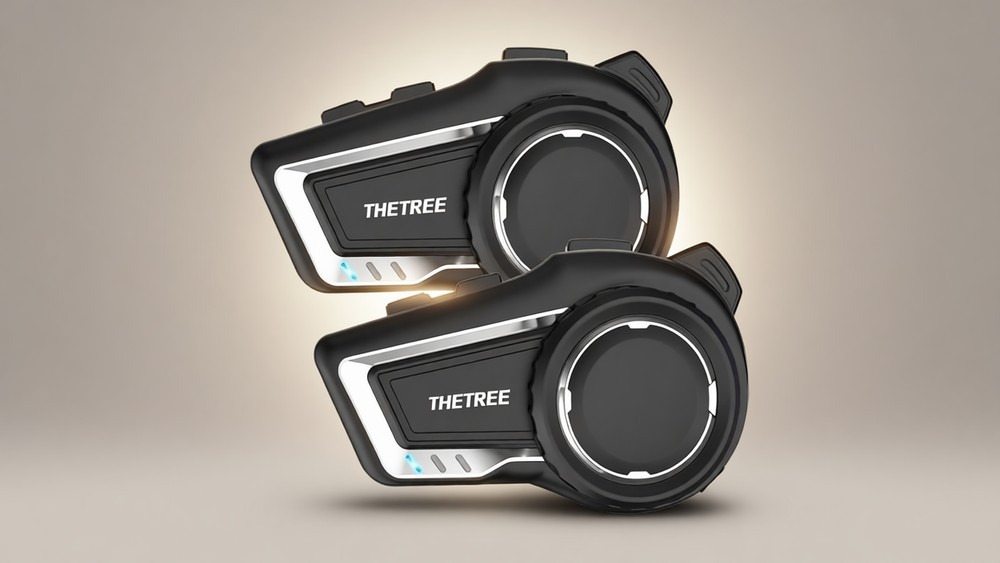
The cheapest mesh on the table, with an asterisk
The listing cannot decide what a box contains. The title ends in the word Double, the Number of Items row says 2, the Number of Packs row says 1, and a Unit Count row says 1 Count. If the box holds two complete units at 79.99, each helmet costs about 40, which is the price of a budget Bluetooth unit, not a mesh one.
If it holds one, the price per helmet doubles and the value story changes with it.
The record cannot settle the question. Two different riders each wrote that they only had one unit to test, and nobody describes unboxing two.
Our own table treats the box as a single unit and prices it per rider against the 10-rider capacity, which flatters it, and we say so plainly. Whichever way the box lands, the price stays low for the feature list. The exact live position sits on the comparison table, because it moves with every price refresh.
The asterisk is not the price. It is the age of the evidence. Every text in the record was written between late August and late September 2026, which means the oldest account is about two months old and nobody has owned one through a winter.
A young record with a badge problem
The rating pool is 11 ratings averaging 4.7, with the bands reading 72 and 28 percent and nothing below four stars. A pool that small cannot anchor a recommendation by itself, and the written record underneath it has a structural problem: only three of the eleven texts carry a purchase badge, and the badged three are one-liners.
Every substantive account in the record is unbadged. The deep four-star text with the clamp and volume findings, the cross-brand Cardo pairing account, the choppy cross-brand intercom report, all of them.
One text self-discloses an Amazon Vine copy, and one more reads like the listing itself, complete with a verdict heading inside the review and bullet vocabulary throughout. None of that makes the good accounts false. It does mean the enthusiastic 4.7 rests on evidence you cannot trace to a purchase.
Read that way, the useful texts are the cautious ones. The three four-star accounts spend their words on limits and workarounds, not praise, and they are where the buying information lives.

The jog dial runs backwards
The most useful single fact in the record appears in no listing and in no other review. The X10's jog dial is reversed. One rider who put real miles on it describes rotating the wheel forward, toward the chin guard, and watching the music skip backwards.
Rotating it backwards skips forward. Rotating it while holding it forward raises the volume instead. Their verdict on the layout is worth quoting in spirit: a rider has enough to think about without a control that means the opposite of what it looks like.
The same deep text covers the mounting hardware honestly. The included clamp did not tighten enough to stop the X10 shifting, so they swapped to the hook-and-loop attachment, which held through regular riding. On a modular helmet the microphone boom needed repositioning to clear the chin cover when it closed.
Treat the included hardware as options rather than one correct method, and the install works.
The second finding is a ceiling, not a fault. With 20 dB earplugs in, that rider wanted more speaker output. A different rider without plugs heard their music at full volume from about fifteen feet away, so the hardware is capable, and the question is whether your hearing protection eats the margin.
Budget intercoms fail at volume before they fail anywhere else, and this one is no exception.
The rest of the control story is mixed but learnable. The top buttons handle pairing rather than volume, which caught one rider out, and the dial takes a second to work out, with gloves making it trickier than plain buttons. Nobody in the record calls the controls a dealbreaker, and one rider who bought a second unit after the first says the controls settled in quickly.
The 10-rider claim, tested by nobody
Ten riders on one group is the headline claim, and the record exercises none of it. The largest groups described are an Oklahoma trail crew with no head count given, and a rider who linked up with their brother, one on one.
Nobody reports six riders, let alone ten. The claim may be true. Nothing on this page can tell you, and the honest way to buy the X10 is as a two-to-four rider communicator with headroom, not as a proven ten-way system.
The cross-brand evidence is more useful than the group claim. One rider paired the X10 with a Cardo Freedom 2x after a factory reset on the THETREE, and the connection then re-paired on later rides without fuss. That is the good news, and it matters, because mixed-brand groups are common.
The bad news comes from a rider who tried the intercom function across two different brands twice, and both times the connection held but the sound came through choppy. Cross-brand pairing works, cross-brand talking is where it strained. The listing's own mesh bullet frames the feature around groups of two to six riders, and the record agrees with that framing.
Then there is the range argument, which the listing has with itself. The title says 2000m open-terrain range. The range bullet says up to 1,500 m, or 0.93 mile.
The spec table's Bluetooth Range row says 100 feet, which is the ordinary short range of the phone link, not the mesh (Wikipedia, Bluetooth). The rider who tested against a Cardo concluded that the distance figures on neither brand are accurate, and said both reach far enough for their use. That is the most honest range statement in the record, and it came from an owner, not a spec sheet.
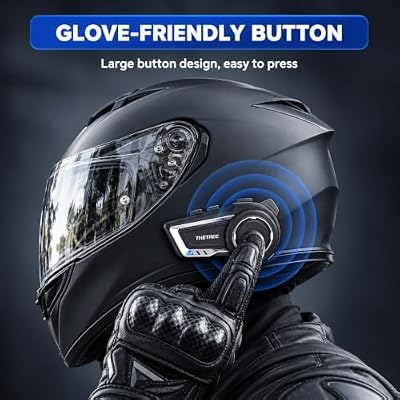
What 79.99 buys against the name brands
The hardware list is generous for the money. Bluetooth 5.4 for the phone link, a Qualcomm chipset with five equalizer presets, both a boom microphone for open-face and modular helmets and a wired microphone for full-face, clamp and adhesive mounts, a hard shell case, USB-C charging in two hours, IP67 water and dust sealing, FM radio, and a two-year warranty row.
The 28-hour mesh talk claim has not been tested by anyone in the record, but one rider reports hours of use that never ran the battery low.
Against the name brands the gap is price and nothing else on paper. A single low-profile mesh unit from Sena costs about three times this box, and the Sena Spider RT1 we rebuilt carries the same trade we found there: you pay for the family. THETREE asks a third of that, and the family you join is whatever THETREE's mesh turns out to be.
Budget buyers who want the same gamble with more record behind it can compare the two-unit mesh packs we have covered on the same table.
Who this suits is the rider who wants to try mesh without the brand tax. Buy it expecting hook-and-loop instead of the clamp, a jog dial that needs learning, a volume ceiling under strong earplugs, and a group feature nobody has proven past a trail crew.
The price makes the experiment cheap. It does not make the evidence any newer, and two months of record on an unknown brand is the whole risk you are taking. If the record is still this thin after another season, that itself will tell you something.
FAQ
Does the THETREE X10 box contain one unit or two?
The listing argues with itself. The title says Double and Number of Items says 2, while Number of Packs and Unit Count both say 1.
Two riders each report having only one unit to test. Update: Amazon's variant ladder has since settled the question. The family lists a 1 Pack rung and a 2 Pack rung as the only two options, and we reviewed the single-unit rung separately.
Can it talk to a Cardo or another brand?
Pairing across brands works, with one rider linking to a Cardo Freedom 2x after a factory reset. The intercom function across brands is weaker: two attempts came back choppy. Treat cross-brand as phone-and-music grade, not group-talk grade.
Is the X10 loud enough with earplugs?
It depends on the plugs. One rider with 20 dB earplugs wanted more output.
Another without plugs heard music at full volume from about fifteen feet away, and a third rode fine at about 75 percent volume with plugs and wind. The ceiling is real but most riders in the record stayed under it.
Is the mesh range claim real?
Nobody in the record has measured it. The listing itself disagrees, saying 2000m on the title and 1,500 m on the bullet. The one rider who compared distances against a Cardo concluded neither brand's figure is accurate and both reached far enough for their riding.