The way intercom boxes are packed assumes you own one helmet. A single pack carries one headset and one mount kit, and a dual pack assumes there's a second rider to split it with. If you're the rider with a full-face lid for the highway and an open-face one for around town, neither shelf slot fits, and the usual fix is buying a second kit separately and hoping it matches your hardware.
Sena packed the 60X single differently. The box holds one headset, and behind it sit two complete helmet kits: two clamp-and-speaker sets, two mounts, and two of each microphone type. One purchase covers two lids, and you swap it between them without reinstalling anything.
The catch is what that box costs. At 459.00 it's the pricier way to buy one 60X, and the owner record behind it is thin and shared with its dual sibling. Here's what the box actually contains, what owners confirm, and where the single earns or loses its place.
The Sena 60X single is the rung of the 60X ladder built for one rider with more than one helmet. The rating pool it carries is a 3.6 from 23, and that pool is shared with the dual pack we have covered separately.
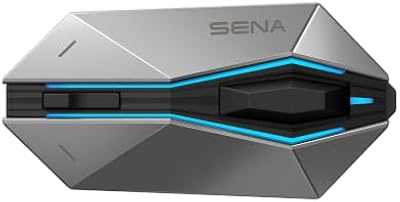
One headset, two complete helmet kits
The box list reads like a dual pack with a headset missing. One main unit, three swap-in face plates, and then the doubling: two helmet clamp and speaker sets, two glued mounting plates, two speaker pads, two boom microphones for open-face lids, and two wired microphones for full faces. The listing's own bullet calls it out: the point is moving one 60X between helmets without reinstalling anything.
One owner has put that design to work and described it in detail: one mount on a modular helmet, the other on a half helmet with speaker pockets, no issues with either setup. The same owner notes the install has moved on from the 50S, which needed screws tightened, where the 60X slides on and holds. Magnetic charging and swap-out color plates round out the two-helmet routine.
The support side is where the box stumbles. The most detailed owner report states there were no installation instructions in the box, no manual, and no company video to fall back on, and calls that inexcusable. They got there anyway on experience from a previous install, and they praise what they found: sound like wearing earphones, a voice command that worked when they tried it, and a joystick that can be programmed so the function you need most sits where your glove lands.
A Spanish-speaking owner adds a related gap: the instructions ship without Spanish, so plan on the app for setup.
The single is the pricier way to buy one 60X
Here's the arithmetic the box does not advertise. The single lists at 459.00 and the dual at 778.06, so the second headset costs 319.06 inside the dual box. Per headset, the dual works out at 389.03 against the single's 459.00.
Buying one at a time carries a 69.97 premium per headset, which is the price of not committing to a second rider or a second unit yet.
That premium buys flexibility, and for some riders it's worth it. If you ride solo but own two helmets, the dual is dead money, and this is the only box that fits. It's the box we'd hand a solo rider with two helmets in the garage. If a riding partner is likely, the dual recovers the difference the moment that rider exists.
Availability has its own story. At our most recent checks this listing showed a single example left before the current restock brought it back, which suggests supply on this rung runs thin.
The wider 60 series ladder gives alternatives: the 60S single carries Harman Kardon tuning instead of Bose, and the 60S EVO pairs Bose with the older generation. Where every rung lands per rider, the intercom comparison table sorts the full field.
What the owner record confirms
The audio claims have one strong proof behind them. One owner upgraded from a budget unit on a ZX-10R with an aftermarket exhaust, and the old headset went silent past sixty miles per hour while the 60X stays audible at speed without being turned up all the way.
Another calls it the best sounding headset they have owned, with the honest caveat that they have only run music so far. A third dissents on the headline: the intercom works well, but the Bose speakers do not sound the greatest for music to their ear.
Install and controls draw the most consistent praise. The top-voted report describes music staying clear up to max volume, an install that slides on and holds, and clean pairing to both a phone and a Garmin GPS. The build reads as solid and premium to more than one owner, and the programmable buttons get specific credit for keeping gloved hands off tiny controls.
Two things to weigh when reading that praise. Two of the positive reports sit on unverified purchases, and the record is small: 23 ratings, with 45 percent five star and 16 percent one star, which is a polarized spread for a flagship.
Where the record pushes back
The harshest audio report and the strongest one describe the same product from two helmets. One owner rides a Vespa with no windshield, bought the 60X to hear GPS directions, and reports that even at maximum volume the voice turns into background noise above 45 miles per hour in wind rush.
The exhaust-equipped owner from the sportbike side hears it fine at highway speed. The difference between them is wind and shell, not the speaker, and it is the clearest evidence in the record that a no-screen helmet can drown out any speaker.
The listing's own copy promises communication that stays crystal clear against wind and engine noise. Its record contains an owner for whom it does not, on a helmet with no screen. The claim isn't false, it's conditional on the shell and the screen, and the listing leaves that condition out.
The smaller gripes are real too. One owner reports the flat bottom button sits where a shoulder or jacket collar presses it, switching music on by accident. That's a first-week check against your own posture, not a defect.
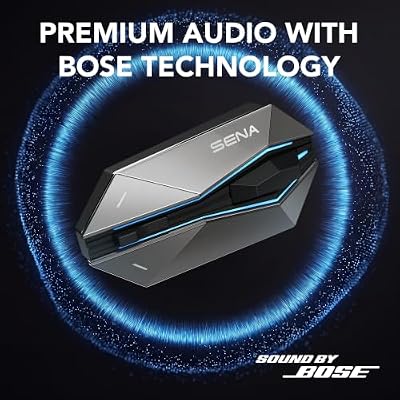
The mesh capability nobody in the record has used
On paper this is the full flagship. Sena's own page lists Mesh Intercom 3.0 in three grades: Bluetooth intercom for up to four riders, Group Mesh up to 24, and Open Mesh across six channels with virtually unlimited participants.
Professional testing of the 60 series notes the same split from the other side: Bluetooth pairing works for rider to rider but gets clunky for groups, which is exactly what mesh exists to fix.
The owner record has nothing on it, so we can't tell you how the group feature behaves on the road. Nobody reports a mesh group ride, an intercom range figure, or battery life, and one owner says outright they cannot rate functions they have not tried because nobody they know owns one.
The record also carries no defect report against this single box: the one quality-control failure in the pool, a headset missing its power button with the return requiring both units back, happened to a dual pack and is already covered in the dual review. The single's own sample is small and clean so far, which is a reason for caution, not confidence.
If mesh with a regular group is the actual goal, the budget end of the shelf covers it: the EJEAS Q8 mesh two-pack trades polish for the group feature at a fraction of the price, and the dual 60X is the rung to compare when the group is two and the budget is not.
FAQ
Does the single pack include everything for two helmets?
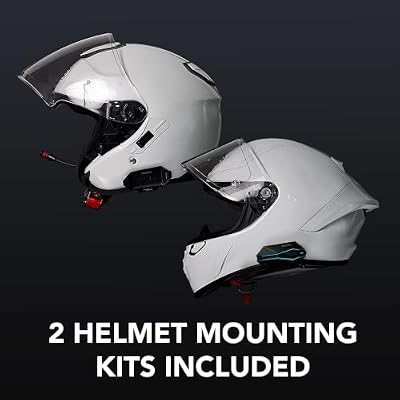
Yes. The box carries one headset and two of everything that mounts to a helmet: two clamp and speaker sets, two mounting plates, two speaker pads, two boom microphones, and two wired microphones. One owner has run it that way with a mount on a modular helmet and one on a half helmet.
What it doesn't include is a printed manual, which more than one owner has flagged.
Is the single cheaper per headset than the dual?
No. The dual at 778.06 works out at 389.03 per headset, and the single at 459.00 costs 69.97 more per headset. The single wins when you only need one headset now, or when the second one would sit in a drawer. The dual pack recovers the difference the moment a second rider exists.
Can one 60X really move between helmets without re-pairing?
The two-kit design is built for it, and the owners who describe the install report clean pairing to phones and GPS units. The swap is mechanical: the headset lifts off one clamp and seats onto the other. Pairing lives in the headset, not the mount.
Why is the rating a 3.6 for a flagship product?
The pool is 23 ratings, thin for a product this new, and it is shared across the single and dual pack listings. Sixteen percent of it is one star, and the loudest one-star report describes a dual pack arriving with a missing power button. Small polarized pools swing hard on a few bad units, so read the spread rather than the average.
Can I hear GPS directions at highway speed?
It depends on your helmet and screen more than on the 60X. One owner without a windshield cannot hear directions above 45 miles per hour at max volume, while an owner behind a sportbike fairing hears it fine at highway speed. If you ride a screenless helmet in open wind, treat any speaker claim as unproven until you've tested it inside your return window.
You can check the current single pack price on Amazon against the dual before deciding which rung fits.