Budget mesh intercoms keep promising the group features of the name brands at a price that doesn't hurt, and the THETREE X10 family now sells that promise two ways. There is a two-pack, which we reviewed when the family was a few weeks old, and there's now a single-unit listing sitting beside it in the same variant ladder.
A rider who wants to try mesh on one helmet, or who already owns one intercom and wants a matching second, has to work out which rung to buy and what the difference really is.
The hard part is that the evidence hasn't grown up with the hardware. Every text in the record was written within about five weeks of each other, most of them carry no purchase badge, and both listings print the same small rating pool. A buyer is reading one shared record through two doors, and neither door tells them which rung the owners actually bought.
We scraped the single-unit listing and both review sorts signed in, matched every claim on the page against the written texts, and set the price against our intercom comparison table. What follows is the ladder answer to the box question, the single-versus-pair math, what the shared record holds, and what starting with one unit can and cannot show about a ten-rider mesh claim.
The verdict up front. The single-unit X10 at 39.99 works out to 4.00 per rider against the ten-helmet capacity, which puts it in the cheapest handful of the 210 intercoms we track.
The two-pack rung charges the same amount per helmet, so the pair buys no discount, only a second unit. That price position is real, and the record behind it is the same small, young one the family's two-pack review worked from.
The variant ladder settles the box question
Our review of the two-pack rung spent a whole section on a question the listing would not answer. The two-pack page titled itself Double, printed Number of Items 2 beside Number of Packs 1, and two riders each wrote that they had only one unit to test. We told readers to ask the seller if they needed two.
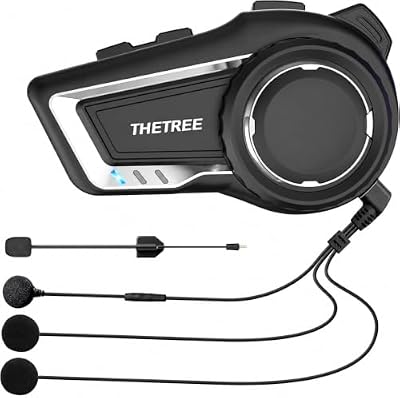
The single-unit listing answers it from the ladder side. Amazon's own variant data lists exactly two rungs in the X10 family: B0H8SJVWN7 for 2 Pack and B0H8S245G8, this page, for 1 Pack.
One box, one intercom unit, 39.99. The two-pack at 79.99 is two of the same thing.
The details table still finds one way to stumble. An Assortment Bundle Type row says Multipack on a listing whose Number of Packs row says 1, which is the same form-filling sloppiness the family showed on the two-pack page. Nothing else in the table argues with the ladder.
A rider who buys this rung gets one complete unit with both microphone styles, the clamp and adhesive mounts, and a two-year warranty row, which is longer than most of the budget band manages.
One helmet at 39.99, and the pair saves nothing
The arithmetic is the most useful thing on the page. One unit costs 39.99. The two-pack costs 79.99, which is two units at 40 each with a penny of rounding.
Buying the pair saves nothing over buying twice, so the only reasons to pick the pair are convenience and getting both helmets on the same version of the firmware on day one.
Against our table the single rung lands at 4.00 per rider, priced against the ten-helmet capacity the listing claims. That's the third-cheapest figure of the 210 intercoms we track, and the exact live position sits on the comparison table because it moves with every price refresh.
Two honest notes belong next to that number. The per-rider figure flatters any ten-rider claim, and nobody in the record has exercised the group feature past a trail crew with no head count. And the metric prices a mesh listing as if the mesh worked, which is the buyer's gamble on an unknown brand, not a measured fact.
What the price does buy is the cheapest way into the family. A rider who wants to test whether THETREE's mesh suits their crew can put one unit on one helmet for less than the cost of most budget Bluetooth units, then add the second rung later if it works out.
The risk sits in the same place it sat on the two-pack page: the family's young, and the record's thin.
Two listings, one shared eleven-rating record
Both rungs of the X10 ladder print the same rating pool, 4.7 from 11 ratings with the bands reading 72 and 28 percent and nothing below four stars. That's one record shared across two pages, not two records. A buyer who reads the single-unit page is reading texts written by owners of either rung, and no text says which one.
The written record underneath has the same shape we documented on the two-pack rung, and today's capture adds nothing that changes it. Eleven unique texts, all written between late August and late September 2026, every one of them with zero helpful votes, so the record has no ranked center.
Three texts carry purchase badges, and all three are one-liners. The eight substantive accounts are unbadged. One text self-discloses an Amazon Vine copy, and one more reads like the listing itself, complete with a verdict heading inside the review.
The deepest findings in that record live in the two-pack review, and they still stand: the jog dial runs backwards until you learn it, the included clamp loses to hook-and-loop, and the volume ceiling arrives with 20 dB earplugs. A single-rung buyer inherits all of it, because the hardware is the same unit.
What starting with one unit shows about the mesh claim
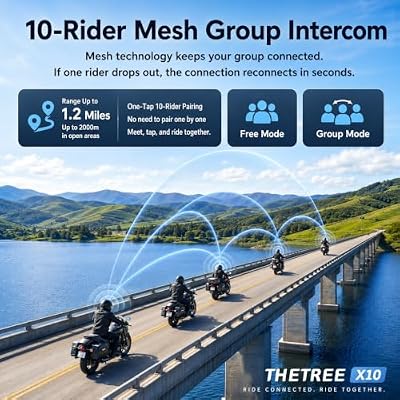
Ten riders on one group is the headline claim, and one unit in one box cannot prove it by itself. What the record does show is the seam between this listing and the rest of the world.
Cross-brand pairing has worked for one rider, who linked the X10 to a brother's Cardo Freedom 2x after a factory reset and found it re-paired on later rides without fuss.
Cross-brand talking has strained for another, who tried the intercom function across two different other brands twice and got choppy audio both times, while noting that two of the same brand might work a lot better. That note is the single-rung buyer's situation in one sentence: the same-brand group this listing promises starts with one box and grows by purchase.
The range story repeats on this page exactly as it reads on the two-pack. An Item Highlight row says 2000m of open-terrain range. The range bullet says up to 1,500 m, or 0.93 mile. The Bluetooth Range row says 100 feet, which is the ordinary phone link, not the mesh (Wikipedia, Bluetooth). One rider who tested distances against a Cardo concluded that neither brand's figures are accurate and both reach far enough for their riding, which remains the most honest range statement in the record.
Nobody in the record has ridden in a group of six, let alone ten. The honest way to buy the single rung is as a one-to-three rider communicator with headroom on paper.
Start with one, or buy the pair
The decision this page forces is smaller than the two-pack's, and clearer. For one intercom on one helmet, at the cheapest per-rider price we track, this rung is the way in, and the two-year warranty row and the IP67 sealing are better paperwork than the budget band usually offers. Want two helmets talking? The pair costs exactly twice this page, so buy whichever rung is in stock at the moment you're ordering.
What one box can't do is answer the family question. Mesh is worth what its group connection is worth, and the group connection is proven by groups, which is the evidence this record doesn't have.
One rider has bought a second unit and reports the pair working on Oklahoma trails, which is the closest thing the record has to a same-brand group test, and it's a good sign rather than a proof.
Riders who want the same gamble with more record behind it can compare the two-unit mesh packs we covered on the same table. Riders who don't need mesh at all can read the brand's cheaper Bluetooth sibling, our THETREE X2 single review, a 29.99 2-way unit with a younger record.
Riders who want mesh with a real track record behind it are still paying the name-brand tax, and the X10 two-pack review explains what that tax buys. Buy the single rung expecting a young record, a dial that needs learning, and a group feature nobody's proven, at a price that makes the experiment cheap.
Frequently asked questions
Does the single pack really contain one unit?
Yes. The variant ladder lists 1 Pack and 2 Pack as the only two rungs, this page is the 1 Pack at 39.99, and the details table says Number of Items 1 and Number of Packs 1. One Assortment Bundle Type row says Multipack, which is template sloppiness, not a second unit in the box.
Is the single pack cheaper per helmet than the two-pack?
No. One unit costs 39.99 and the two-pack costs 79.99, which is the same 40 per helmet. The pair buys convenience, not savings.
Can I add a second X10 later if the first one works out?
The hardware is the same model in both rungs, and one rider in the record bought a second unit and reports the pair working on trail rides. Nobody in the record has needed to mix rungs bought months apart, so treat that as likely rather than proven.
Is the 10-rider mesh claim real?
Nobody in the record has tested it. The largest groups described are a trail crew with no head count and a two-rider link to a Cardo. The listing itself frames the feature around groups of two to six, and the record agrees with that framing.