Group riding works when everybody can talk without stopping, yelling or holding up a glove. That is the promise of every mesh intercom on the shelf, and it is the promise the Sena Spider RT1 makes in an unusually small shell.
The complication is that mesh is not one standard. Each brand runs its own radio protocol for rider-to-rider talk, so the headset you buy decides which friends you can ride with, not just how you sound.
That makes this purchase a brand decision first and a hardware decision second. The RT1 sits at 239.00 on a page where Sena's own comparison table offers five older alternatives, some cheaper and some better rated. Our price-per-rider ranking across the intercoms we track puts it among the most expensive units we carry, so the money has to buy something the budget brands cannot.
Here is how we read it. We scraped the live listing and its written reviews, sorted the texts by date and by helpful votes, and set the claims next to our own intercom comparison table. What follows is what the mesh lock actually costs, what the record covers, where the listing and its owners disagree, and the one failure account that says the most about the brand.
The verdict up front. The Spider RT1 sits mid-priced in Sena's own comparison table: dearer than the ST1, the 20S EVO and the SMH10-11, cheaper than the 30K and the 10S, with a 4.1 average that beats only the 10S. You pay Sena money for Sena's mesh family. If your group rides on Sena mesh, that purchase makes sense. If it does not, nothing on this page will change your mind.
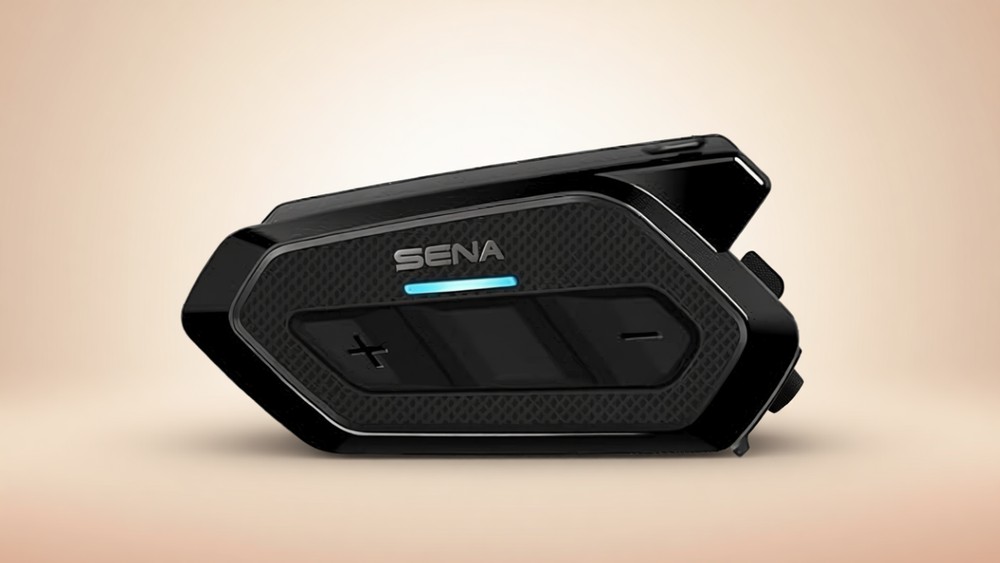
A low profile with one condition, and the condition is the brand
The RT1's defining spec is not the 8 km mesh range or the 24-rider group capacity. It is the sentence in the most-voted owner text, from a rider who has owned several Sena units before this one: rider-to-rider talk runs on Sena's proprietary mesh, not Bluetooth, and it is not compatible with other brands. Bluetooth handles the phone, the GPS and the music.
The same owner calls the rider-to-rider sound far better than older Bluetooth systems, so the trade buys real quality inside the wall it builds.
That wall has two edges. Outside the brand, no cross-brand talk at all, and no fallback to plain Bluetooth intercom either. Inside the brand, it also cuts off older Sena units that predate mesh, which matters if your regular group includes someone on an older headset.
Sena's own spec rows list Open Mesh with 9 channels and Group Mesh for up to 24 participants, so the family you join is a big one, but it is one family.
The Bluetooth side carries its own numbers worth decoding. The spec table lists a 2 km Bluetooth range, and the radio is Bluetooth 5.2. The standard itself is humbler: a class link typically runs up to 10 metres and Bluetooth 5 radios list 40 to 400 metres in best-case conditions (Wikipedia, Bluetooth).
Phone links on any intercom live in that ordinary range, and the mesh claims live in a different world the spec sheet does not have to prove.
What the record covers, and what none of it tests
The written record is unusually clean for this tier. Every one of the 15 captured texts carries a purchase badge, and the pool behind them is 527 ratings averaging 4.1, with the star bands reading 67, 11, 6, 5 and 11 percent. That last number is the one to notice.
One rating in nine or ten gives up on the RT1 entirely, which is a heavy tail for a device at this price, and the negative column has substance behind it.
What the owners actually cover is battery life, installation and pairing. Three separate owners report the battery with approval: one after repeated hour-long rides that barely moved the gauge, one with a simple "charges easy, lasts a long time", and one with a flat statement of long battery life.
Installation comes up easy more often than hard, including one rider who swapped the RT1 onto mic and speakers already wired into the helmet from an older unit and was done in minutes. Pairing gets described as easy by two owners, with one noting the Bluetooth side took more fiddling than the mesh side.
What nobody covers is the claim that anchors the listing. No owner reports a group larger than a handful of friends on newer Sena mesh units, no head count given, and no owner measures distance.
The 8 km range figure and the 24-rider capacity have not been exercised anywhere in this record. They may be true. The record simply cannot say, and you should not buy on them.

Where the listing and its owners disagree
The bullets sell a "glove-friendly three-button interface". One owner has described the reality in detail: the important commands need button holds of one to three seconds, the buttons are hard to feel with gloves on, and pausing music takes two buttons that are nearly impossible to find while riding. That text rates the RT1 4 stars anyway and calls the sound better than a Cardo Spirit HD, which makes the complaint more credible, not less.
The second gap is a missing feature, not a broken one. A rider upgrading from another Sena headset found the voice assistant gone, the Hey Google and Hey Siri kind, and reported buyer's remorse every time the reflex fired. Low profile means something was cut to fit, and this owner missed it daily.
The third gap is the angriest text in the record. One owner who bought the RT1 for music found the sound thin, high frequencies only, with volume that oscillates, and then discovered the deeper problem: the speaker plugs are proprietary within Sena's own range, with none interchangeable across models, so upgrading speakers means buying a higher-end complete unit.
Whether or not you share the tone, the structural fact is useful. Speakers are not a commodity upgrade path on this hardware.
One more row deserves a plain statement. The spec table lists the certification as DOT on a communication device, and impedance at 2200 ohms.
Neither belongs on an intercom. They are template rows pasted across a product family, and they tell you the spec table was not written for the RT1.
The price, next to Sena's own comparison table
Sena prints the comparison on the RT1's own page, and it is more honest marketing than most listings manage. Six units, side by side.
The RT1 at 239.00 with 4.1 from 527. The Spider ST1 at 235.99 with 4.3 from 830. The 30K at 274.79 with 4.4 from 1,744.
The 20S EVO at 215.20 with 4.4 from 848. The 10S at 269.00 with 4.0 from 355. And the SMH10-11 at 203.31 with 4.4 from 1,930.
Read as a buyer would. The RT1 is the middle-priced of the three mesh-capable units in that table, and the ST1 undercuts it by three dollars with a higher average from a larger pool. Its 4.1 rating is the second lowest of the six, ahead of only the 10S. What the extra money buys, against the cheaper units in the table, is the mesh. The comparison says so without meaning to.
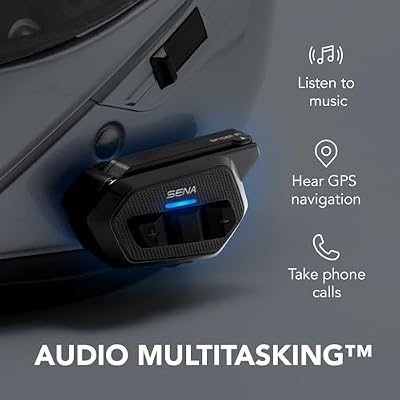
On our own ranking the picture agrees. Per rider, this is one of the most expensive intercoms we track, and the comparison table shows the exact live position because it moves with every price refresh. Nothing in the owner record argues with that.
The value case for the RT1 is the family, not the price, and the family is only worth the price if the people you ride with are already in it. If both riders are committed, the RT1 2-pack has been the cheaper route, saving about eighteen percent against two singles when we priced both rungs on the same day.
One rain-soaked failure, and the owner who bought Sena twice
The most instructive text in the record is a failure that ends in a repurchase.
One owner's headset stopped working after a rain ride, and they gave it two stars for exactly that reason, saying a motorcycle product should hold up to those conditions. The same owner then bought another Sena, a more water-resistant version, and explained why in the same breath: the sound, the ease of use and the experience still sit above many other brands for them.
That text pairs with a row on the listing. The spec table says Water Resistant, with no IP code attached, which is a weaker promise than the IP67 ratings budget units print. There is a two-year warranty behind it, and the failure account does not say whether it was used.
What the pairing of row and record tells you is the honest shape of the risk. The protection is unspecified, the failure happened to somebody, and the brand recovered the customer anyway.
Two other negatives fill in the edges. One owner reports the RT1 freezing when a phone call comes in, with the mesh misbehaving and the mount disappointing, and asks the fair question about a device at this price.
Another notes that the wiring sits fixed on the headset, so moving it between helmets means another install rather than a swap, though the same text confirms this version holds up to water where the sibling ST1 has taken on water.
Put together, the record describes a product you buy for the ecosystem and forgive for the price. If your group rides Sena mesh, the RT1 is the low-profile way in, and every captured text behind it carries a purchase badge. If you ride with mixed brands or you want a voice assistant or swappable speakers, the same record tells you to look elsewhere, and our comparison table is where that looking should start.
FAQ: the mesh that takes no outsiders, the gloves that slow the buttons and the warranty behind the water claim
Can the Spider RT1 talk to a Cardo or another brand?
No. Rider-to-rider talk runs on Sena's proprietary mesh, and the top-voted owner text states it plainly. Bluetooth handles phone, GPS and music only. There is no cross-brand intercom and no fallback to older Bluetooth-only Sena units.
Is it actually glove friendly?
The listing says so. One owner has described needing one to three second button holds, buttons that are hard to feel with gloves on, and two buttons to pause music. Plan to learn the button layout with gloves on before you ride, not during.
How long does the battery last?
The spec table lists 11.5 hours with a 2.5 hour charge. Owners back the general shape of that claim, reporting hour-long rides that barely moved the gauge and easy charging, though nobody in the record reports running it flat.
Is the RT1 waterproof?
The listing says Water Resistant with no IP code, which is a weaker claim than the IP67 figures on many cheaper units. One owner has reported a unit that stopped working after rain. The two-year warranty is the backup, and a more water-resistant Sena version exists if rain riding is your norm.