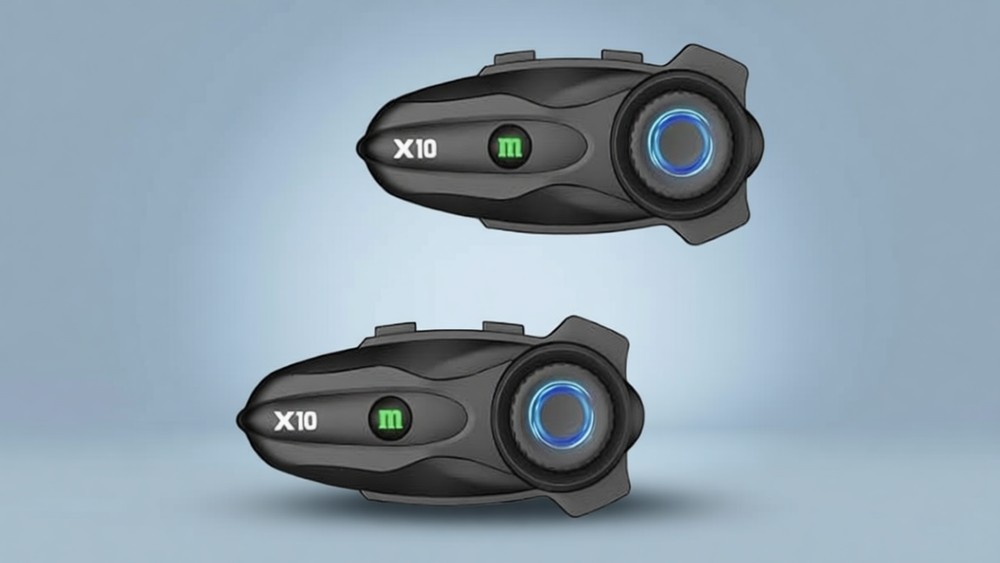
Mesh intercom used to be the thing you paid Cardo money for, and the two-pack listings are where the budget brands started selling it. This one puts two units in the box for less than one flagship costs, and the people buying it are not ten-rider clubs.
The record is almost entirely pairs: a rider and a pillion, a rider and the friend two bikes back, a partner on the second unit.
That mismatch between the marketing number and the actual use is worth sitting with before you spend, because the pack price only looks cheap if you divide it by helmets you will actually hang units on.
The listing has its own opinions about range, and they don't agree with each other. This review walks through what the record supports, where the hard limits showed up, and the one defect that makes the included cable irreplaceable.
The short version: the NYTALK X10 two pack works well as a pair, the verified owners are happy at pair distances, and the 10-rider claim is something nobody in the record has ever tested. The range story is messier than the title suggests. The port story is the part the listing doesn't mention at all.
The spec table undercuts the range claim
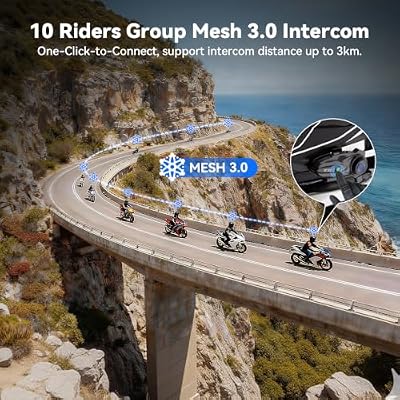
The bullet copy sells Mesh 3.0 with up to 10 riders across 3 kilometers. That is the number on the box, and it is also the number our table divides by when it shows the per-rider price.
Scroll down to the spec table and the story changes: the Bluetooth Range row prints 50 meters. Same page, same product, two figures sixty times apart.
The 50 meter row is closer to how Bluetooth actually behaves. The standard's best case runs about 40 to 400 meters in open line of sight, and the familiar 10 meter figure is what you get at the default low transmit power, per Wikipedia's Bluetooth article.
A 3 km claim is the category's open-sky marketing convention, the number a listing can print because somewhere, at full power, with nothing between the antennas, a radio once got close.
The one measured number in the record sits between the two. A rider who has used the pair reports the connection between helmets very good and clear up to around a quarter mile, which is about 400 meters. That is a strong result for Bluetooth-class hardware, and it is nowhere near 3 kilometers.
Treat the bullet as aspiration and the spec row as the floor, and the quarter-mile owner report as the number to plan around.
The port that only accepts one cable
The deepest verified text in the record covers something no bullet mentions: the charging port isn't a standard USB-C socket. The owner plugged in one cable, then another, and neither would seat. Only the cable in the box fits, because the connector geometry differs, with a longer metal part and thinner plastic than a generic cable.
That owner asked the obvious follow-up and got an answer worth repeating. The seller said the non-standard port exists for waterproofing, which is consistent with the IP67 claim, and said extra cables are available. The practical read is simpler than the engineering argument: a lost or broken included cable is a dead unit until a replacement arrives.
Keep the cable clipped to the bike or the tank bag, not in a drawer at home.
The same text flags a smaller annoyance nearby. The volume dial sits close enough to the other controls that reaching for the visor can change the volume by accident, though the owner expects that to fade with use. Neither issue touches the radio itself, but both are the kind of thing you want to know before the box is open, not after.
Clear to a quarter mile, done at 65
The speed ceiling is where the verified record draws its honest line. The same owner who measured the quarter mile reports the X10 a little louder and clearer than their previous XGP headset, then the envelope: hard to hear at 55 mph and above, and by 65 the speech is gone. Podcasts hold to about 55, roughly ten miles an hour more than their previous unit managed.
Wind noise explains most of that ceiling, and one text in the record explains it better than the listing does. That owner also runs a Sena, uses it to talk to a pillion, and rates the X10 its equal, with one catch: talking across brands required extra setup steps found on a video site rather than in any manual. Their rating reflects physics both brands share.
In their experience most full-face helmets lack the ear-pocket space these speakers want, and turbulent air at speed will bury any intercom unless you ride behind a big windscreen or keep the pace down. Their rule of thumb was about 30 mph without protection.
The controls draw praise on the same axis. One owner reports buttons large enough to hit with gloves on, a mount that clamps to the shell without rattling, and pairing that doesn't fall apart when a rider in their group drops out of range and rejoins, which is the promise mesh topology makes.
In a mesh network each unit passes messages along instead of relying on one direct link, so a member dropping out doesn't end the conversation, per Wikipedia's article on mesh networking. The reconnect behavior shows up in the record as a practical detail, not a spec.
You are buying mesh for two helmets, not ten
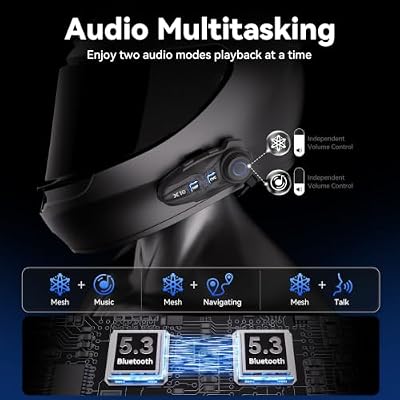
Read the record as a whole and the 10-rider claim never gets tested. One owner calls ten well past what most group rides actually need. Another has used the pair for calls and music, likes the audio multitasking, and says outright they have not had the chance to try the group feature yet.
The group riding that does appear is small: live commentary on potholes from a friend two bikes back, a pillion on a Sena, a partner on the second unit.
The most useful upgrade verdict comes from an owner who moved from this brand's cheaper X1. Their finding is blunt in both directions: the X10 doesn't sound better than the X1, and the reason to pay more is mesh, which the X1 can't do. If you want Bluetooth music and calls and never ride with a group, their advice was to buy the cheaper model.
Our single-unit X10 review covers that trade on the one-helmet listing, and the NYTALK N8 sits nearby in the brand's lineup if eight riders is the real number.
One caution about the record itself, because this listing earns it. Thirteen texts are captured, and eight carry no purchase badge.
Four of those eight read like the listing: a Pros and Cons structure, the word revolutionized, restatements of the bullet claims in review clothing. The five verified texts are where the port trap, the speed envelope, and the X1 comparison live. Weight the record accordingly, and note that the rating histogram carries no one-star band at all.
What the pair costs per helmet
At the price we checked, the two-pack costs about 90 per helmet, which is the honest denominator here. Our comparison table divides by ten riders because the title says ten, and that lands the pack in the middle of the 192 units we track.
Divide by the two helmets the record actually describes and the pack lands in the expensive quarter of the table, though still below the flagship single units at the top. Against other mesh units it isn't a bargain: 90 a helmet sits in the upper half of the 45 mesh rows we track, so the discount here is against flagships, not against the budget mesh pack.
The value case rests on the pair being the real use case. Rider and pillion, or rider and regular partner, is what these boxes sell for, and at that distance the verified owners report clear audio, a battery one owner measures in weeks, and a mounting system that stays put.
The case against is the same record: the quarter-mile ceiling is one owner's measurement, the 65-mph cutoff is another's, and nobody has confirmed the big claims.
Buy the two-pack if a pair describes your riding, you want mesh reconnect behavior, and you will treat the included cables like the irreplaceable parts they are.
Skip it if your group rides are large and frequent, because ten-rider mesh at this price is a claim the record can't support, and the flagship brands are where that feature has been proven. And if music and phone calls are the whole job, the X1 costs less and sounds the same.
Frequently asked questions
Does the X10 really reach 3 kilometers?
Nobody in the record has measured anything close. The best real datum is one owner's clear audio at about a quarter mile between helmets, and the listing's own spec table prints a 50 meter Bluetooth range. Plan around the quarter mile, not the bullet.
Can I charge it with any USB-C cable?
No. One verified owner reports only the included cable seats, because the port isn't standard USB-C. The seller says the difference exists for waterproofing and that extra cables are available. Keep the included cable with the bike.
Will it pair with a Sena or another brand?
One owner reports cross-brand talk with a Sena works, but the setup steps came from a video site rather than the manual. The listing's cross-brand claim has that single point of support, so expect some fiddling rather than one-press pairing.
Is the X10 louder than the X1?
One rider who ran both says no, the sound quality is about the same. What the X10 adds is mesh group communication. If you ride alone with music, the X1 is the cheaper way to get the same audio.
How many riders has anyone actually used?
The record contains pairs, and one mention of a friend two bikes back. No text describes a group of five or ten. The 10-rider figure is untested by every captured owner.