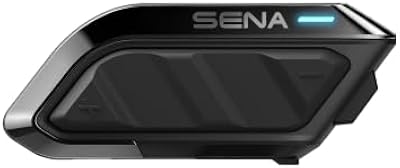
Sena's Spider family has covered the RT1 and the ST1 already. The X Slim is the newest member, and it changes the design in one visible way: the battery comes off the main pod and mounts on the helmet separately.
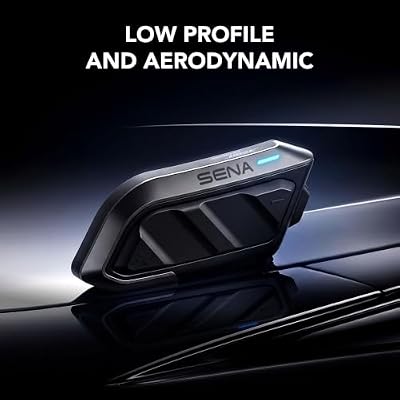
That choice buys a slimmer profile on the side of your helmet. It also adds a second component to wire, place, and eventually replace, and the record has opinions about both sides of that trade. Here's how it shakes out.
Here's what the first three months of owner reports establish, including the one measured range figure in the whole record, and where this 299.00 headset sits against its own siblings.
The Sena Spider X Slim sells as a single headset at a checked price of 299.00. The listing prints no range figure anywhere, which is unusual for a mesh intercom and matters later in this review. Our intercom comparison table lists the whole Spider family, and the Spider RT1 review and Spider ST1 review cover the two earlier models.
Four badged texts carry the whole record
Twenty ratings back a 4.5 average with no one-star or two-star band at all. Thirteen written texts exist, and only four of them carry a confirmed-purchase badge. The badgeless nine include most of the short praise, among them a text that opens by addressing fellow Amazon users and another that praises the headset in the listing's own vocabulary.
The four badged texts carry the record's substantive complaints and every workaround, which makes them the center of gravity for a buyer. They are also the texts with the specific detail, and the rest of this review leans on them for that reason.
One thing the record can't establish is durability. The oldest text is from early August 2026, so the whole written record is under three months old. Nobody has owned one through a winter, and nobody reports battery aging.
The one measured range figure in the record
The badged text from September 25 does something unusual for this price band. It reports numbers. The rider measured 200 to 400 feet before losing connection, in line of sight, with no trees and no obstacles, and calls it not even close to what Sena says.
The same text praises the mesh setup itself. One button push connected them to their riding partner, and the ease of use earned explicit credit. The complaint is purely about distance.
The listing makes this hard to settle, because it never states a range figure at all. No bullet, no spec row, and no gallery card gives a number for the mesh. Sena's own marketing lives off-page, so the only honest comparison available here is the number the owner measured against the absence of any printed claim.
When a listing declines to print the figure its buyer measured, that measurement is the fact that matters.
Mesh range is also a relay claim rather than a radio one. Bluetooth itself tops out far below it, typically under 10 meters and at most 100 meters for the common classes (Wikipedia), so a mesh figure describes a chain of riders repeating the signal, and the chain breaks where the riders stop. That's why one rider's number beats any marketing figure.
The two-piece design, both ways
The detachable battery is the X Slim's defining choice, and the record splits on it cleanly.
The case for it comes from an owner who mounted the battery pack on the back of their helmet. They report the setup turned out inconspicuous, that the headset adds no noticeable drag or weight, and that the low profile is worth the second component. The bullets make the same argument, promising better weight distribution.
The case against comes from two texts. The badged September 1 text reports that the battery has to be mounted too, which adds wiring and placement questions, and that owner doesn't know how long a charge will last yet. The September 7 text checked Sena's website for replacement batteries and couldn't find whether any are offered, which turns a removable battery from an obvious win into an open question about the day it stops holding charge.
The box includes three interchangeable faceplates, a helmet clamp, adhesive pads, velcro, and the battery. The faceplates match the customizable-style bullet, and nobody in the record mentions them beyond the parts list.
The Harley stereo conflict, and the workaround
The most useful badged text in the record comes from a Road Glide owner, and it documents a conflict wired-bike riders will recognize.
With a phone plugged into the motorcycle's stereo, the headset's phone-answering stopped working. Bluetooth audio to the helmet alone was fine. The wired connection and the headset's call handling excluded each other.
The update attached to the same text supplies the workaround. An aftermarket Bluetooth adapter on the radio's USB output restored the bypass, and calls now reach the helmet. If you ride a bike with a wired audio system, budget for that adapter or accept the trade.
Sound itself gets the strongest praise in the record. The Bose-tuned speakers earn compliments for crisp voices at highway speed, loud music that doesn't drown out traffic, and one owner prefers the sound to a much pricier headset they already own. No text reports a volume failure or a dead speaker, which is notable in a record this young and rare at any price.
Buy it for the sound and the warranty, not the range figure
The Sena Spider X Slim earns its price on two lines the budget brands can't match. The limited lifetime warranty row is real, and the Bose audio has four independent texts behind it. The IPX7 rating means the headset survives 1 meter of water for 30 minutes (Wikipedia), though nobody in the record has reported riding in rain yet.

The spec table carries the usual template noise. It files the headset with a 0.8-ounce weight row, which can't describe a full headset with battery and speakers, and an active noise cancellation row no bullet supports. Bluetooth 5.3 and USB-C charging are on the page and credible.
Battery hours appear nowhere, on the page or in any owner text, with one rider reporting several days of riding per charge as the only endurance figure.
The pair math favors the box. The X Slim dual pack sells at 568.98 against 598.00 for two singles, a real saving of about five percent, and both rungs share one rating pool. If two helmets need headsets, the dual pack is the cheaper door, and the X Slim 2-pack review walks the pair page in full.
Against the family, the X Slim trades the RT1's built-in battery for the detachable one and adds the Bose drivers and faceplates. Our Spider ST1 review covers the cheaper non-Bose rung. The X Slim's record is too young to prove it the better long-term buy, but nothing in it argues against the design.
Common questions about the Sena Spider X Slim
How far does the mesh actually reach?
The record contains one measurement: 200 to 400 feet before losing connection in open line of sight, from the badged September 25 text. The listing itself prints no range figure, so there's nothing on the page to compare it against.
Can you replace the detachable battery?
The battery comes off the main pod by design, but the September 7 text reports that Sena's website offered no clear answer about replacement batteries being sold. The lifetime warranty row exists, yet nobody in the record has been through the process.
Does it work with a wired motorcycle stereo?
Not fully, on the evidence of the Road Glide owner. A phone plugged into the bike bypassed the headset's phone-answering until they added a Bluetooth adapter on the radio's USB output. Bluetooth-only use has no such conflict.
How long does the battery last per charge?
No hours are printed anywhere. One owner reports several days of daily riding per charge. Nobody reports a charge time, and nobody has owned one long enough to report battery aging.
Is the X Slim better than the RT1 or ST1?
Different, not proven better. The X Slim adds Bose drivers, faceplates, and the detachable battery. The RT1 and ST1 keep the battery built in.
The X Slim's record is three months old, so the verdict on the trade is still open.