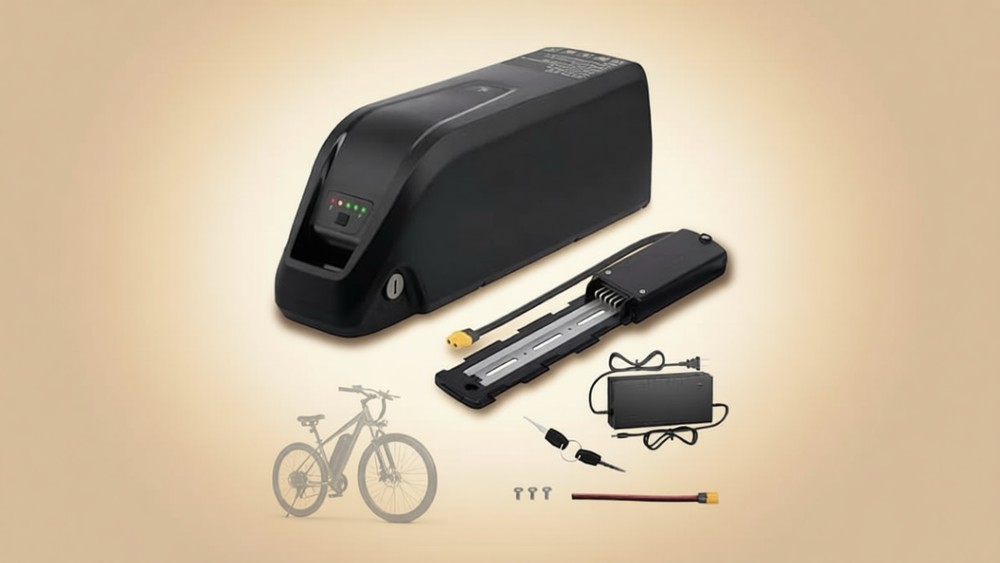
Budget 36V batteries compete on a short list: amps on the protection board, a charger in the box, maybe a USB port. The Meaycoty 36V 15Ah ticked every box the category had - 40A board, 42V 2A charger, keyed lock, LED display, USB output, XT60 pigtail - and priced the whole checklist at 159.99.
What the checklist can't tell you is what the energy costs. Our comparison data tracks 324 packs by price per watt-hour, and on that measure this pack sat in the pricier third, 0.02 per watt-hour above a same-board sibling and behind Meaycoty's own 48V rung.
The features were priced in full and the evidence never arrived: zero ratings when we first wrote this up, and the listing is gone now anyway.
The recorded data still says plenty, though: the board arithmetic against the 1800W title claim, a charge time our July review got wrong, a range band that needs correcting, and how to match a replacement if your bike still wants a 5-pin, XT60 pack.
The verdict is plainer than the listing was. This was a feature-stacked pack sold at a feature-stacked price, with a board at the top of the budget 36V class and no buyer record whatsoever. The old review called it a value pick, and our own data disagrees with that now.
What follows is what the recorded listing supports, and the replacement rules you'd need if your bike is still wired for this shape of pack.
The family ladder priced energy by capacity
Meaycoty sold five packs on Amazon, and lining them up by price per watt-hour shows a pattern. The two 36V 10.4Ah twins cost 139.99 for 374.4Wh, which is 0.37 per watt-hour. This 15Ah rung cost 159.99 for 540Wh, or 0.30.
The 48V 20Ah sibling cost 269.99 for 960Wh, or 0.28. The 52V 20Ah rung closed the ladder at 339.99 for 1040Wh, or 0.33. Bigger packs delivered cheaper energy right up to the 52V oddity, and the small 36V rungs were the worst deals in the family.
Against the whole market the position is less kind. On our comparison table this pack sits in the pricier third of the 324 rows we track, and the same-board Maxbetip 36V 15.6Ah cost 0.02 less per watt-hour for nearly the same spec.
The difference bought the checklist: USB output, LED display, keyed lock, XT60 pigtail, charger and two keys in the box. That's a real bundle, and it's fair to pay something for it. The question the record can't answer is whether it was worth 0.02 per watt-hour, because no buyer ever scored the pack.
The board arithmetic, briefly
Forty amps at 36 volts is 1440W of continuous output, and the title's 1800W top would draw 50A at this voltage - a quarter past the board.
1500W draws about 41.7A, which just misses. 1200W and 1000W fit with room to spare, and those are the motors this pack actually suited. The Maxbetip sibling review runs this same fault class in full, because that pack carried the identical board and an identical claim.
There's a second ceiling under the first. Per the connector guide at BatteryDX, a 5-pin Hailong-style baseplate tops out around 25 to 30A, which is 900 to 1080W at 36V. The board could feed 1440W, but the mount under it was rated for less.
Meaycoty's own 48V 20Ah pack led with this exact problem, so it gets one paragraph here and no more.
What the checklist actually cost, in hours
The 42V 2A charger was real and in the box, with two keys for the lock. The charge time was not what the earlier article said.
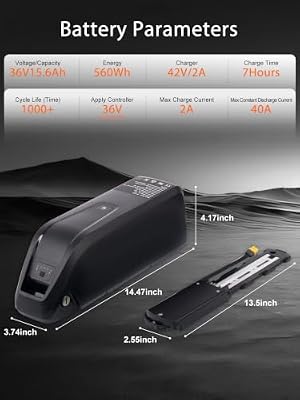
Fifteen amp-hours at 2A is a 7.5-hour floor from empty, before the balance tail, and 7.8 if the variant code's 15.6Ah is the true capacity. The old article claimed 4 to 5 hours, which fails the arithmetic by nearly half. This was an overnight charger, the same class of bundling every budget pack ships with.
That capacity question runs through the whole record, by the way. The headline said 15Ah, which is 540Wh and the figure our data row carries. The variant code said 15.6AH, which would be 561.6Wh.
The listing died with the question open, and nothing else in the recorded data settles it.
Range, corrected
The listing band ran from 31 to 112 miles. The bottom of that band is reachable: 31 miles from 540Wh is about 17 watt-hours per mile, which is light-pedal-assist territory. The top is fantasy.
A hundred and twelve miles would take 4.8 watt-hours per mile, a figure no real bike approaches - less than a third of what a hub drive consumes with the pedals helping.
Against the category anchor, a 540Wh 36V pack delivers about 17 to 22 miles on throttle and 28 to 36 with light pedal assist. The July review estimated 25 to 40 for moderate assist, which straddles generously at both ends. If you're sizing a replacement for the same bike, plan around the 28-to-36 figure for pedaled riding and treat anything above 40 as marketing.
Matching a replacement
Baseplate, pins and plug
The recorded fit is a 5-pin base with an XT60 discharge outlet, and the box included the mounting plate and a male XT60 pigtail. Match the pin count and spacing first - 4-pin and 5-pin baseplates don't interchange - then the plug. The XT60 itself is never the limit, since it's rated around 60A, well above anything a 36V board asks of it.
Charger and slot
Any replacement must charge at 42V full, which is 10 cells in series at 4.2V.
The recorded case measured 14.47 x 3.74 x 4.17 inches and weighed about 7.78 pounds, so measure the slot and expect a pack in that weight class. A 42V replacement charger is a cheap part if the bundled one ever dies. The USB output carried one quirk worth checking on any replacement: a USB port needs a step-down converter inside the case, and that standby circuit drains the pack between rides unless the design switches it off.

FAQ: the checklist, the record and the replacement
Was the missing rating record a dealbreaker? It was the whole problem. The pack priced a full feature bundle with zero ratings behind it, and the dead listing froze the count there. Features are checkable against a spec sheet, but "is the pack any good" needed buyers, and none ever spoke up.
Could this pack really run an 1800W motor? No. The board tops at 1440W continuous, and 1800W would draw 50A at 36 volts. Set the board aside and the 5-pin baseplate class still carries only about 25 to 30A. Motors from 250W to about 1200W fit the hardware honestly.
How long did the included charger take? Around 7.5 hours from empty at 2A on the 15Ah capacity, closer to 7.8 at 15.6Ah. The first review's 4-to-5-hour claim doesn't survive its own arithmetic.
What replaces a 5-pin, XT60 pack like this? Match four things in order: the baseplate pin count and spacing, the XT60 discharge plug, a 42V charger, and the slot near 14.47 x 3.74 x 4.17 inches. The fit is the first column to check on any listing, before the price or the feature list.
Why did the old write-up call this a value pick? It priced the checklist, not the energy. On board amps and bundled accessories the pack led the budget 36V class. On price per watt-hour it sat in the pricier third of our data, behind its own 48V sibling and behind the same-board Maxbetip. Both readings were true, and they measured different things.
If your bike still wants a 5-pin, XT60 36V pack, shop the fit first and the record second - the smaller Meaycoty rungs show what the family's small-capacity pricing looked like, and our review archive covers the whole ladder. The checklist approach to buying hasn't changed: count the features, then divide the price by the watt-hours and see which number the seller really wants you to look at.