A 36V battery rarely gets bought on ambition. Most riders in that voltage pick a 500W to 750W motor, and almost every pack on the shelf answers with a 25A to 30A board. The Maxbetip 36V 15.6Ah made a different promise: 40 amps of continuous discharge in a standard four-pin Hailong case, at 159.99 for 561.6Wh.
That promise is why the pack is worth reading about even now. Forty amps at 36 volts is 1440W of continuous output, and that's more headroom than most 36V builds use. It sat well clear of the usual budget boards.
The listing has since vanished from Amazon, so everything below comes from the recorded capture rather than a live page.
Where the claims and the arithmetic meet is where it gets interesting. The title said 0-1800W motors, and the math puts that claim about 25 percent past the board. One claim holds, unusually for listings like this one: the charge time.
What doesn't hold is the evidence, because two five-star ratings with no written words behind them is close to no record at all.
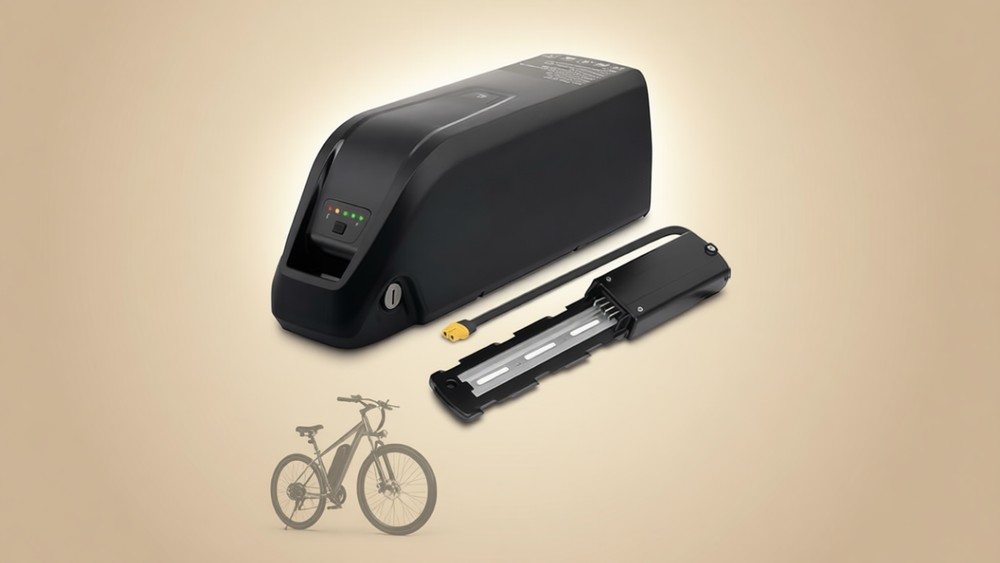
A 36V pack sold on its amps
Our comparison data tracks 324 packs by price per watt-hour, and this one sat close to the middle of that table. 159.99 for 561.6Wh works out to 0.28 per watt-hour, which is an ordinary row and not a bargain. The exact position renders in the specs box on our comparison table, and nothing about the price was ever the reason to notice this pack.
The reason was the board. Most 36V packs in this class run a 25A to 30A BMS, and the old article framed its buyer as someone with a 500W to 750W motor and a 35-40A controller that those boards would not feed. Forty amps answered that.
The pitch was headroom, not capacity or price, and everything else in the listing leaned on it.
That's also what makes the pack hard to replace today. Anyone shopping that same spec now is looking for 36V listings with a 40A-class board, and the board claim is exactly the kind of number a dead listing can't be held to anymore.
What 40A actually buys
Forty amps at 36 volts is 1440W of continuous output, and both recorded motor claims fail against it.
A 1500W motor draws about 41.7A continuously at this voltage, which is past the board. The title's 0-1800W top would draw 50A, a full quarter past the rating. Even the spec box disagreed with the title, promising 100W to 1500W while the headline sold 0-1800W.
Plan the build around what the board can feed, not what the title said. A 750W motor draws about 20.8A and leaves the board with room to spare. A 1000W motor draws about 27.8A and still fits.
Past that, the BMS cuts output under sustained load, and it will do so on a climb exactly when you'd rather it didn't.
The connector question
The case used a four-pin Hailong base, and the connector families for those bases are documented at 20-25A by parts sellers. That sits below the 40A board on paper. The capture never recorded which discharge connector the pack actually shipped with beyond the XT60 mention, so there's no way to know whether the pins or the board set the real ceiling.
Anyone buying a similar high-amp 36V pack should ask the seller what the full discharge path is rated for, because the weakest link is the one that heats.
The 1000-cycle claim
The listing claimed 80 percent capacity retention after 1000 cycles. Standard lithium-ion cells manage 400 to 1,200 full cycles before they fade to about that level, according to the Wikipedia lithium-ion battery entry, so the claim sits inside the top of the documented band rather than beyond it. It's an optimistic number, not an impossible one, and without a cell brand on record there was never any way to check it.
Fit, lock, and the rest of the recorded box
The recorded package was complete by budget-pack standards. A mounting plate came in the box with an XT60 discharge connector and two keys. The case is the standard Hailong shell with a four-pin base, so it docks into the same downtube mounts as any comparable pack, and the first check for a replacement buyer is the size of the battery compartment against the case.
The features list read like a commuter spec: a four-bar LED charge indicator, a safety lock, a power disconnect switch so the pack doesn't drain itself on the rack between rides, and a USB outlet inside the case for charging a phone. Maxbetip sold the same shell in 48V and 52V variants under the same listing family, and our Maxbetip 48V 15.6Ah review covers the same case at the higher voltage.

Range and the charge math that holds
At 561.6Wh, the pack carries a bit more than half the 0.96 kWh anchor in the em3ev 48V battery guide, which scales to roughly 17 to 23 miles on throttle alone and 29 to 38 with a light pedal assist.
The old article promised 30 to 40 miles on pedal assist, which starts a mile inside the scaled band and tops it by two. Hills, cold, tire pressure and assist level all pull the real number toward the bottom of each band, and the em3ev 36V upgrade guide lists the usual variables.
The charge claim survives, and that's rare. The included charger printed 42V at 2A, and 15.6 amp-hours at 2A takes 7.8 hours from empty, which lands inside the recorded seven-to-eight-hour claim. The instructions said to connect the charger to the battery first and the wall second, which is the gentle order for the cells.
A buyer who wants faster turnaround needs a higher-amperage 42V charger, and the pack's 15.6Ah tank gives room for one.
A record too thin to trust
Two buyers rated the pack, both at five stars, and neither left words behind. That's the entire owner record this pack will ever have, because the listing is gone and our dataset row froze without a rating figure at all. Five stars from two people is the start of a curve, not a verdict on it.
What a buyer of a similar pack can still do is what the record can't.
Meter the pack on arrival at full charge, and again after a known distance, before the return window closes. Ask the seller for the board amperage and the connector rating in writing. The recorded warranty terms were three months for returns and twelve months on parts, which is the budget standard, and a current 36V listing should be held to better than silence on both.

Frequently Asked Questions
Can it run a 1500W motor?
Not on continuous draw. A 1500W motor pulls about 41.7A at 36V and the board is rated 40A. A 1000W motor draws about 27.8A and runs with margin.
What about the 1800W claim in the title?
It fails the arithmetic by about 25 percent, since 1800W at 36V would draw 50A. The spec box's own 1500W top also sits past the board. Treat 1440W as the honest ceiling.
How long does a full charge take?
About 7.8 hours at the included 2A charger, which matches the recorded seven-to-eight-hour claim. The order matters: charger to battery first, then to the wall.
Will it fit my ebike?
It uses the standard Hailong case with a four-pin base. Measure your battery compartment and check that your mount accepts a four-pin dock before ordering any replacement.
What did buyers say about it?
Two five-star ratings with no written reviews. There's no owner experience on record to draw on, which is why the checks above matter more for this class of pack than most.
Is the pack still available?
No, the listing is gone from Amazon. Similar 36V packs with high-amperage boards appear in current listings, and each one should be checked against the arithmetic above before it's trusted.