Small 36V packs serve a narrow rider: short commutes, a spare for a long-day bike, or a lightweight build where a big tank makes no sense. The buyer already knows the range will be modest. What surprises people is the price per unit of energy, which runs backwards at the small end of most families.
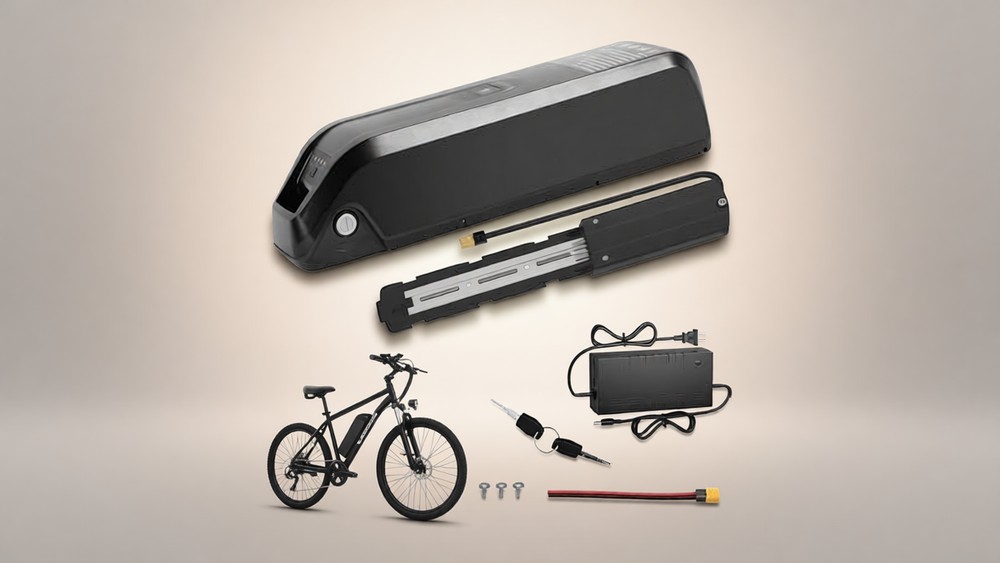
Meaycoty's 36V 10.4Ah made that surprise obvious. Its own brand sold a 15Ah rung for about twenty more, and the bigger pack cost a fifth less per watt-hour. The small pack bought a checklist instead: USB output, a power switch, a keyed lock, a charge display, and a 30-amp board on a 4-pin base.
The listing is dead now, so the decision is about replacements, not purchases. What matters now is where the value went, what the board could and could not push through that baseplate, and the honest range a 374-watt-hour tank delivers.
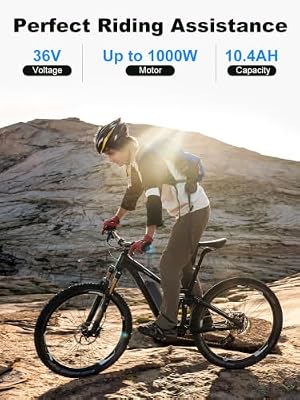
The value story is the honest place to start. Meaycoty's 36V 10.4Ah pack sold at 139.99 for a rated 374.4 watt-hours, which is 0.37 per watt-hour and among the most expensive positions in our whole comparison table.
The 15Ah Meaycoty rung cost 159.99 for 540 watt-hours, twenty more than this pack for 44 percent more energy. The old pitch called this pack very competitively priced. Our data says the opposite, and the brand's own ladder is the clearest evidence.
Where the value went
A small tank does not price linearly, and this family proves it. The case, the board, the lock, the USB module and the packaging cost roughly the same whether the pack carries 374 watt-hours or 540.
Spread those fixed costs over a smaller tank and the price per unit of energy climbs, which is how the smallest rung ended up at 0.37 while its 15Ah sibling sat at 0.30 and the 48V 20Ah rung at 0.28.
That arithmetic is not a scam, it is how small packs work everywhere. What it means for a buyer is specific: you pay a premium for compactness and for the feature checklist, not for energy. A rider who can physically fit the 15Ah rung pays a fifth less per watt-hour for the same brand, the same baseplate language and the same checklist.
The one honest defense of the small rung is weight and size. Our records never captured dimensions for either pack, so the size difference cannot be quantified, only presumed. Anyone choosing between the two rungs today is choosing blind on that axis, and the listings that could have answered are gone.
The board, the baseplate, and the 750-watt claim
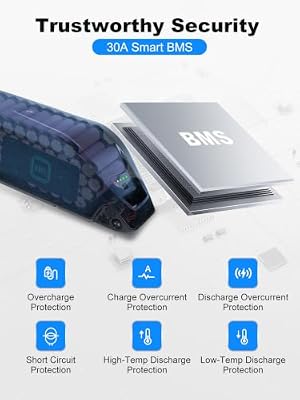
The recorded board rating is 30 amps. At 36V that is 1080 watts of continuous ceiling.
The title claimed motors from 0 to 750W, and 750W at 36V draws about 20.8 amps, roughly 69 percent of the board with about 9 amps in reserve. On paper, the claim fits with room to spare.
The baseplate is where the room shrinks. Per batterydex's connector guide, a 4-pin Hailong-style baseplate class tops out near 20 to 25 amps, which is 720 to 900 watts at 36V. This pack's 750W claim sits inside that class, so the claim itself was sound.
But the board's full 1080W ceiling was never safely usable through a 4-pin mount, and anyone who pushed a big motor to the board's limit was drawing at or past the class top.
That is the inverse of a fault documented in the maxbetip 48V review, which carried a 1500W title claim that outran its own 4-pin mount class. Meaycoty's claim stayed inside it. The lesson cuts both ways - read the baseplate class and the board rating together, because either one can be the real limit.
Range on a 374-watt-hour tank
The em3ev 36V guide's capacity table puts a standard 36V 10Ah rung at about 360 watt-hours, so this pack sat just above the smallest rung in the table. Scaling from the 48V range anchor, which measures roughly 24 to 31 watt-hours per mile on throttle and 15 to 19 with light pedal assist, a 374.4 watt-hour tank delivers about 12 to 16 miles on throttle alone and about 20 to 25 with light pedaling.
The old write-up gave 15 to 25 miles for moderate assistance and called 18 to 22 realistic. Both sit between the two regimes: the throttle regime never appeared, and the top of the old band only matches the top of the pedal-assist range.
A 10-mile round trip with charging at home fits comfortably. Anything past about 20 miles needs pedaling effort, not the throttle.
Charging follows the 10S math: 36V nominal means 10 cells in series and a charger stating 42V full-charge output. No charger amp rating was ever recorded for this pack, and the old text gave no charge time. The conditional floor: at a typical 2 amps, 10.4Ah needs about five and a quarter hours from empty before the balance tail.
The checklist you were paying for
The recorded component list is long for a pack this size: 30A board with cell balancing, temperature monitoring, fuse protection and reverse polarity protection, a waterproof shell, a keyed safety lock, a charge-level display on the case, a USB output, and a power switch that kills standby drain. Most of that list is standard. Two items are not.
The power switch is the uncommon one. Budget packs usually leak a small standby current through the board in storage, and a pack that sits for weeks arrives weaker than it left. A switch that isolates the drain is a genuine differentiator at this price, and it is the feature we would carry into a replacement search.
The USB output matters for the same rider it always does: the one whose GPS and navigation live on a phone. The warranty terms were recorded as one year of free repairs plus a three-month return window on quality issues. Those are the listing's own claims, carried forward as recorded, not verified policy - the listing is gone, so the terms went with it.
Buying a replacement today
Start with the mount, because that is the constraint that kills most replacements. Our data records this pack's form factor as unclassified while the old write-up called it silver fish style and the title's variant code reads 4-PIN, which is Hailong-case language. What the case actually was cannot be answered anymore - look at the tray on the bike and measure it.
Then match four things in order: the tray dimensions and mount bosses, the 4-pin baseplate pin count and spacing (4-pin and 5-pin do not interchange), the discharge connector and charge port, and a 42V charger for any 10S 36V pack. The checklist features are easy to find on current packs. The fit items are not.
One more fact for the search: our dataset carries this same pack under a second ASIN, covered in the Meaycoty 36V 10Ah review. Two listings, one product. If a seller offers either ASIN today, it is the same pack behind both, and the same value arithmetic applies to both.
Frequently Asked Questions
Was the Meaycoty 36V 10.4Ah a good deal?
No. At 0.37 per watt-hour it sat among the most expensive packs we track, and the brand's own 15Ah rung delivered 44 percent more energy for twenty more, at a fifth less per unit. The premium bought compactness and the feature checklist, not value.
What motors could it run?
The title claimed 0 to 750W and the recorded 30A board could supply 1080W at 36V, so 750W drew about 20.8 amps with reserve to spare. The 4-pin baseplate class tops near 20 to 25 amps, so the practical ceiling sat near 900W regardless of the board.
How far could it go on a charge?
About 12 to 16 miles on throttle alone and about 20 to 25 with light pedal assist, scaled from standard consumption figures for a 374.4 watt-hour pack. Hills, cold and cargo pull both numbers down.
Did it include a charger?
The old text never said, and no charger amp rating was ever recorded for the pack. Any replacement charger must state 42V for a 10S 36V pack. Budget accordingly, because some current listings exclude the charger and the cost surprises at checkout.
Is it still available?
No. The listing is gone from Amazon. The silver fish and small-pack section of our comparison table shows live 36V alternatives sorted by price per watt-hour, and the tagged search links above point at current equivalents.