A 40A battery management board on a pack selling at 0.25 per watt-hour sounds like the budget deal of the year, and for a while in 2026 the Maxbetip 48V 15.6Ah pack looked like exactly that. That catch was printed in the title, four characters long.
The pack mounted on a 4PIN base, and a 4-pin baseplate tops out near 25A, so the board's full output never had a path through the mount it shipped on.
Now the listing has died, and the two questions a buyer would have asked the seller are frozen: was it the 17.5Ah the headline named or the 15.6Ah in the variant code, and did the board ever feed a motor as big as the title promised? What survives is the record, and the record is worth reading before you buy any pack in this class.
The 40A figure was real but capped, the charge estimates failed their own arithmetic, and the range numbers need rebuilding from the per-mile anchor.
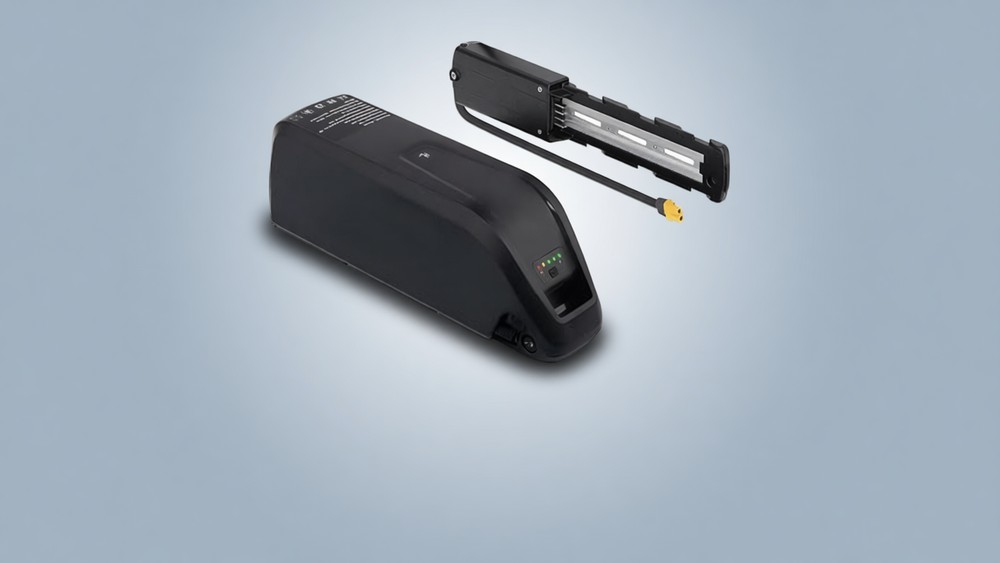
The board was real, the base was the limit
Maxbetip built this pack around the biggest number a budget board could print in 2026: 40A of continuous discharge, which at 48V is 1920W of sustained output. The title claimed the pack suits motors from 0 to 1500W, and 1500W at 48V draws 31.25A continuously, leaving 8.75A or about 22 percent of the board in reserve for hills and acceleration.
The old review went further, naming 100W to 1800W motors in its questions section, and 1800W is 37.5A, which still fits the board. The two recorded claims disagree by 300W, and the dead page can't settle which one the seller meant.
Disagreements like that one ran through the whole Maxbetip line. The 36V Maxbetip sibling claimed 0-1800W in its title while its own spec box said 100W to 1500W, the same shape of contradiction one size down. Either reading ends at the same place, and the place is the base.
The pack mounted on a 4PIN base, and per batterydex's connector guide the 4-pin Hailong-style baseplate class tops out near 20-25A. That is 960-1200W at 48V, so the practical ceiling sat at or below 1200W no matter what the board allowed. A 1500W motor draws 31.25A, which is 25 to 56 percent past what the base class carries.
The XT60 discharge connector is rated around 60A, so the plug was never the bottleneck - the baseplate was.
A 1000W motor draws about 20.8A and sat inside both the board and the base class with room to spare.
A 750W motor draws 15.6A and never came close to any limit here. The 40A board was real, and it was also unreachable through the mount it shipped on, which is the same fault family we led with on the meaycoty 48V 20Ah pack, a 50A board on the same class of base.
What 0.25 per watt-hour cost
At 189.99 for 748.8Wh, the pack sits close to the middle of the 324 packs in our comparison table, which is a position the old review got wrong. It called the price among the least expensive per watt hour available, and the data puts it mid-table, cheap next to a brand name, dear next to the generics.
Against its own 36V sibling
The family pricing is the interesting part. The 36V Maxbetip sold 561.6Wh for 159.99, which works out to 0.28 per watt-hour, so the 48V rung priced the same amp-hour class about 11 percent cheaper per unit of energy. Bigger packs pricing cheaper per unit is the normal shape of our data, and it means a buyer with a 48V bike got the better half of the Maxbetip ladder.
Charging, corrected
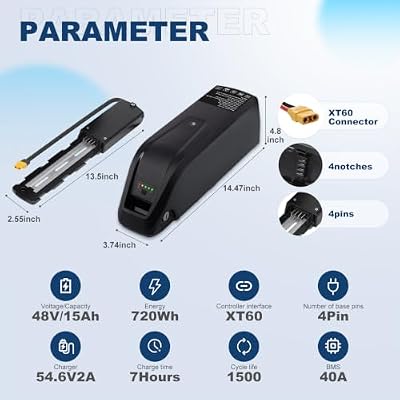
The included charger is a 54.6V 2A unit, and the July review claimed a full charge in about 5 hours.
The arithmetic fails its own floor: 15.6Ah at 2A is 7.8 hours from empty, and the 17.5Ah headline reading is 8.75 hours, both before the tail while the cells even out. The old questions section compounded it with a claim that third-party 5A chargers cut the time to about 2 hours, and 15.6Ah at 5A is 3.1 hours minimum.
The manufacturer's cycle line - 80 percent capacity retained after 1000 cycles - never published a test basis. Lithium-ion cells typically deliver somewhere between 400 and 1,200 full cycles before capacity drops to about 80 percent, the band Wikipedia's lithium-ion entry tracks, so 1000 sits near the top of what the class does at all. Treat it as marketing.
Range, rebuilt from the anchor
Both old range figures need rebuilding. The review suggested 15 to 25 miles of commuting and its questions section offered 25 to 35, and both bands grew out of a 20-25Wh-per-mile consumption figure, which is a light-pedal-assist rate wearing a general label.
The em3ev 48V guide puts hub-drive draw at 24-31Wh per mile on throttle and 15-19 on light pedal assist.
From 748.8Wh that scales to about 23-31 miles on throttle and about 39-51 pedaling lightly. If the pack was really the 17.5Ah headline version, the same rates give about 27-35 and 44-56. The old 25-35 band sits between the two regimes and matches neither.
Replacing a pack nobody measured
Dimensions and weight never made it into any record of this pack, so tray matching starts and ends with the old pack on the bike. Measure it, then match the 4-pin baseplate's pin count and spacing, the XT60 discharge connector, the charge port, and finally a charger stating 54.6V output, because a 48V pack is 13 cells in series at 4.2V each.
The convenience kit - the LED charge bar, the keyed lock, the standby switch that cuts drain in storage - is nice to have and irrelevant to fit. What matters is that the listing carried zero reviews when we wrote about it in July 2026, so the 40A claim never collected a single piece of buyer evidence before the page died.
Search 48V 15.6Ah packs with 4-pin bases on Amazon for what's currently listed, and meter anything secondhand before trusting it. More candidates are in the review archive.
FAQ: the board, the base and the frozen record
Was it 17.5Ah or 15.6Ah?
The headline said 17.5Ah and the variant code said 48V15.6AH, which is 840Wh against 748.8Wh, about a 12 percent gap. Nothing ever settled it, and the death of the listing makes the question permanent. Plan range and charge times off the 15.6Ah figure and treat anything more as a bonus.
Could it actually run a 1500W motor?
The board had the headroom, 31.25A against 40, but the 4-pin baseplate class tops out around 20-25A, so the mount rather than the board set the real ceiling near 1200W. A 1000W motor sat comfortably inside both.
How long did a full charge take?
7.8 hours minimum at 2A for the 15.6Ah reading, 8.75 for the 17.5Ah one, plus the tail while the cells even out. The old 5-hour claim fails the floor by more than a third.
What range should it have delivered?
About 23-31 miles on throttle and 39-51 on light pedal assist at 748.8Wh, using the em3ev per-mile figures for 48V hub drives. Cold weather, hills and a heavy throttle hand pull both numbers down.
What replaces it?
A pack you measure for. Tray size first, then 4-pin baseplate spacing, then the discharge connector and charge port, then a 54.6V charger. Search 48V replacement packs on Amazon and compare against the full table before spending.