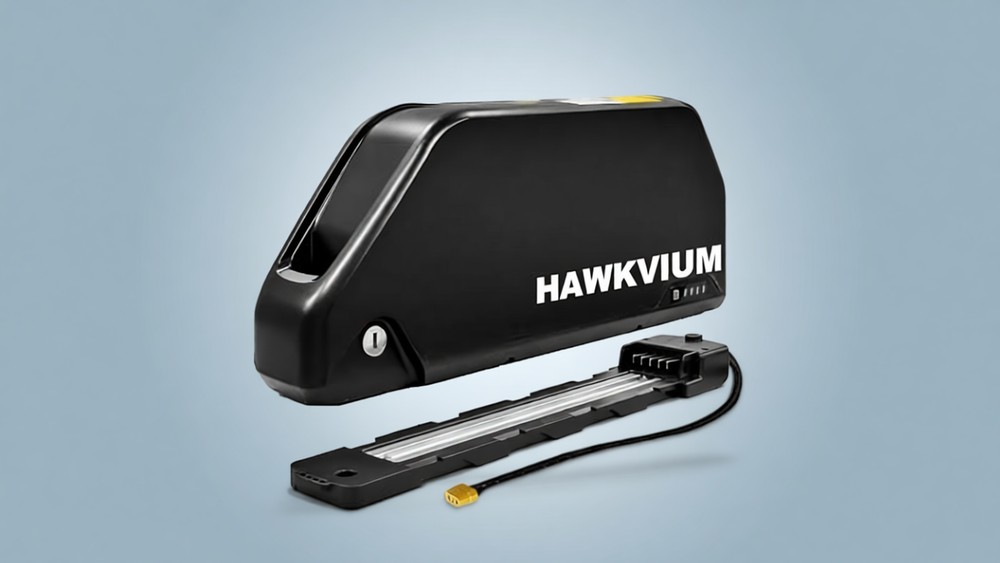
This 52V 25Ah pack is nearly alone in the budget band with its SGS UL2271 certified rating at about 23 cents per Wh, while the 60A BMS makes the 3000W motor claim arithmetic-credible. Since the owner-evidence pool is near zero with only six ratings, the buy rests on the certificate. Buyers who ask for the certificate copy before ordering win here.
Why the UL2271 claim is the whole decision
The UL2271 mark is the only reason to pay mid-table money for this pack, because almost no budget-priced 52V units carry this specific safety rating. While the UL2271 standard covers the electrical safety of the battery, the certificate applies to the pack and not the whole bike. You're betting that the cells inside won't fail or catch fire when you push them to the limit.
You should check this claim by asking the seller which standard they used, which lab did the work, and requesting a copy of the certificate before you send money. A seller who has the real document will answer fast, but a vague or slow response is a sign that the claim is fake. You also need to get the warranty terms in writing so you're protected if the cells wear out before five years are up.
The current review pool is very thin with only six ratings total, and four of the recent texts are unverified purchases with flat wording that offers almost zero evidence value. That leaves the certificate doing all the work, which is a different kind of evidence rather than a weaker one: it says how the design behaved under lab abuse, where reviews would say how the pack behaves after a season. You can't rely on these vague comments to know if the hardware holds up under real riding. If the seller won't provide proof, you're taking a risk that the certificate is supposed to remove.
The 60A BMS and the 3000W claim
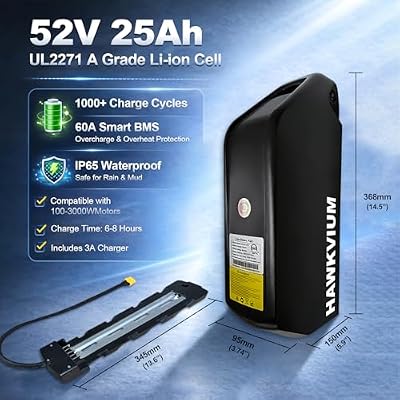
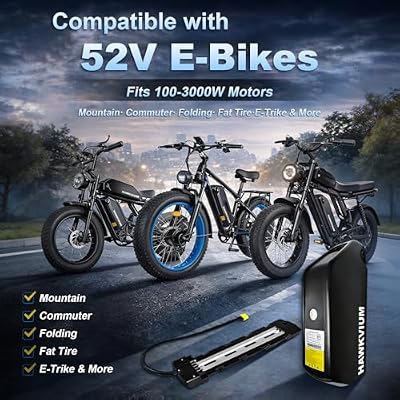
The 60A BMS inside this pack supports a steady draw of about 3120W, which makes the 3000W motor claim seem real since most other 52V packs ship 30A or 40A boards. This extra headroom means you won't cut out when you push the bike up a steep hill. It comes with XT60 and XT90 cables, so you can wire up single or dual-motor setups without needing extra parts.
At 1300Wh, this sits at the top of the common 52V band, and you're trading about a kilo of extra weight against the 20Ah version. It's a heavy brick to carry, but the extra charge helps you stay out for longer rides. You get the most energy possible for this voltage.
The listing warns you that the 14.49-inch length might not fit, so you should measure your battery space before you buy to avoid the hassle of a return. If it doesn't slide in, you're stuck with a heavy box you can't use. Check the space twice.
What 1300Wh actually buys you in miles
Since the pack holds 1300Wh but you only get about 85% of that charge, you're really working with 1105 usable watt-hours when you head out on the road. If you use pedal assist at 15-25 Wh per mile, you'll see between 44 and 74 miles, but relying on the throttle drops that range down to 28-37 miles. These numbers shift fast if you're climbing steep hills, hauling weight, or riding in the cold, which drains cells faster.
Winter rides can cut the whole band by ten to thirty percent, so treat the low end as your real plan when the temperature drops. A worn pack fades the same way, just slower, which is why the range you actually see is the number to track.
The cells claim to last over 1000 cycles while keeping 80% capacity after 800, which is better than the usual industry band but still hard to verify without real-time telemetry. Because there isn't a smart-BMS app to track cell health, you won't know if the capacity is fading until your total range starts to shrink on long trips. You're essentially betting on the quality of the cells inside since there's no live data to show how they're holding up.
Range comes at a cost in weight because this pack weighs over 13 pounds and takes up a lot of space on the frame. If you don't check the fit before you buy, you might find it doesn't slide into the battery space at all. It's a heavy trade-off for riders who need to go far without stopping to charge.
Who should buy it, and who should spend differently
If you are building a high-power 52V rig with dual motors or a setup pulling over 2000W, this pack fits because the 60A BMS handles those heavy loads without tripping. You should buy it if you will actually check the certificate, because you want safety you can check without paying extra for a smart BMS app. It is a solid choice for heavy builds.
Skip it if you ride a small frame that can't take a 14.5-inch pack, or if you want a cheap 20Ah pack and don't care about safety ratings. The Fryzonix 52V 20Ah is the cheaper uncertified sibling in the same voltage class, and the BtrPower 48V/52V 15Ah LiFePO4 is the safe-chemistry alternative if cycle life matters more than raw capacity. Compare per-Wh on the battery table before you pick, and check the current Hawkvium listing for the live price.
Frequently Asked Questions
What does UL2271 mean?
This standard covers the electrical safety of the battery itself rather than the entire electrical system of the bike. The SGS lab performs the tests that verify the pack meets these safety tests.
How do I check the certificate?
You should ask the seller for the specific standard, the testing lab, and a digital copy of the certificate to confirm the claim. A quick, clear response helps you filter out sellers you cannot trust before you spend any money.
Is 3000W realistic?
Since the 60A BMS supports a steady draw of about 3120W, the claim for a 3000W motor is mathematically credible. This hardware can handle the high power demands required for steep climbs.
How far per charge?
You can expect between 44 and 74 miles with pedal assist, or 28 to 37 miles if you rely heavily on throttle. These numbers are based on usable capacity and standard energy use during riding.
Will it fit my bike?
The battery measures 14.49 inches long by 3.54 inches wide and 5.94 inches high, weighing 13.23 lbs. Measure your battery space before ordering to avoid the hassle of a return.