Mars 1.0 owners shopping for a replacement battery run into a shelf with exactly one obvious answer on it. Yose Power builds a DF-line pack for this bike, it carries the right mount interface, and almost nobody else bothers. That makes the decision look simple until you read the listing closely and find the charger missing from it.
The missing charger turns out to be the most instructive thing about this listing. The bullet promises a full charge in 7 hours and states in the same breath that no charger ships. Whether that matters depends on what is already in your garage, and the buyer record answers that question in detail.
This article reads the listing, the gallery's parameter cards, and both written texts in the record. The record is tiny, six ratings, so this is a buying guide built on the listing's own numbers as much as on owner experience.
The Yose Power 48V 13Ah Mars battery sells at 299.99, about 48 cents per watt-hour. That is among the most expensive positions in our comparison table, though it undercuts the 36V Cityscape sibling we reviewed alongside it, and the live figure renders in the specs box below.
Six people have rated it at 4.1. The histogram has no middle: 78 percent five stars, 22 percent one star, and nothing in between, as printed. Two people wrote anything at all, both purchase-badged, and one of the two wrote the most useful text we have read on a Heybike-specific pack this month.
The deep text is an install manual, and it is worth reading in full
One owner has documented the whole swap, and their June 2026 text settles the questions the listing leaves open.
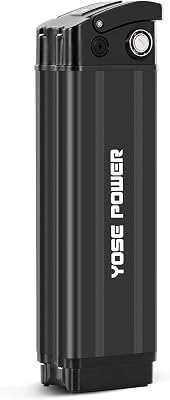
The pack is a perfect replacement for a Mars 1.0. The original Heybike charger matched the ports perfectly. The battery registered on the bike, the charge lights read green, and a quick ride went without problems.
The install detail deserves its own paragraph because it will save somebody a support ticket.
Sliding the pack into the track did nothing. The owner pulled it out slightly, pushed harder, straight on, and it snapped into place. If your first seated attempt feels loose, that is the fix, not a defect.
The same owner left two pieces of advice that have nothing to do with this pack and everything to do with owning one.
Do not toss the old charger just because you are buying a new battery, because if the charger was never the problem, the battery may not be either. And bring lithium batteries indoors when the garage climbs past about 90 degrees, which matches the standard advice about heat and lithium-ion aging.
The one-star in the record is a single line: the battery does not charge, in the owner's own spelling. Six ratings is a small sample, one disappointed buyer is one buyer, and nothing else in the record lets us say more about it than that.
What no charger in the box actually means
The packing card lists a battery pack, a manual, a fuse, a key, and nothing that plugs into a wall. The fuse is a family habit worth noting: the DF pack we reviewed for the Jasion EB5 ships spare fuses too, because the fuse is the part Yose expects to fail.
If your Mars 1.0 still has its original charger, the deep text says it works, and that is the cheapest path. If your charger was the reason you are shopping, buy one at the same time, because the listing will not supply it.
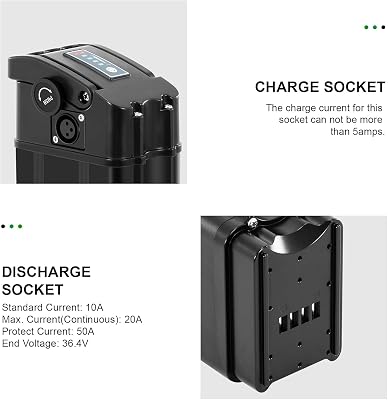
The charging arithmetic is straightforward. The charge socket caps input at 5 amps, and 13 amp-hours at 2 amps is a 6.5-hour floor, so the 7-hour promise describes an ordinary 2-amp charger rather than a fast one. A 5-amp input would cut the wait below 3 hours if the pack accepts it.
The numbers hold, with one rounding and one argument
The title claims 625 watt-hours. Forty-eight volts times 13 amp-hours is 624, so the extra watt-hour is rounding, and for once the rounding favors the buyer by one unit. The card repeats the 625 figure, and the capacity row in the spec table reads 13 amp-hours correctly, unlike the milliamp-hours error on the sibling listing.
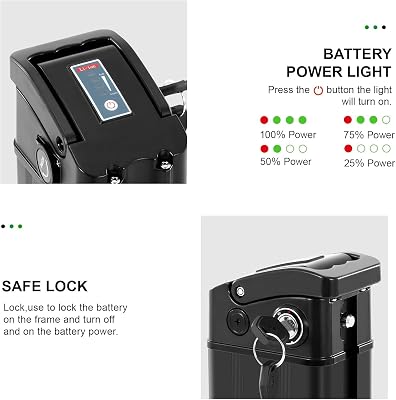
The discharge card matches the family pattern: 10 amps standard, 20 continuous, 50 protect, end voltage 36.4 volts. That end voltage is 13 cells in series at 2.8 volts each, which is the right arithmetic for a 48V pack. Twenty amps at 48 volts is a 960-watt continuous ceiling, comfortably above the 800-watt motor maximum the listing claims, so this listing's power claim is honest rather than aspirational.
The weight closes too. The card says 4.3 kilograms, and 624 watt-hours at that weight is about 0.145 kilowatt-hours per kilogram at pack level, a comfortable reading with room for the case, BMS and wiring. Nothing here asks you to believe in cells that do not exist.
The cycle-life argument carried over from the sibling unchanged. The bullet promises 70 percent capacity after 700 cycles, the card says 1000-plus, and the listing never reconciles them. Treat 700 as the promise.
Buying for a Mars, or not
If your bike is a Mars 1.0 and the pack has died, this is the purpose-built replacement, the install is documented as a snap once you know the trick, and the value line is defensible for a proprietary fit. The one-month quality-issue return window is short, so test-fit on arrival.
If your bike is anything else, this pack is not your product. The title names the Mars 1.0, the range card names the Mars 1.0, and the record's one fitment lesson on the sibling applies with double force here. Riders on standard-frame bikes should compare the table instead, where universal packs sell at half this cost per watt-hour.
Frequently asked questions
Does it come with a charger?
No. The bullet states it, and the packing list card confirms it. The one owner who documented a full install used their original Heybike charger without any adapter or issue.
How far will it go on a charge?
The card claims 155 to 160 kilometres under pedal assist with a 350-watt motor and a 70-kilogram rider, which is an assist-mode figure. Under throttle at a realistic 20 to 25 watt-hours per mile, 624 watt-hours carries you about 25 to 31 miles.
What is the difference between this and the Cityscape pack?
Voltage and bike model. Same 75 by 111 by 390.5 millimetre shell, same 13 amp-hours, same bullet copy word for word. The Cityscape pack is 36 volts, this one is 48, and each is built for one specific Heybike frame.
Is the one-star a warning?
It is one line, battery does not charge, from one of six buyers, with no detail to learn from. The deep five-star text describes a healthy pack that charged overnight and registered correctly. Six ratings cannot settle a reliability question, and we say so rather than pretend either text is decisive.