Yose Power sells so many battery shapes under soup titles that picking one is a puzzle before price ever enters it. Downtube, silver fish, seat tube, folding, across 36V, 48V and 52V, all wearing the same brand name and nearly the same bullet copy.
This article covers one rung of that ladder: the Yose Power 48V 15Ah downtube pack, model row reading AT 48V15Ah with a DPLC110V55 charger, priced at 279.69. That is about 39 cents per watt-hour, which lands among the priciest spots in our comparison table, and the live figure sits in the specs box below.
The brand's own covered rungs price lower per watt-hour, so value is not the reason to land here.
The reason to land here is the record. Twenty ratings and eleven written accounts, every one purchase-badged, and they're about fitment more than they're about battery quality. One of them contradicts the listing's own port claim directly, and that dispute is where this article starts.
The port dispute the listing cannot settle
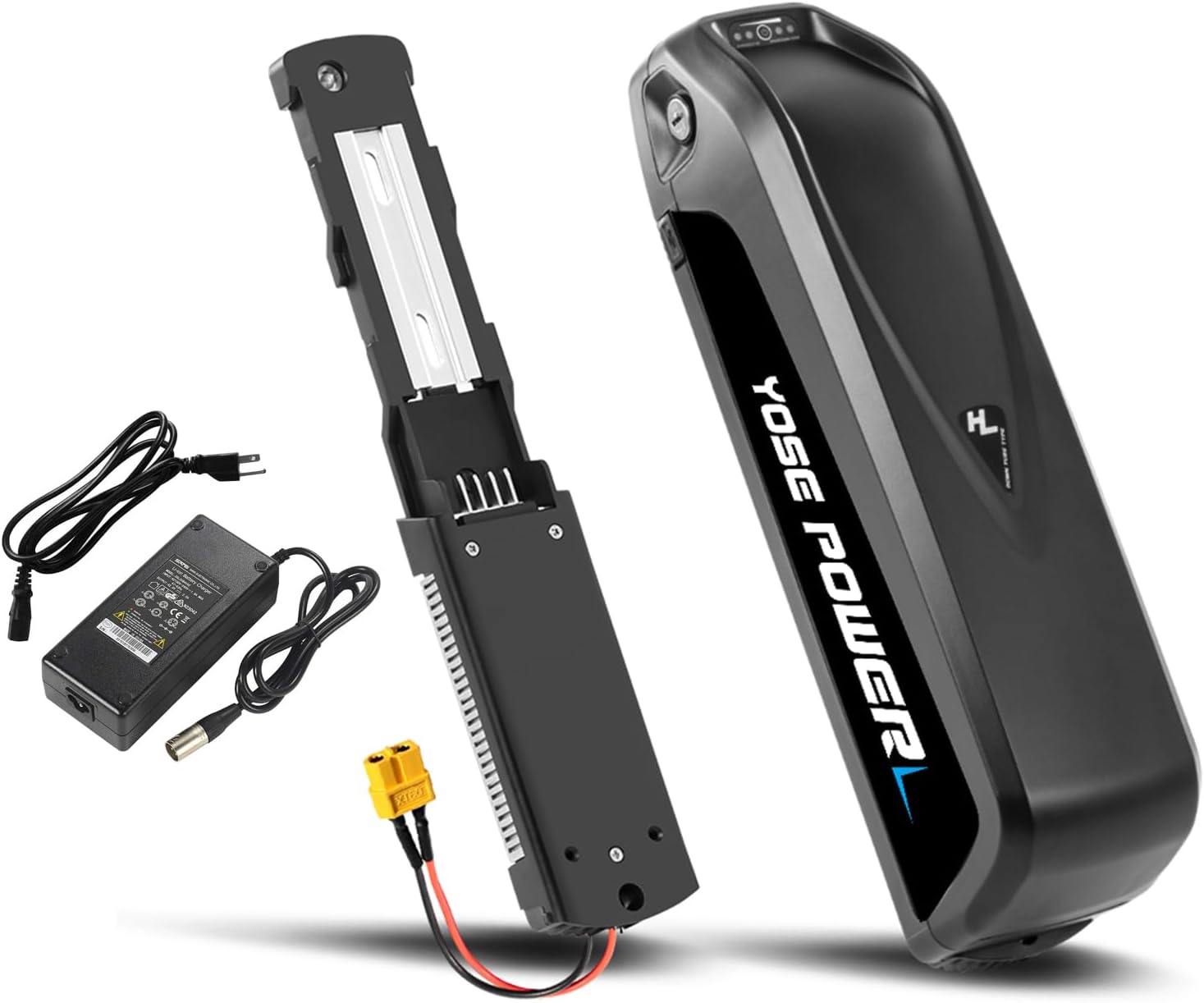
The listing's own ladder names this rung a 4-pins-port pack. A purchase-badged owner writing in April 2025 says otherwise, in an account that has drawn two helpful votes: the battery, in their words, is "not designed with 4 prong contacts". The listing advertised them, and the pack in the box did not have them.
A second owner, writing a year later, supplies the practical version of the same warning. They bought this as a second battery and advise paying attention to the connector on the mount, to make sure the new pack matches the existing battery and mount. Two accounts, a year apart, pointing at the same fault line from both sides.
The honest reading is that this ladder covers packs whose port hardware has changed across rungs or across runs of production, while the page text stayed still.
The model row is the part of the listing that identifies the physical product, so the buying sequence we'd trust is: find the rung by model row, then confirm the port against a photo of your old pack's plug, then pay. Skipping the middle step is what the April 2025 account paid for.
Nothing in the record resolves the dispute. No later owner has written that the port arrived as advertised, and no owner has described the connector that did arrive in detail. The question stays open, and a buyer who needs a specific plug count should treat this listing as unproven on that point.
Cradles that look alike and are not
The most-voted text in the record is an Ancheer owner's upgrade story, and it is the clearest explanation of how this brand family mounts. The owner moved up from a 7.8Ah pack and found the cradles looked almost the same but were not, because the Ancheer cradle carried the ESC built into it.
The plastic shroud and the metal base that housed the ESC turned out to be separate pieces with identical bolt patterns, so the owner transferred parts, built a working cradle, and retired the old battery for good.
That account matters past Ancheer. It shows that with cradle-mounted packs the cradle is a working part, not just a bracket, and that looks prove nothing. A pack can slide into a mount that looks right and still lack the electronics the bike expects to find there.
A recumbent owner has reported the pack working as a Bacchetta replacement, which broadens the fitment picture past the usual mountain-bike crowd.
But the mount itself drew the record's sharpest hardware criticism. An owner mounting the pack horizontally on the water-bottle holes found the plastic cradle so flimsy it wobbled side to side while riding, and secured it with bungee cords to keep the plastic from snapping. That account still recommended the battery, and it reported 40 to 50 miles of riding with a Bafang kit and light pedaling, with charge to spare.
The charger question, and a socket that caps at 5 amps
The charger in the box carries its own model number, DPLC110V55, and a 3-prong plug one owner has described as strange and bulky. Three-prong charging connectors are unusual on e-bike packs in this price band, so a spare charger won't come off a shelf of generic 2-pin units.
The listing never states the charger's amperage, and its two printed charge times point different ways.
Bullet one says 6 to 8 hours to full. The parameter card says 5 hours. The charge socket's own card caps input at 5 amps, which puts the mathematical floor at 3 hours for 15 amp-hours, so both printed times can be met, and the gap between them is the unanswered amperage question.
The same socket does a second job. A card shows it doubling as a USB output at 5 volts and 1 amp for charging a phone, which is a small thing that matters on long rides. The gauge behind it reads in quarter steps: one red light with three green means full, and the green lights drop one at a time through 75, 50 and 25 percent.
What the numbers say
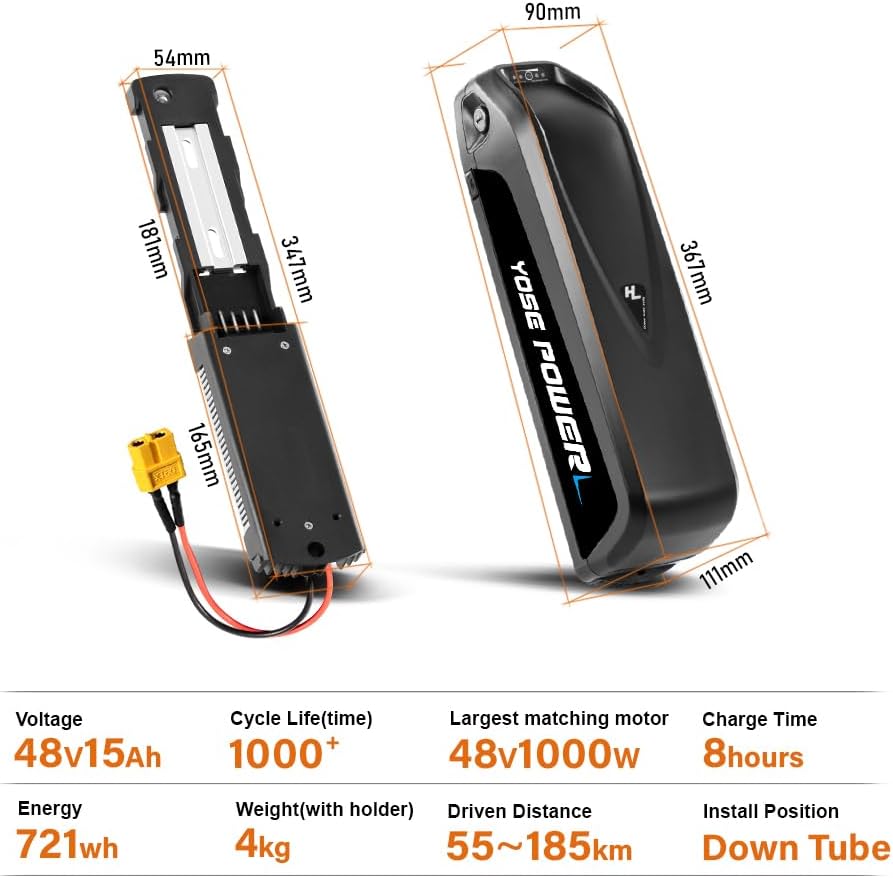
The energy claim is 48 volts times 15 amp-hours, which is 720 watt-hours. The card prints 721, a rounding quirk we note and move past. At 279.69 the price works out to about 39 cents per watt-hour, and we won't soften it: that is a below-average value position, pricier than roughly nine of every ten packs we track, and both covered Yose rungs cost less per watt-hour.
The Yose Power 48V 13Ah downtube, reviewed here, and the silver fish 15.6Ah pack, also reviewed, are the cheaper siblings to compare first.
The power claim holds. A 30A BMS at 48 volts caps draw at 1440 watts, and the largest motor the card matches is 1000 watts, which draws about 21 amps. The claim sits well inside the pack's own ceiling.
The weight rows fight, and both readings stay possible. The card says 4 kilograms with holder, the details table says 6.6 pounds, which is about 3 kilograms, and the boxed item weighs 12 pounds.
At 720 watt-hours, the pack's density lands between 0.18 and 0.24 kilowatt-hours per kilogram, depending on which figure you believe. Mass-produced lithium-ion cells store roughly 0.16 to 0.30 kilowatt-hours per kilogram before case and wiring, so both rows sit inside what chemistry allows. Weigh the pack on arrival and you'll know which row was telling the truth.
Range claims run wide, and the record's own numbers show why. The card's test condition is a 72-kilogram rider on a 350W motor with pedal assist, and it spans 50 to 55 kilometers up to 175 to 180, while the bullet sells 50 to 180.
Published e-bike range figures span about 25 to 75 miles because assist level dominates everything, and the owner report of 40 to 50 miles with light pedaling lands inside the card's band without any stretch. The cycle-life claim of 1000 carries an asterisk with no printed footnote, so treat it as marketing.
Frequently asked questions
Which bikes does this pack fit?
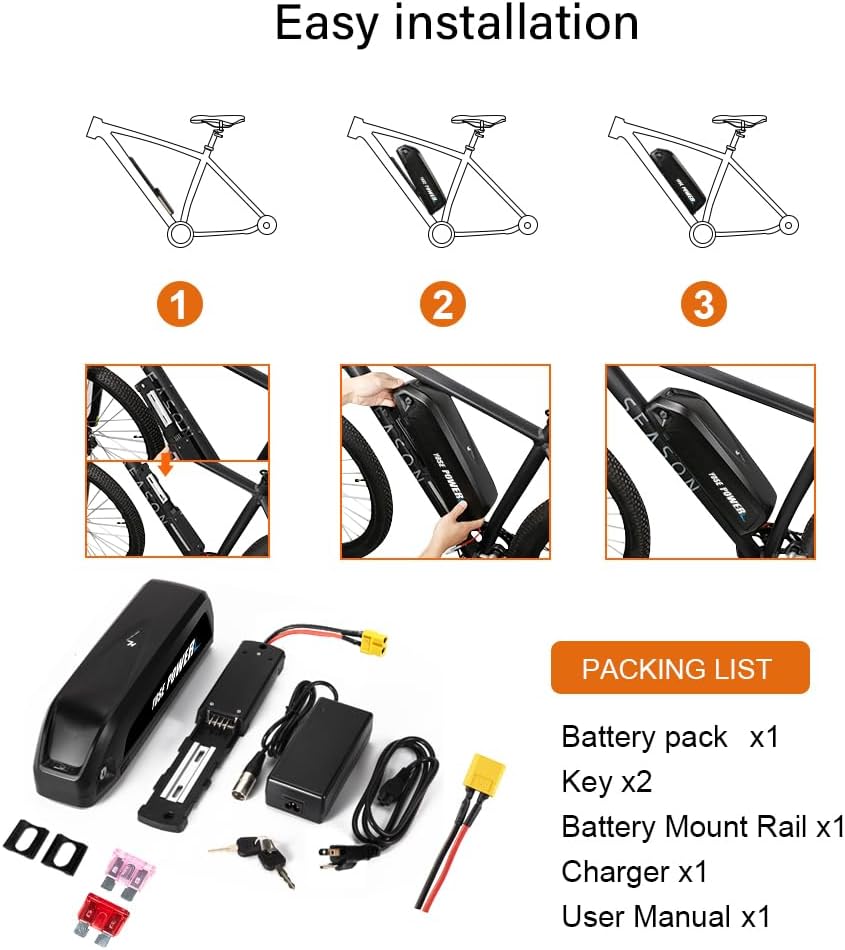
The card names the down tube as the install position, and the bullet walks you through releasing the holder base with the keys and mounting it there. The record shows owners fitting it to an Ancheer with cradle work, a Bacchetta recumbent, and a Bafang-kit build. No bike brand appears in the listing's fitment text, so match the mount rail and the port against your old pack before ordering.
How long does charging really take?
Between the bullet's 6 to 8 hours and the card's 5 hours, plan on the longer figure until the charger's amperage is known. The socket caps at 5 amps, which is a 3-hour floor, so nothing printed is impossible. The 3-prong connector means spares are not generic-shelf items.
Is the 721 watt-hour figure real?
The arithmetic is 48 times 15, which is 720. The card prints 721, a one-unit rounding quirk. No owner has metered the capacity, so the honest position is that the claim adds up and hasn't been tested in public.
Is it worth 39 cents per watt-hour?
Only if the fitment solves a problem a cheaper pack can't. The record's owners bought it as replacements and upgrades rather than bargains, and most of the accounts with real detail in them pass through cradles or connectors on the way. If a covered Yose rung fits your bike, those cost less per watt-hour and carry longer records.