If you're concerned with durability and safety above all else (and have the room), grab the BtrPower 36V 10Ah LiFePO4 ebike battery. As opposed to the normal lithium-ion battery, this pack contains cells that provide greater chemical stability and thus a longer shelf-life. However, they weigh considerably more than the standard lithium-ion units. So you'll receive a long-lasting unit, but at the cost of added weight.
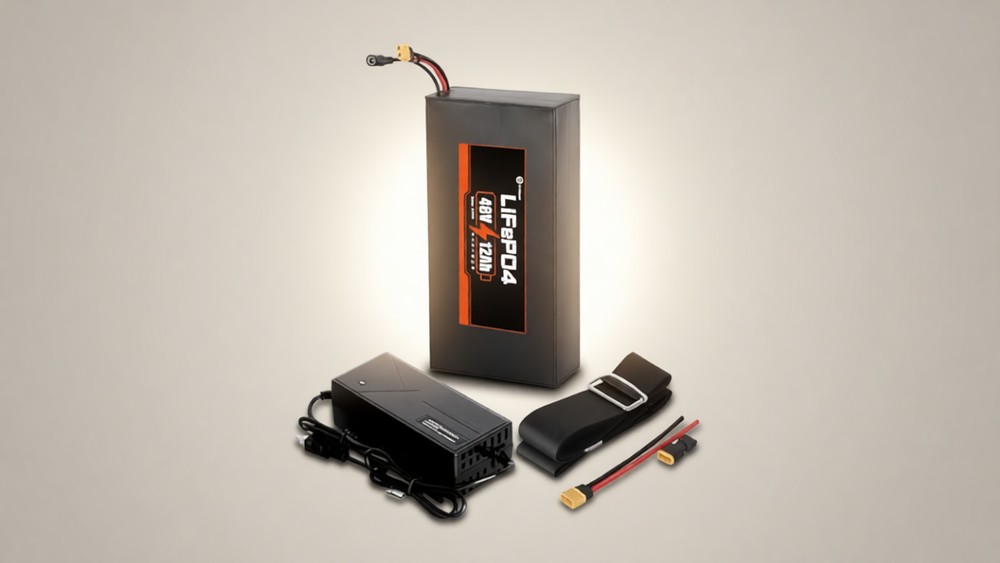
Specs and Value
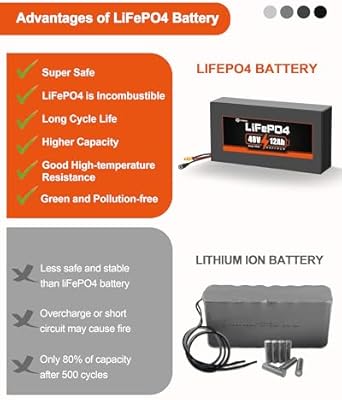
The primary selling point of this battery is its chemistry. Standard lithium-ion packs use nickel manganese cobalt (NMC) cells, which are lighter but sensitive to heat. The BtrPower uses lithium iron phosphate (LiFePO4) instead.
If you puncture a LiFePO4 cell or let it overcharge, the phosphate bond holds onto its oxygen tightly, so the cell is far less likely to ignite or vent toxic gas. Put simply: if a cell fails, this chemistry is far less likely to burn your garage down.
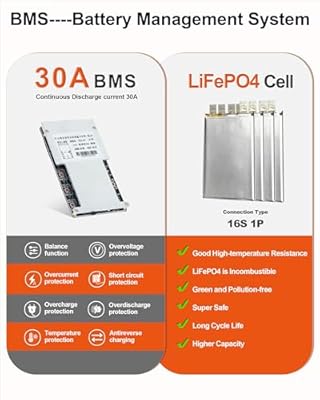
The listing claims more than 2000 charge cycles. A typical NMC pack starts fading visibly at 500 to 800. Ride daily and the standard lithium-ion battery can be a two-year consumable, while this pack could plausibly see five or six years. That gap changes the total cost math even before you factor in the budget price. The 20A BMS guards the cells against overcharge, over-discharge, and short circuits. Chances are you will never think about it, which is the point.
The packaging includes a 42V 2A charger, and a full charge takes five to six hours. That slow rate is gentle on the cells and is part of why the cycle life claim is even plausible.
Fast charging LiFePO4 is possible, but the seller ships a conservative charger on purpose. Pair the pack with a higher-amp unit and you trade longevity for convenience. The USB port lets you top up a phone or run lights straight from the pack mid-ride, which turns the battery into a power bank on camping trips. The power switch matters more than it sounds: the BMS itself draws a small standby current, and on a pack stored for weeks that slow drain deep-discharges the cells. Flick the switch when the bike is parked and the pack wakes up months later still healthy.
Weight and Compatibility
Now the cost. This pack weighs around nine pounds because LiFePO4 stores less energy per pound than NMC chemistry. That is a lot of mass to hang on a frame or rack, and where you mount it changes how the bike handles. High on a rear rack, the tail gets noticeably heavy.
Verify the connector style and mounting bracket prior to making a purchase. There are numerous types of connectors utilized throughout the ebike industry. Verify your connector style and bracket against your current battery before ordering. A wrong connector will not mate with your controller, and return postage on a nine-pound battery stings. Measure the space twice. Dimensions matter as much as chemistry here.
Real-World Range and Power
Expect 20 to 30 miles per charge in normal commuting. Flat terrain with moderate assist stretches that figure. Steep grades chew through 360Wh quickly, and no chemistry changes that arithmetic. Cold weather shrinks it too: LiFePO4 tolerates cold better than it delivers in it, and winter range can drop ten to twenty percent.
The 20A BMS caps the current draw. If your motor asks for more than twenty amps to hold speed, the protection circuit will cut in. This pack is built for steady commuting, not drag-strip launches.
One genuine performance perk: LiFePO4 holds a flatter voltage curve, so the bike feels consistent right up until the pack is nearly empty. The trade is that the gauge gives little warning. One day the bike feels normal, the next the BMS cuts in, so charge habitually rather than by feel.
What Amazon Reviewers Are Saying
Review count is thin so far. That is normal for LiFePO4 packs, since most casual buyers default to standard lithium-ion.
Early reviewers focus on safety and how much cooler the pack runs than the NMC batteries they used before. The weight gets acknowledged and mostly accepted. Failure reports are scarce so far, but the sample is small. Test the pack on arrival and confirm connector fit before you commit.
Who Should Buy This
Buy this pack if you commute daily and want battery replacement to be a five-year question instead of a two-year one, or if charging safety in a garage or apartment hallway ranks high for you.
Skip it if you need light weight for trail riding, if you tour long distances and need more than 360Wh, or if you want hard acceleration from a high-drain motor. A higher-capacity NMC pack serves all three of those riders better.
Compare it against the rest in our ebike battery comparison table, or dig through the GoMotorbikes blog.
Check the latest price on Amazon.
Frequently Asked Questions
Quick answers before you buy.
Is a 36V pack enough power?
For most 250W to 500W commuter motors, yes. The 36V standard is proven and parts are everywhere. Step up to 48V only if your build is heavier or hillier than a typical city ride.
Does the 10Ah capacity suit daily commuting?
Plan on roughly 20 to 25 miles per charge with moderate assist. If your round trip is longer than that, the 15Ah variant in the same lineup is the better match.
Can I charge LiFePO4 in freezing weather?
Charge it above freezing. LiFePO4 cells tolerate cold discharge reasonably well, but charging below 0C can plate lithium metal inside the cells and permanently cut capacity. Bring the pack indoors for winter charging.
Is this pack a direct fit for my bike?
Only if your connector and bracket match. It uses a standard 36V downtube-style interface, but ebike connectors are not universal. Compare photos of your current battery port against the listing before ordering.
What does the BMS protect against?
Overcharge, over-discharge, over-current, and short circuit. That is standard protection, and the practical effect is simple: the pack cuts power before the cells are damaged.
Can I charge it on the bike or off?
Both. The pack slides off the Hailong-style mount for indoor charging, which is the habit that doubles a budget pack's lifespan.
What is the realistic cycle life?
LiFePO4 chemistry is the selling point here: expect well over 1,500 cycles before capacity drops to 80 percent, several times what ordinary li-ion manages.
Browse more riding and buying guides on the blog.