The BtrPower 48V 18Ah runs a LiFePO4 cell chemistry at a price most NMC packs charge, and that is the whole story here. You trade energy density and weight for cycle life that can outlive the bike it powers. For a commuter that charges daily, that trade works, and a weight-critical build should look elsewhere. Check today's price on Amazon before you decide.
LiFePO4 Safety and Cycle Life
Most e-bike batteries available through Amazon utilize NMC or ternary lithium cells. They provide good performance. However, they do present a risk of catching on fire when something goes wrong. Enter the BtrPower 48V 18Ah LiFePO4 battery which takes a totally different approach using lithium iron phosphate chemistry. Although it is heavier, has worse energy density, it cannot be made to catch fire.
Check the current price on Amazon.
Any rider who charges their e-bike indoors, stores their e-bike in an apartment or building, or simply wants the peace of mind that comes with inherently safe battery chemistry should consider LiFePO4. Below we'll break down what this particular BTRPower pack provides.
What Amazon Reviewers Are Saying
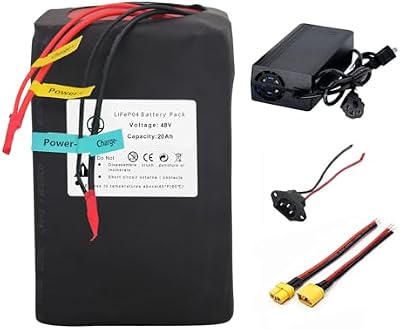
This is a 48V 18Ah pack providing 864Wh of usable energy. Each cell is configured at 16S1P (sixteen cells in series with each cell operating at 3.2V nominal) giving you 51.2V nominal total.the Btrpower is compatible with both 48V and 52V controller systems due to the nominal voltage being 51.2V.
It measures 10.4 x 5.3 x 3.54 inches in terms of physical size. Compared to similar sized 48V 18Ah packs, this is a fairly compact package. The 16S1P configuration places all sixteen cells in a straight line allowing for a thin profile. Instead of the cylindrical 18650 or 21700 cells found in most NMC batteries, it utilizes polymer soft pack cells.
I think the estimated range of twenty plus miles without pedaling is reasonable given the 864Wh contained within this pack, utilizing a throttle-only setup at moderate speed. At least thirty miles of additional range may be realized using pedal-assist, assuming you possess a suitable motor and riding style.
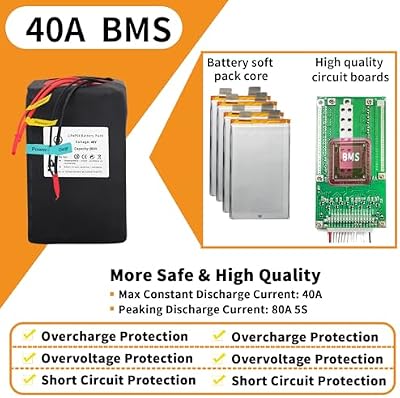
This pack is heavier than an equivalent NMC pack. That is the trade-off associated with LiFePO4. While the cells are inherently more dense per Wh, safety and longer cycle-life are provided in exchange. Additionally, it includes a forty amp BMS to handle protection tasks.
Voltage Curve and Charging Behavior
Be honest about why you would select LiFePO4 over conventional lithium-ion. The chemistry used is flame resistant. Thermal runaway occurs in NMC cells and will not occur in LiFePO4 cells. Puncture the cells, heat them beyond temperature limits or damage the cells physically - they will not explode.
From an indoor charging perspective, or for those storing their bikes in an apartment building, that is a major plus. Liability insurance is now beginning to ask about ebike battery storage in some buildings, and LiFePO4 chemistry typically receives approval while NMC may not.
This battery was constructed using polymer soft pack cells that the vendor explicitly stated do not include toxic materials such as heavy metals and are non-toxic. Since LiFePO4 uses cobalt or nickel instead of lithium like conventional lithium-ion, disposal is easier and the environmental impact is reduced.
An important factor to note regarding the forty amp BMS, is that on a forty-eight volt system, forty amps continuous discharge equates to approximately nineteen-twenty watts of peak power. Therefore, this should be sufficient for most seventy-five-watt to one-hundred watt hub motors. However, if you have a fifteen hundred-watt + motor you may find yourself restricted by the forty-amp rating recommended by BTRPower.
As previously mentioned, LiFePO4 batteries have a cycle life of approximately fifteen hundred to two thousand cycles to eighty percent capacity. As compared to five hundred to eight hundred cycles for conventional NMC lithium, the benefits become apparent. Assuming you receive fifteen hundred cycles from the battery, the cost per cycle is approximately thirteen cents. This is roughly one-third the cost per cycle of a typical NMC battery.
The extended cycle life makes LiFePO4 particularly beneficial for daily commuters who ride throughout the year. If you commute twenty miles each day and charge your bike nightly, you may expect anywhere from three to five years of capacity loss in a conventional NMC pack. On the other hand, a LiFePO4 pack could potentially last seven to ten years under the exact same conditions.
One thing to note about LiFePO4 is that these cells follow a very flat voltage curve during discharge. Then they rapidly drop off near empty. Your battery gauge will indicate "full" for an extended period of time prior to dropping sharply. Many riders initially react negatively to this as they believe the battery has failed prematurely. In reality, the gauge simply cannot accurately measure LiFePO4 voltage levels. A battery indicator showing remaining Wh versus voltage will help minimize confusion.
Who Is This Battery For?
There are currently only two reviews at five stars apiece for the product. Consequently, user comments are still very limited. Both reviewers praised the performance and construction quality of the battery.
Since there are only two reviews in existence at this time, there is insufficient information to form valid conclusions about long term reliability.
Since LiFePO4 batteries are a specialized segment of the marketplace, primarily comprised of small brands selling on Amazon, it is common to find limited user feedback on these products. The majority of customers purchasing ebikes are focused on acquiring an affordable option with good performance from an NMC lithium battery. Therefore, customers searching for LiFePO4 chemistry tend to be more informed about the trade-offs and potential restrictions.
What would be helpful would be to collect feedback on BMS operation (forty amps), longevity of polymer soft pack cells over time, and whether or not the specified mileage range is achievable.
This battery fits several specific categories:
Apartment dwelling riders who charge indoors or store bicycles in residential units/garages adjacent to living areas. The primary reason for selecting LiFePO4 is flame resistance. BTRPower delivered on this front.
Commuting riders looking for maximum long-term bang-for-the-buck. Per-cycle cost savings from using LiFePO4 add up rapidly when you ride regularly. After five years of commuting daily (twenty-mile round trip) and recharging nightly, the overall cost-of-ownership may be substantially less than repeatedly replacing an NMC lithium battery.
Motorcycles with forty-eight-volt or fifty-two-volt controllers within sixty-five-watts to one-hundred-watts. Forty amps of BMS discharge is optimal for this horsepower range. If you have a fifteen hundred-watt + motor, seek a LiFePO4 battery with a fifty-amp or sixty-amp BMS.
In addition to compatibility issues (the above), compact packaging (ten-point-four x five-point-three x three-point-five-four inches) provides many users with ample opportunity to install this battery into smaller frames where larger NMC lithium packs may not fit. One of the benefits of using polymer soft pack cells is that they provide a slimmer profile compared to cylindrical cells.
Compare this offering fromthe Btrpower comparison page and visit our other pages reviewing LiFePO4 batteries for further discussion on chemistry-specific comparisons.
Frequently Asked Questions
Can I Use a Standard 48V Lithium Charger with This Battery?
You need a charger that is designed specifically for charging LiFePO4 batteries. The charge parameters differ from those of conventional lithium-ion/NMC batteries. A standard 48V lithium charger is tuned for NMC chemistry and will not properly top off iron phosphate cells. Failure to use a correct charger may result in damaged cells or shortened lifespan.
What Voltage Does This Battery Run at?
Nominal voltage for your e-bike is fifty-one point two volts (sixteen cells times three point two volts). Upon reaching full charge, the battery reads approximately fifty-eight point four volts (three point six five volts per cell). According to BTRPower, normal voltage readings fall between fifty-three point six volts and fifty-eight point four volts after charging.
How Does the 16S1P Configuration Affect Performance?
Each of the sixteen individual cells is connected in series. No parallel branches exist within this configuration. This means that eighteen amp hours of capacity exists across fifty-one point two volts nominal. The polymer soft pack design maintains a slender shape compared to similarly-sized packs containing cylindrical cells.
Will the Voltage Drop Scare Me?
Likely at first. Due to the flat nature of the discharge curve for LiFePO4 chemistry, your battery gauge will display "Full" for an extended duration prior to rapidly falling near empty. This is normal chemical behavior and not related to any issue with your battery itself.
Does This Battery Work with 52V Controllers?
Yes. Because the pack runs at 51.2V nominal, BTRPower states it is compatible with both 48V and 52V controller systems. This flexibility lets it drop into bikes that already use 52V controllers without requiring extra electronics or adapters.
How Long Does Shipping Take?
Shipping time depends on the Amazon seller and your location, with most orders fulfilled through Amazon warehouses arriving within a few days to about a week. Check the delivery estimate shown at checkout for the most accurate timing for your address.
Is the 40A BMS Enough for Hill Climbing?
Assuming you have a fifty-five watt to one-hundred watt motor and moderate terrain conditions -- yes. Approximately nineteen-twenty watts of peak power exists via forty-amps at fifty-one point two volts. While this may limit performance slightly, it should meet needs in most cases. If you reside in a very mountainous region or weigh more than average -- you might wish to investigate a higher-amp LiFePO4 battery (fifty or sixty-amps) suited for your specific requirements.
For more options, browse our full selection.
Check our gear review comparison for more options.