Two helmets, one intercom budget, and a search page full of brands you have never heard of. That is where most rider-to-rider shopping happens now, and the XGP 2-Rider Bluetooth Intercom sits right in the middle of it: Bluetooth 5.4, 40mm speakers, an IP67 badge, and a title promising music sharing for two.
The choice is harder than the spec sheet makes it look. The listing's own bullets disagree about battery life. The spec table files the headset under headphones and says nothing about range, battery, or warranty.
And the record of owner texts is small enough that a single voice moves it, which cuts both ways.
I read the live listing and every owner text on it, checked it against our intercom comparison table, and this article walks through what that record settles, what it leaves open, and where the better buy sits inside the same brand.
The XGP 2-Rider Bluetooth Intercom suits pairs who ride below highway speed and want to keep the spend small. It installs without drama, pairs without drama, and one owner has put three of them on three helmets. The two costs are real: the most-voted owner text could not hear a passenger at 45 mph, and the buy box has climbed to a price the record's praise was never written at.
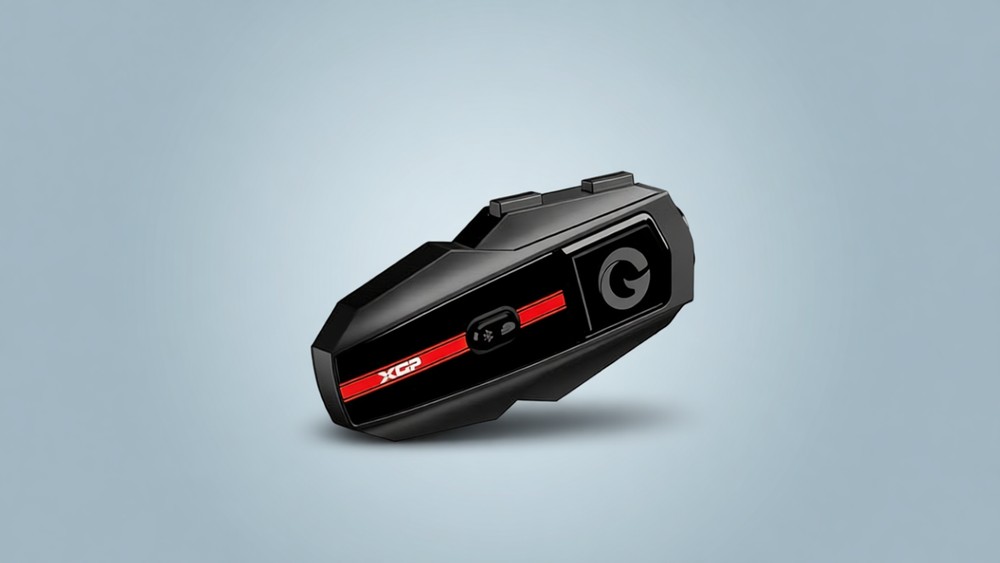
The buy box left the budget shelf
The price is what changes the math on the XGP. Our comparison table still tracks this ASIN at 39.99, and every line of praise in the owner record was written in that price band. The live buy box reads 149.99.
The record even dates itself. One owner compared it to "the other brand on here that's four times as much," which at the old price meant about 160, Sena money.
At the live price, this headset is four-times money itself. The sentence hasn't stopped being true, it's just stopped being a bargain.
Per claimed rider slot, 149.99 across the title's two riders works out to 75. That sits 70th of the 118 two-rider units on our table, the expensive half of the category.
At the tracked price it was 23rd. Same hardware, same claim, different product economically.
I'm not calling the new price wrong. Listings reprice all the time, and the owner who ran three helmets got them when they were cheap. But a review written at 40 and a purchase made at 150 aren't the same decision, and the rest of this article reads the record with that in mind.
The listing argues with its own battery
Two bullets, two battery stories. Bullet three says the 1000mAh cell delivers up to 20 hours of music playtime and 15 hours of intercom.
Bullet five says the battery provides 15 to 18 hours of music, phone calls, and intercom talk time combined. Those can't both be the headline figure, and the listing prints both without reconciling them.
The title has its own drift. It promises "2 Riders Music Sharing" and the box holds one unit, which is fine, but bullet two sells "1000m Group Intercom" with language about group rides and staying in touch with fellow riders.
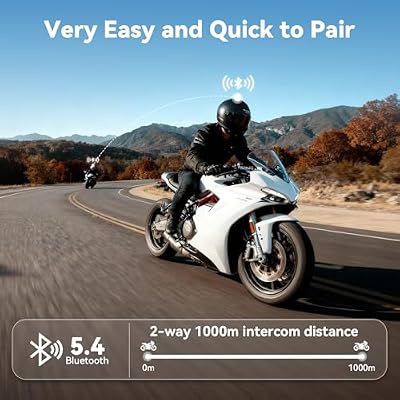
A two-rider pair isn't a group. The 1000-metre claim also sits far past what a phone-class Bluetooth radio does by default, where the standard's documented best case tops out around 400 metres open-field. Mesh relay or not, nobody in the record has measured anything close to it, or anything at all.
The spec table is the thinnest I have seen in this category: five rows, covering brand, color, ear placement, form factor, and noise control. That is a headphones filing. There is no range row, no battery row, and no warranty row anywhere on the page.
For a 150 purchase, the absence of any warranty statement is worth an email to the seller before you buy.
What the record actually settles
Eight owner texts sit against twelve ratings, and the histogram splits cleanly: no four-star band at all, five-star cluster, a three, a one. Buyers either got a unit that works or one that disappointed.
At riding speed
The most-voted text, at three helpful votes, is the three-star. That owner has found the install and both pairing jobs easy, the phone and the second headset alike. Then the speed ceiling: hard to hear a passenger at 45 mph, phone calls hard to follow above 35, and music that "sounds like you're listening through tweeters," all high tones with no mids or lows.
This is the only measured datum in the record, and it's the one a buyer at the new price should weigh first, because the 40mm driver and the noise cancelling on the box don't survive contact with 45 mph wind according to the one person who voted on it.
On the trail
The deepest positive comes from the owner running three units on three helmets, who calls the value fantastic and used the intercom for real on a trail ride when a friend rode one of the bikes. Both ends came through, in their words, shockingly clear and crisp. Trail speed isn't highway speed, and that gap is exactly where the two strongest texts disagree without ever meeting.
The rest of the positive record is short and warm: one owner rates it better than their Sena in two sentences, another calls it one of the best sounding budget headsets, and a Spanish-language text praises the sound and the sturdy feel at a good price. None of them measure anything, and one of the loudest five-star texts carries no purchase badge at all.
The failure mode nobody expected
The one-star is the only other text with a story. That buyer tested the headset a few minutes at delivery and shelved it.
Months later, first real use, it wouldn't turn on. It shows a charge light while plugged in and is completely dead unplugged. The text carries no purchase badge, so weigh it accordingly, but the pattern it describes, a unit that passes a garage test and dies in storage, is the kind of fault a short test at delivery can't catch.
Nobody in the record mentions rain, snowmobiles, or ATVs, all three of which the title claims.
Nobody names the noise cancelling. Nobody describes the music sharing working between two riders. The record is silent on every fitment promise the title makes, which is worth knowing before you buy it for a specific use.
The better buy is in the same brand
Our table tracks a sibling ASIN, the XGP Bluetooth 5.4 two-pack, listed at 79.99 for two units. That is about 40 per helmet, it works out to 50th of 118 two-rider units per claimed rider, and the full two-pack review draws on more than a thousand ratings against this record's twelve.
Two boxes of the same claimed chipset for half the cost of one box here isn't a close call on paper.
The XGP 2-Rider Bluetooth Intercom earns its place only if you need exactly one unit, right now, at a price you have confirmed on the listing yourself. If the buy box has drifted back toward 40, the calculus flips, and the honest reading of the record, easy pairing, clear below highway speed, one shelf-death report, applies at either price.
Frequently Asked Questions
Does the 1000-metre range hold up?
Nobody has measured it. The only distance-adjacent datum in the record is a passenger who became hard to hear at 45 mph, which says nothing about metres. Bluetooth's documented best case for a standard radio is around 400 metres open-field, and helmet intercom claims routinely assume conditions no ride provides.
Is it waterproof enough for rain?
The listing claims IP67, which covers dust and 30 minutes at one metre of depth. No owner text mentions water in either direction, and the spec table carries no certification row, so the rating is the seller's word.
Can I pair it with a Sena or a Cardo?
The record doesn't say. One owner calls it better than their Sena without describing cross-brand pairing. Cross-brand intercom between different manufacturers is a known friction point across this whole category, so treat it as untested here.
What if I only ride with one other person?
That is the exact use case the record supports best, below highway speed. The pillion report at 45 mph is the cautionary tale, the trail-ride report is the endorsement, and our JESIMAIK mesh two-pack review covers the other budget pair worth a look if you want two helmets in one box.