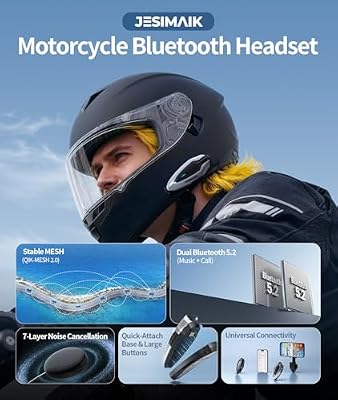
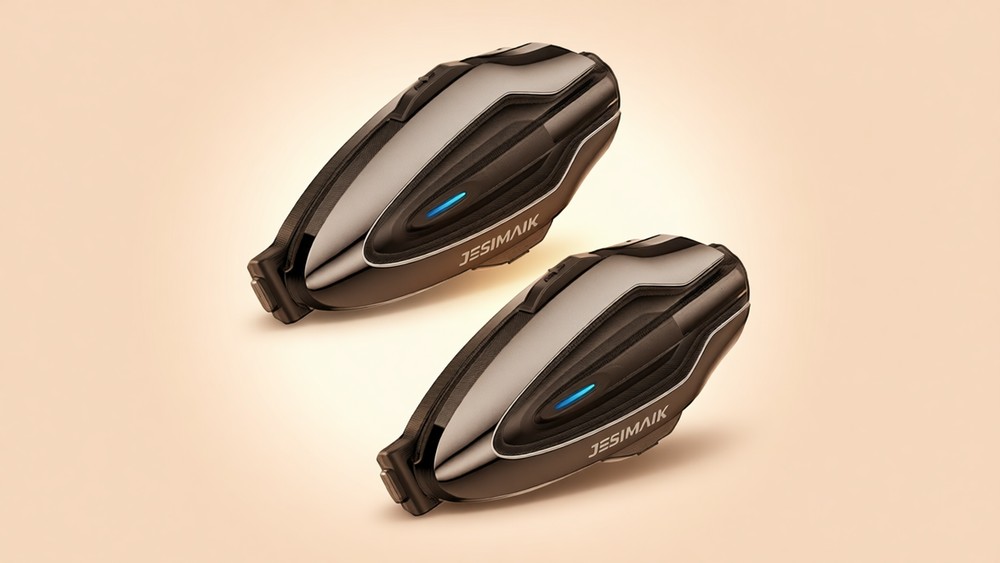
Most two-rider shopping starts with a single unit and a plan to buy the second one later. The JESIMAIK H6 mesh 2-pack inverts that: one box, two complete headsets, magnet mounts and microphones for both, and a price that undercuts what several brands charge for one.
The catch is that everything else about the listing asks for caution. The spec row promises 1600 metres for ten riders.
The record's only range report says the pair didn't reach a mile. The battery figures change depending on which row you read. And seven owner texts, all purchase-badged, are the entire evidence base.
I scraped the live listing, read every owner text, and placed the pair on our intercom comparison table. This article walks through what the price actually buys, what the record settles for rider-and-pillion use, and where the claims outrun the evidence.
For pairs and pillion riders who stay on backroads, the JESIMAIK H6 mesh 2-pack is the cheapest two-helmet package we track. The two pillion accounts are genuinely good, one at 65 mph with no wind noise picked up. The limit is real too: nobody has exercised the ten-rider mesh or the cross-brand pairing, and the one range datum sits far under the spec row.
What the pair price actually buys
The buy box reads 39.99 for two units. Per helmet that's about 20, and it's the number that makes this listing strange in a good way.
The listing's own comparison module prices its rivals as singles: the ASMAX F1 at 145.99, the XGP X10 at 79.99, the R16 at 145.99. JESIMAIK's own single-unit two-way listing, the one our R18 Lite review covers, sells at 45.99. The brand's two-box mesh package costs less than its own one-box Bluetooth unit.
I want to be precise about the denominator, because our table divides by claimed riders and that flatters multi-rider claims. Per claimed group slot the pair works out to 4.00, second cheapest of the 192 rows we track and second cheapest of the 45 mesh rows.
Per helmet actually in the box it's about 20, which would sit 78th of 192, mid-pack. Both numbers are true. The first one is the mesh promise divided out, the second is what you pay per head, and only one of them is your money.
Our own data row is behind the listing here. We still track the ASIN at 139.98, and the price has moved so far that the ranking the table prints today doesn't describe the listing a buyer sees. That gap should close at the next data refresh.
One more figure for context: the page shows the H6 ranked 238th in Powersports Helmet Communication, and the comparison module rates the rivals from much bigger pools, 982 and 2,444 ratings, against this listing's ten. The price is proven. The record behind it is thin.
Two pillion rides carry the record
Seven texts, all carrying a purchase badge, and the strongest two describe the same use case: one rider, one passenger behind.
The most-voted text, at three helpful votes, comes from an Indian Chief Dark Horse owner who opens with the problem, "she's loud," and then reports the install as easy and the result as clean: each rider listens to their own music while they chat back and forth with no issues. Music during talk is the feature the cheap units usually drop first, so that sentence is doing real work.
The second account is the one I'd buy on. A 50-mile lunch ride with the wife riding pillion, most of it at 65 mph, and the microphones didn't pick up the wind.
Turn-by-turn directions and music kept playing while they talked, and the owner closes by calling it a good starter com for new riders who want to ride with someone more experienced. That text also floats the claim nobody in the record has tested: the units, in the owner's words, can mesh with the premium brands.
Three more texts round out the picture. One owner reports flawless operation between the two units and clean pairing to two different phones, with the honest note that the universal group function is still untested. Two Spanish-language texts praise the clarity, one at four stars and one at five, with the five adding that the commands take learning.
Batteries holding their advertised charge times is the one long-horizon data point, and it comes from that same Aug 13 owner.
The range row against the one range report
The spec table prints Maximum Communication Range at 1600 metres for ten riders, which is about a mile.
The record's only range datum is a three-star trail-ride owner who wished the range was further because it's "definitely not a mile." A point-to-point Bluetooth radio at default power reaches about 10 metres, and the 1600-metre figure has to be earned through mesh relay in open country, conditions a casual trail ride doesn't provide.
I'd plan around the report, not the row. Two riders within sight of each other are well served by this record.
Ten riders strung across a mile of trail is a claim this record never approaches, and the mesh topology that makes such ranges possible, where nodes connect directly and route around dropped members, still needs every link in the chain to exist. Nobody has ridden the H6 pair in a group of any size.
That gap repeats across the Jesimaik family. The single-unit R18 Lite carries its own overclaimed range figure and its own measured shortfall, which the R18 Lite review documents from a different owner's report. Treat the pattern, not the number, as the finding.
The magnet mount, and the cover fight
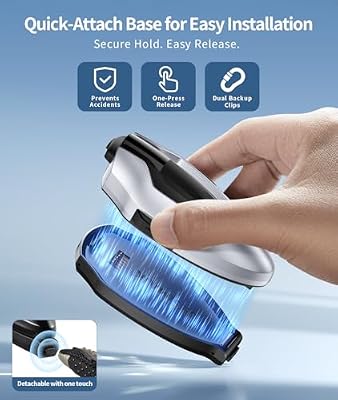
The mount is the listing's favorite feature. A magnetic quick-mount marketed as anti-theft, one second on and off, one-handed, swappable across full-face, half-face, and open-face helmets. The spec rows describe a curved adhesive pad, dual backup clips, and a side-mounted clamp.
No owner text mentions the mount at all, in either direction, so the anti-theft pitch rests entirely on the listing's word.
One owner did collide with the hardware, loudly. The one-star is all caps: the grey plastic outer cover wouldn't go on the H6, and the box carries no instructions for it. That's a setup frustration rather than a failure, and the same owner's headset presumably worked, but a listing that ships assembly steps nobody documents is telling you where its support sits.
The button layout, four directions of glove-friendly anti-mistouch controls, draws the same silence from the record.
Battery claims get the usual listing treatment. The title says 23H battery life, the bullet says 23 hours of intercom talk time, and the spec row says 25 hours of music playback. The title borrows the lower intercom figure without saying so.
The 900mAh cell, the 1-hour full charge, and the 450-hour standby all come from bullets with no owner confirmation behind them, though no text reports a battery failure either.
Frequently Asked Questions
Can two H6 packs join a bigger group?
The hardware claims a ten-rider one-click mesh, and no owner has tested a group of any size. The one owner positioned to try it says the universal function is still untested. If a big group ride is the reason you're buying, this record can't support the decision.
Does the magnet mount stay put at speed?
Nobody says. The pillion account at 65 mph describes audio, not hardware, and the spec rows promise a curved adhesive pad with dual backup clips. The mount is untested in the record, which matters because the anti-theft angle is the listing's main selling point.
Is the IP67 rating real?
The rating covers dust and 30 minutes at one metre of depth, and the spec table carries it. No owner mentions rain. The rating is the seller's word here, as it is across most of this price band.
Should I buy this pair or two of something else?
At about 20 per helmet, no two-helmet package we track costs less. Two cheap singles can land lower in total, but they give up the mesh claim, and the magnet-mount single review covers the family's microphone record if you want one unit at a time. Buy the pair for backroad and pillion use, and buy it knowing the ten-rider claim is a promise, not a finding.