The 40A number did the selling on this listing, and it is the one claim the record can fully back. Forty amps at 52 volts is 2,080W of continuous output, and a 1,500W motor draws about 29A of it, so the board covers the full claimed motor range with about 11A in reserve. That puts this pack in the minority this season, where several listings printed motor claims their own boards could not power.
What the listing did not advertise was its own ladder. In the market sweep behind our comparison data, this 20Ah VISET captured at 0.26 per watt-hour while the brand's own 30Ah rung captured at 0.23, so the bigger pack sold 50 percent more energy for about a third more money. Below, you'll find the power math, the 13S-versus-14S question the record never settled, the range bands, and what a rating frozen at 4.8 with no count can still tell you.
I put the ladder ahead of the specs, because it is the part a listing never volunteers.
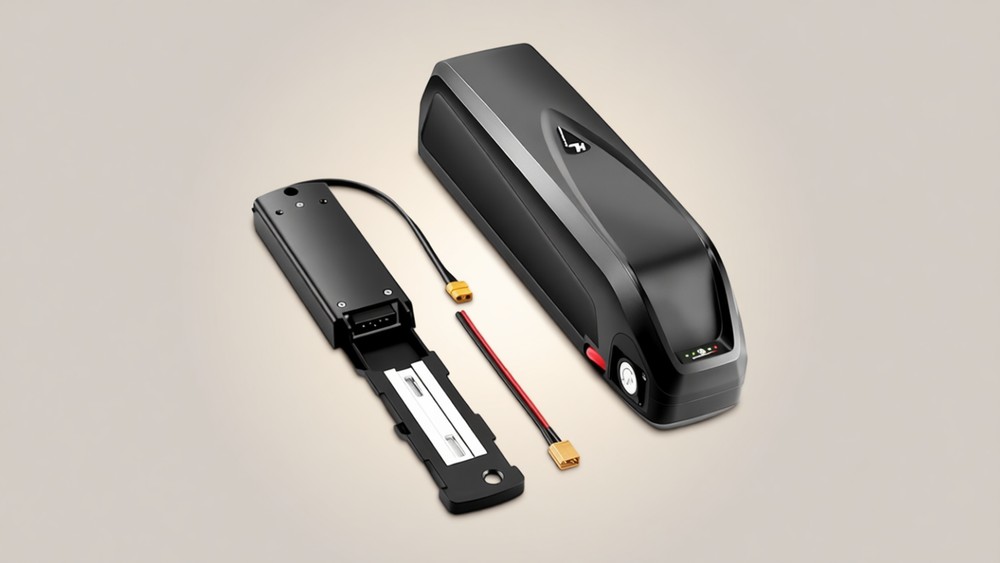
What a 40A board actually covers
The recorded title promised motor support from zero to 1,500W on a 40A battery management system, and the arithmetic holds across the whole range. Forty amps at 52 volts is 2,080W continuous. A 1,500W motor draws about 29A at this voltage, so it sits inside the ceiling with about 11A in reserve, and a 1,000W motor draws about 19A. Even the 200W floor of the claimed range pulls roughly 4A, which the board covers without warming up.
That makes this pack the opposite of the failures documented in recent rebuilds. A 15Ah downtube pack sold against a 2,000W claim while its own 30A board topped out about 40 percent lower, and a folding pack's charge estimate failed its own charger floor. Here the strongest number in the title is the one the hardware supports.
Why 58.8 volts means fourteen cell groups
A 52V pack's full charge tells you its layout. Fourteen cell groups times 4.2 volts is 58.8V, the standard 14S termination, while a 13S pack tops at 54.6V. Both layouts are sold as 52V, and the em3ev 52V buyer guide walks through the difference, because a charger must match the layout it feeds. Which one VISET built was never recorded, and the listing is gone, so the question is now unanswerable. On any successor listing, the charger's printed voltage settles it: 54.6V points to a 13S pack and 58.8V to a 14S one.
The ladder priced the bigger rung better
Our comparison data ranks 324 packs by price per watt-hour, and this one sits close to the middle of that table, so the row itself is ordinary. The exact position renders in the specs box on our comparison table. What is not ordinary is how the rung above it was priced.
The brand's own 30Ah pack captured at 0.23 per watt-hour against this one at 0.26, on 1.56 kWh against 1.04. The bigger pack cost about a third more money and carried 50 percent more energy. Ladders usually step up in price, so a rung that undercuts its own smaller sibling per watt-hour is worth noticing, and the VISET 52V 30Ah review covers that pack's own quirks.
For the same capacity at 52V, one pack we rebuilt captured far cheaper per watt-hour, though its price carried a two-pack decode problem that its own article explains. The Lithium Hellas 52V 20Ah review shows what the cheapest corner of this capacity class looked like when the market was captured.
LED light, USB port and a stand for indoors
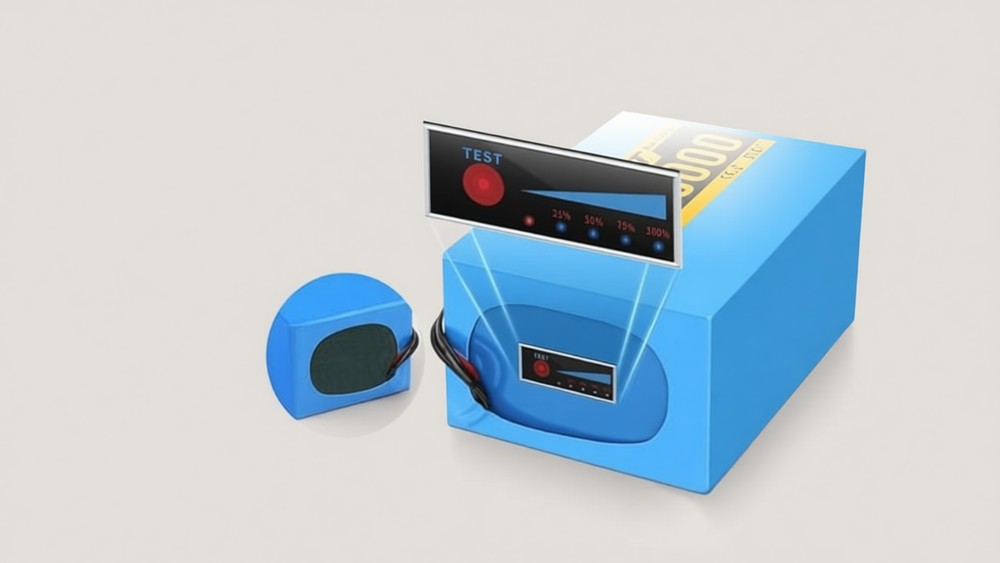
Three features rode along on the title: an LED power light on the case, a USB port, and a base stand. The light lets a rider check remaining charge without a display or an app, which matters most on bikes whose dash hides the pack voltage. The USB port charges a phone or a GPS unit straight from the pack, and the draw is negligible against 1.04 kWh, so a touring rider loses nothing worth counting by topping up a phone. The stand holds the pack upright and stable when it comes indoors to charge. It is not a mount, and the bike still needs its own bracket or rack interface.
What the feature list cannot tell you
Nothing in the record names the discharge connector, and nothing records the included charger's amperage. Both gaps are practical. A connector mismatch is fixable with an inexpensive adapter for common plugs, but only if you know both ends before ordering. A charger of unknown amperage means the charge-time floor below stays a floor, not a promise. A buyer hunting a successor should ask a seller for both figures in writing.
Range and charging at 1040Wh
Fifty-two volts times 20 amp-hours is 1040Wh, just over the 0.96 kWh anchor in the em3ev 48V battery guide, which puts that anchor at 30 to 40 miles on throttle alone and 50 to 65 with a light pedal assist. Scaling by capacity, this pack lands at roughly 32 to 43 miles on the throttle and 54 to 70 with a light leg. Hills, cold weather and high assist levels pull the real number toward the bottom of the band.
Charging has a floor and nothing else. At a common 2A rate, 20 amp-hours takes 10 hours from empty, and the record never says the included charger delivered more. The old article's 7-hour estimate assumed a 3A charger that no capture ever recorded, so it is dropped here. Plan on the 10-hour floor unless a successor listing prints a higher amperage.
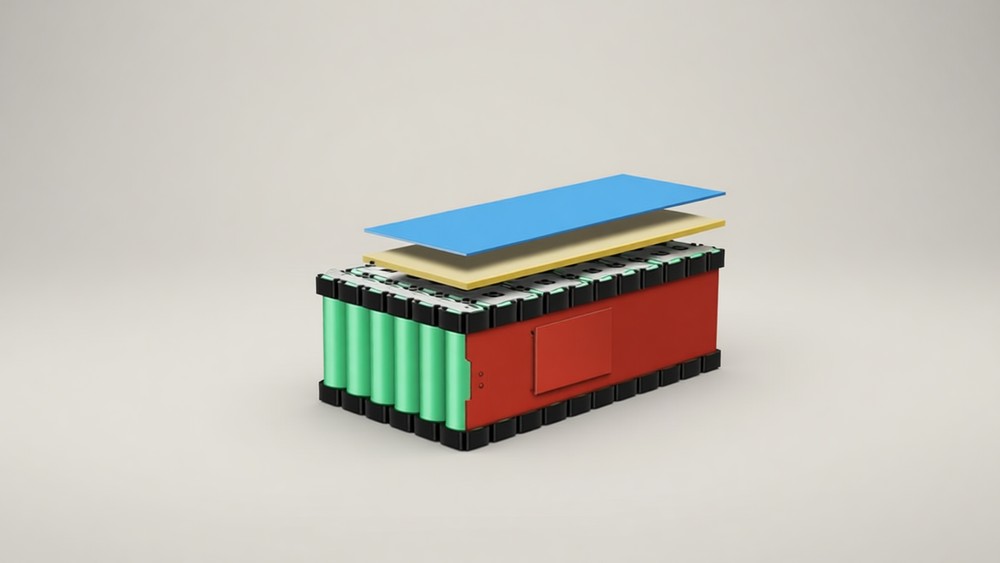
No weight was ever recorded for this pack, so the density check every rebuild runs is impossible here. The expectation can still be stated: complete packs usually land between 0.18 and 0.21 kWh per kilogram, and 1.04 kWh at that band implies roughly 5.0 to 5.8 kg. A successor listing's weight can be tested against that band in one division.
What the frozen record leaves
The capture caught a 4.8 rating with no count attached, and no review text was ever recorded. A star figure without a count could be three buyers or three hundred, and there is no way to know now. The listing is gone from Amazon, so the record can never grow, and nothing here should be read as an owner consensus. It is a number frozen at the moment of capture.
What the record does leave is a coherent feature set with a power claim that survives its own arithmetic, which is rarer than it should be. A rider hunting a 52V replacement today can carry the checks this listing left unanswered: the S count behind the full-charge voltage, the charger's amperage, the connector type, and a weight to test against the density band. Compare what is live right now with those four questions written down.
Our review archive covers packs across every voltage, and the comparison table ranks live listings by price per watt-hour.
Frequently Asked Questions
Does the 40A BMS really support a 1500W motor?
Yes, on the arithmetic. A 1,500W motor draws about 29A at 52 volts, and the board is rated 40A continuous, so the claim sits inside the hardware with room to spare.
Was it a 13S or a 14S pack?
Never recorded, and the dead listing settles nothing now. A charger printed at 58.8V belongs to a 14S pack and one printed at 54.6V to a 13S pack, which is the check to run on any successor.
How long did a full charge take?
At the common 2A rate, 10 hours from empty. The included charger's amperage was never recorded, so no faster figure can be claimed.
Was the 4.8 rating trustworthy?
Unknown. It carried no review count, no text was ever captured, and the listing's death froze it. Treat it as a data point with no weight behind it.
What range could a rider expect?
About 32 to 43 miles on throttle alone and 54 to 70 with light pedal assist, scaled from the em3ev anchor at 1.04 kWh. Hills and cold weather pull it down.
Is the base stand a mounting bracket?
No. It holds the pack upright for indoor charging and storage. The bike needs its own bracket, rack or bag interface.