Replacing a folding ebike's battery means matching a cavity first and a spec sheet second. The pack slides into the frame between the hinge points, so a pack that is a quarter inch too tall is a wall ornament, and the plug behind it has to match too. That measurement decides more than the brand name does.
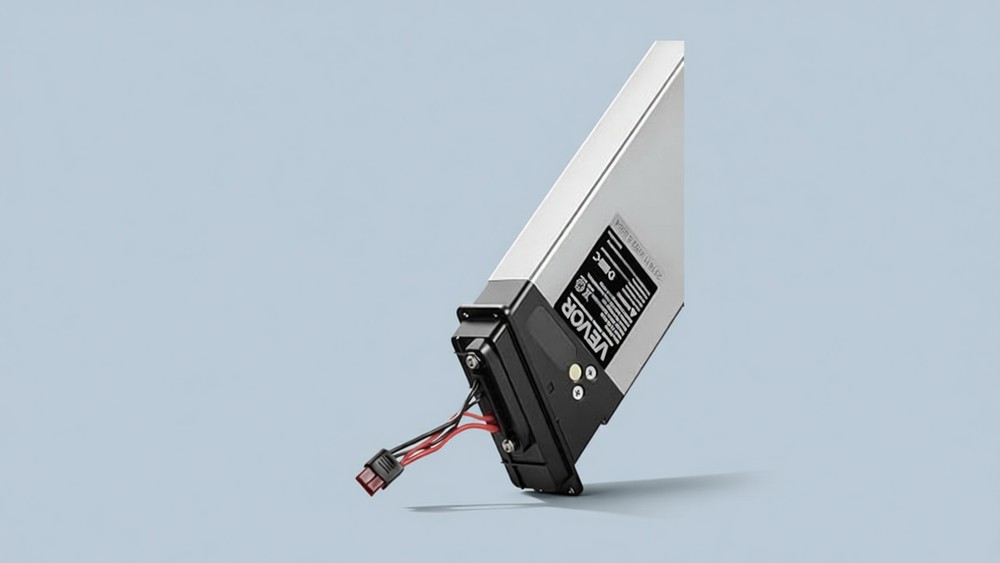
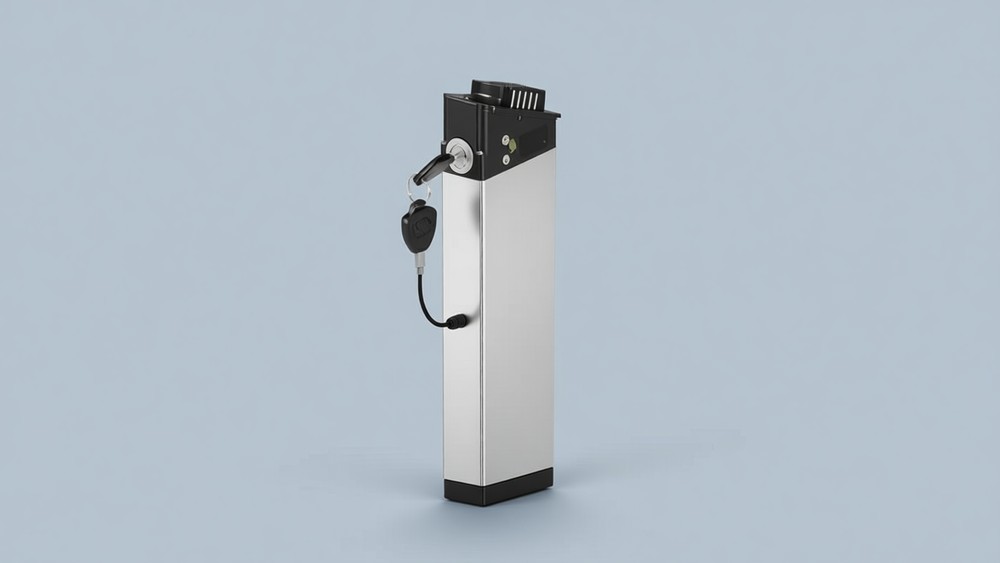
VEVOR's 48V 10.4Ah pack pitched the checklist side of that market: an aluminum case instead of plastic, a 3A charger where most folding packs ship 2A, a keyed lock, a carrying handle, and a separate discharge socket. The energy inside was the ordinary part, 499.2 watt-hours that sit mid-pack for the class.
That listing is gone from Amazon now, and it left something unusual behind: both the size and the weight are on record, so a replacement can be matched exactly. What the record never held is a single owner, because the pack sat on the market for the better part of a year without collecting a review. The value question, the power claim and the honest range math are all below.
I priced this pack against its own class before anything else, and the honest position is mid-band at best. At 159 for 499.2 watt-hours it works out to 0.32 per watt-hour, which sits in the pricier third of the 324 packs we track. The plain generics around it did the same job for less, with LOCKBUS and VODIPOWER selling 480Wh folding packs at 139.99 and CXZCXZ at 149.99.
The extra twenty dollars bought gear, not energy, and that's a fair trade for a commuter who charges indoors and parks in public, but it isn't a deal on paper, and I wouldn't call it one. The plain version of this pack class is still easy to find.

The checklist was the purchase
The kit list is what separates this pack from the generics, item by item. The case was aluminum alloy with a PC shell, sold against the bumping and scraping a folding frame hands its battery.
A keyed lock held the pack in the frame for parked-in-public charging. The carrying handle made indoor charging a one-hand job, and a separate discharge socket sat outside the main connection. Under it all sat generic 18650 cells with a BMS covering overcharge, over-discharge, overcurrent, overheating and short circuits.
Most folding-class packs ship the cell box and a low-amp charger, and nothing else. The LOCKBUS 48V 10Ah we reviewed is exactly that plainer version of this class, and it costs about twenty dollars less for the same energy. Our battery comparison table shows the whole spread by price per watt-hour if you want to see the gap yourself.
VEVOR's own ladder makes the same point from inside the brand. The company's 52V 20Ah pack, which we reviewed on its own page, landed mid-table at 0.25 per watt-hour. The small pack cost about a quarter more per unit of energy than its own bigger sibling, the reverse of the usual capacity pricing, and the premium paid for the case and the charger rather than the cells.
Charge time that survives the math
One claim in this record checks out cleanly. At 10.4Ah, the included 3A charger sets a 3.47-hour floor for a full charge, and the listing's "about 3.7 hours" sits above that floor, so the claim survives its own math. On the 2A chargers the class usually ships, the same pack is a 5.2-hour job, which makes the fast charger worth about ninety minutes per full charge.
For a commuter topping up between shifts, that's the difference between an overnight job and a lunch-break one.
Charger voltage is the detail the listing never printed. A 48V nominal pack is a 13S pack and takes a 54.6V charger, while a 42V unit belongs to 36V packs and will never bring this one to full (em3ev). Anyone replacing this pack should read the label on the brick before assuming a charger marked 48V is the right one.
The two numbers a replacement needs
Dead listings usually leave a buyer nothing to measure against. This one left both numbers: 17.72 by 3.94 by 1.77 inches, and 8.33 pounds, about 3.8 kilograms. Folding cavities differ by millimeters between brands, so a tray match against those numbers is the whole purchase, and here the record lets you make it.
The weight reads plausible for a metal-cased pack of this size. At 499.2 watt-hours in 3.8 kilograms, the pack sits at about 0.13 kWh per kilogram, on the heavy side of what complete lithium packs usually manage, which fits an aluminum case rather than a plastic one.
The quick plug-in socket plate was sold as the wiring answer around the folding hinge, and it's the part a replacement must also match, because the plate is what meets the frame, not the cells.
The power question and the range, both corrected
The title said the pack suited motors of 1000W or less. A 1000W motor at 48V draws about 20.8 amps continuous, and no BMS amp rating was ever printed for this pack, so nobody could ever check the claim.
The old review's advice was to contact VEVOR before running anything over 750W, which was the right advice, and with the listing dead the question can never be answered from the record at all.
The old range numbers don't survive the standard anchor either. A 48V hub drive really burns roughly 24 to 31 watt-hours per mile on throttle and 15 to 19 on light pedal assist (em3ev), which puts a 499.2Wh pack at about 16 to 21 miles on throttle and about 26 to 33 on light pedaling.
The old review printed "15 to 25 miles" for moderate assistance and "8 to 15 miles" for heavy throttle, and both bands undershoot the anchor: the first bottoms eleven miles below the light-pedaling figure, and the second tops below what the pack supports at full throttle. Plan on the anchor numbers.
A record that stayed empty
The listing went live on January 15, 2026, and no review ever arrived. The old article counted zero customer reviews, our data row carries no rating, and the listing died in early November still at zero, roughly ten months on sale without collecting one buyer's verdict.
The brand name was the real argument for buying it anyway. VEVOR is a large tool-and-hardware brand with a wide ebike accessory line and a busy Amazon store, so an unreviewed pack from them isn't the same risk as an unreviewed pack from a storefront that appeared last month. It doesn't change the physics, though: the cells were unnamed 18650s, the BMS rating was unprinted, and the one honest signal a record can hold, buyer feedback, never existed.
That's the shape of this record: a complete parts list, two good numbers, one charge claim that survives checking, and no human evidence about how any of it held up over time.
Common Questions
What folding bikes does this pack fit?
Any folding frame whose battery cavity accepts 17.72 by 3.94 by 1.77 inches with a matching socket plate, and the only way to know is to measure the cavity or the old pack. VEVOR sold it for folding bikes with motors of 1000W or less, but the cavity decides, not the title.
How long did a full charge take?
About 3.7 hours on the included 3A charger, which sits above the 3.47-hour floor the pack's size sets. On a class-typical 2A charger the same pack needs about 5.2 hours. The charger for a 48V nominal pack must be a 54.6V unit.
Was it good value?
Not on energy alone. At 0.32 per watt-hour it priced into the pricier third of everything we track, above the 0.29 to 0.31 generics in its own class, though below the Lectric-fit branded folding packs at 0.34 and up. The premium bought the case, charger, lock and handle, and our comparison table shows where that landed it.
Could it actually run a 1000W motor?
Nobody ever proved it either way. A 1000W draw is about 20.8 amps and the BMS rating was never printed, so the title's claim rested on hardware the record never described. With the successor listings that now sell this size, ask the amp rating in writing before you order.
What should a replacement buyer check first?
The tray: 17.72 by 3.94 by 1.77 inches and the socket plate, matched against the frame cavity or the old pack. After that the charge port, a 54.6V charger, and a BMS amp rating stated in writing, which is the answer this listing never gave. The review archive carries the other folding packs we've taken apart if you want a comparison.