We published our first look at this pack in August, and the article's honest caveat was sample size. One five-star text from a Happyrun owner who swapped a connector and rode away was the entire record, and we said a single data point is a signal, not evidence. The evidence has since arrived, and it isn't the kind anyone wanted.
The record today is two ratings averaging three stars. The newer text is a one-star report of two dead packs and a fire. The listing itself has not caught up, because the rating widget still prints five stars from one rating, a snapshot that predates the one-star entirely, while the reviews page next to it says something different.
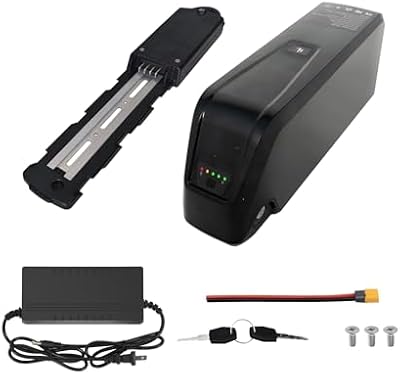
The UUGPOWER 48V 20Ah lithium pack sells for 289.99 with 960 watt-hours on the label, 48 volts times 20 amp-hours. On our comparison table that is about 30 cents per watt-hour, which sits in the pricier third of the 301 packs we track. The specs box below renders the live position as prices move, and the live price has already drifted ten dollars above the one our row carries.
The record flipped under this review
Here is the arithmetic of the page arguing with itself. The reviews page counts two global ratings averaging three stars.
The listing's rating widget says five stars from one. Both can't be current, and the widget is the one that lost the race, since a five-star average from a single rating is the state the page was in before mid-August.
That matters more than it looks. A shopper who lands on the listing sees a perfect score and never scrolls to the reviews tab, because nothing on the page suggests there is a story to find. The story is one paragraph long.
The older text, from May, is the one we built our first look around. Its writer, a Happyrun G50 owner, describes a two-wire solder job, a swap from the bike's five-prong receptacle to the pack's four-prong holder, everything bolting up cleanly and the included charger working out of the box.
One helpful vote sits on that text. It remains the only account in the record of this pack working at all.
The newer text, dated the same day our first look went live, runs five sentences and we will quote it in full in the next section, because every sentence carries weight. Both texts are purchase-badged. Nobody else has written a word about this pack.
What the fire report says, and what the page promises
The one-star text reads, exactly as written: "AVOID. This battery is terrible. I have gone through TWO of them so far. The first one died, wouldnt charge, ans when I tried to reset the BMS by leaving it plugged in it caught fire. The second one has died, wont charge, and im not about to find out if its gonna do the same."
Take the claims in order. Two units, back to back. The first died refusing to charge, and the fire happened during the owner's reset attempt, in the charger-connected state.
The second unit died the same way, and the owner stopped testing. That isn't a report of one defective unit, which every batch has. It's a report of a failure that repeated.
Set that against the first bullet on the listing, which leads with a UL-2271 certification claim, the words no inflated specs, and a list of safety advantages that names fire prevention explicitly.
A certification claim is paperwork until an independent lab tests the sample, and a bullet is marketing until a fleet of buyers confirms it. One of the two buyers in the record reports the opposite outcome in the most serious way a lithium pack can fail.
The category context is worth stating plainly, because it isn't exotic. Lithium-ion cells carry flammable electrolyte, and the standard reference chemistry notes describe how charging past a cell's voltage ceiling plates lithium metal inside the cell, which produces internal short circuits and ignition, with plating made worse by fast charging and low temperatures.
Overcharge is precisely the condition a BMS exists to prevent, which is why a pack that fails while connected to its charger deserves the scrutiny it now has. None of this convicts this specific pack. It explains why the fire report outranks every bullet on the page.
The BMS arithmetic at the top of the title
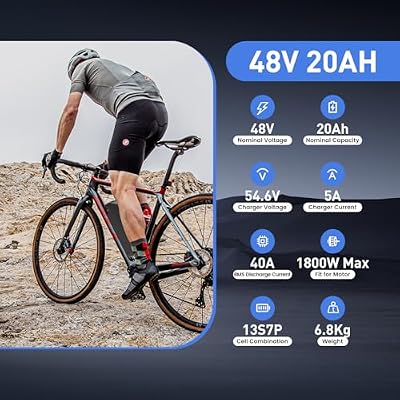
The title promises support for motors up to 1,800W, and the bullet behind it names a 30A continuous BMS with a 75A instantaneous peak. Those numbers disagree at the top, and the disagreement is arithmetic rather than opinion.
An 1,800W motor at full load on 48 volts draws about 37.5 amps. The BMS continuous limit is 30 amps, so the top bracket of the title's own range sits above the pack's own continuous ceiling. The 75A peak, about 3,600 watts of burst headroom, covers acceleration spikes, but bursts don't sustain a climb.
A 1,000W motor drawing about 21 amps sits comfortably inside the limit, and that is the honest top of this pack's range in practice.
The same pattern appeared on the Yose 36V pack we rebuilt last time, where the highlight bracket sat at or over the maximum current. It is becoming the house style of this market tier: the wattage figure in the title is chosen for the search box, and the BMS figure in the bullet is chosen by the hardware. Believe the BMS.
One more row deserves a note. The spec table prints the voltage as 47.45 volts, which is 13 cells at a 3.65-volt nominal, a precision almost no listing bothers with. Multiply that row by 20 amp-hours and you get about 949 watt-hours rather than 960.
The label math still works on the title's numbers, and the row tells you the pack is a 13S design either way.
Fitment and the connector that keeps moving
The connector story now has three positions, and the listing doesn't reconcile them. Our data row, captured when the pack was first tracked, titles it 4PIN.
The live title today says 5PIN. The May buyer's unit had a four-prong holder against the bike's five-prong receptacle, which he resolved with a solder job. Whether the current production run moved to five pins or the title was corrected, the page doesn't say, and the difference is the difference between plug and play and a soldering iron.
So the practical instruction is unchanged from our first look and now carries more weight. Ask the seller which connector is on the current units before you order, and match it to your controller or your old pack's receptacle.
The rest of the fitment picture is a 14.5 by 3.74 by 4.17 inch brick, and the bullet's metric conversions all check out, which is rarer on listings like this than it should be.
What the page leaves out is the usual list for this tier. There's no weight row, no Included Components row, and no charger specification anywhere, so the fact that a charger ships at all rests on the May buyer's one line about it working out of the box.
The model number is HL4821, the manufacturer of record is UUGPOWER itself, and the details table carries an ASIN that differs from the page address, a variant-mapping loose end worth knowing if a support conversation ever needs the right identifier.
What it costs, and who has reason to look past the fire report
At 289.99 for 960 watt-hours, the pack works out to about 30 cents per watt-hour, the pricier third of everything we track.
The comparison table shows what the same money buys elsewhere, and the short answer is roughly a third more energy in a name-brand pack for the same spend. Nothing about this page's specs justifies the premium except the certification claim, and that claim is now the one thing in the record with a contradicting data point.
The protections are a one-year warranty with the word returnable in the sixth bullet, and both matter more than usual here. If you buy this pack anyway, test it hard inside the return window. Charge it supervised, in a space where a fire would be an incident rather than a loss, the same advice that applies to every pack in this tier and doubly to this one.
Who still has reason to consider it is a short list. A Happyrun G50 owner whose original pack died, matching the one success story in the record, gets a working bike for two wires of solder. Everyone else is weighing a price in the expensive third of the market against a record where one of the two buyers reports two dead packs and a fire, and the other is the install story.
The Varstrom 48V 16Ah review covers another listing whose page argues with itself, and the Yose 36V 13Ah review shows the same title-versus-BMS arithmetic on a pack with a deeper record. The current listing is the source for every figure in this article, and if the seller replaces the stock or revises the pack, the record will start over.
Frequently Asked Questions
Is the UUGPOWER 48V 20Ah battery safe?
The record can't clear it. The listing claims UL-2271 certification and names fire prevention among its advantages, and one of the two buyers reports a fire during a charger-connected reset attempt after the first of two units died refusing to charge. A certification claim plus a contradicting owner report is an unresolved question, not a safety endorsement.
How long does 960Wh actually last?
Plan on about 48 miles at a gentle 20 watt-hours per mile of pedal assist, or about 32 miles under heavier throttle at 30. Real figures depend on hills, cold and how honest the cells are, and no buyer in the record has reported a measured range.
Will it fit my bike?
It's a universal brick, 14.5 by 3.74 by 4.17 inches, so the mechanical question is whether your mount takes those dimensions. The electrical question is the connector, and the listing won't settle it, since the data row said four pins, the live title says five, and the one buyer who describes the subject had a four-prong pack on a five-prong bike.
Does it come with a charger?
The page never says. There's no Included Components row and no charger specification anywhere on the listing, so the only evidence that a charger ships is the May buyer's line about the included charger working. Confirm with the seller before ordering, and confirm its output matches the 54.6 volts a 13S pack takes.
Can I trust the five-star rating on the page?
No, because the page disagrees with itself. The rating widget prints five stars from one rating, while the reviews page counts two ratings averaging three. The widget predates the one-star report, and the average you will actually find in the record is the lower one.