Replacing a downtube battery on an older ebike is a narrowing search. Most of the market moved to 48V packs years ago, so 36V replacements come from a short list of brands, and the buyer is usually holding an aging bike with a specific bay size, a specific connector and a motor that cannot be swapped cheaply. Yose Power is one of the few brands still selling into that gap.
The purchase should be simple: match the voltage, match the shape, ride. This listing makes the first step genuinely hard, because the page cannot decide what voltage it is selling. The title says one thing, two spec rows say another, and the charger evidence splits down the middle.
This article walks through the voltage conflict, the fitment record, the electrical numbers behind the motor-compatibility claim, and what the one-star texts add to the picture.
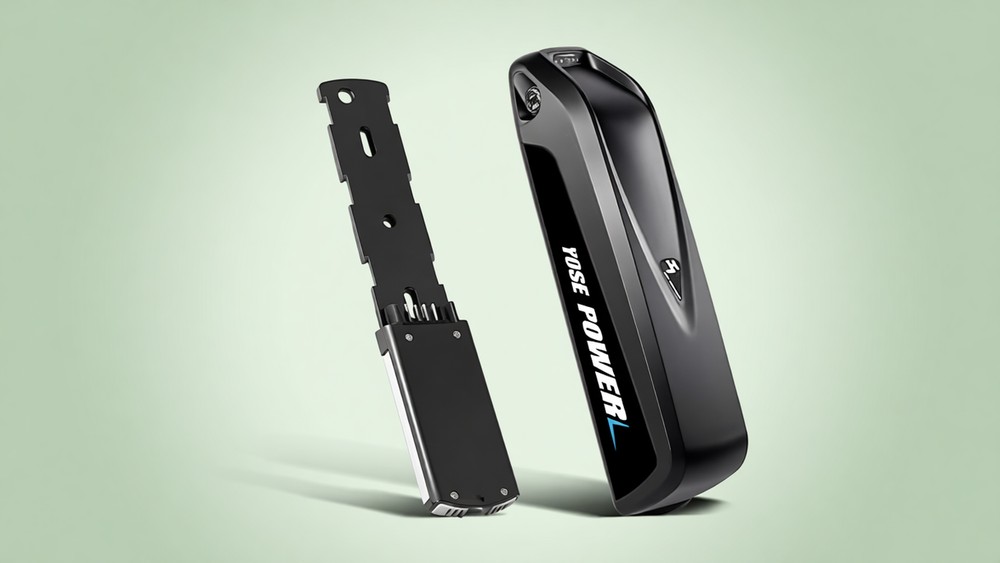
The Yose Power 36V 13Ah downtube battery sells for 192.00 from the brand's own storefront. Taking the title at its word, 36 volts times 13 amp-hours is 468Wh, and on our comparison table that works out to about 40 cents per watt-hour, which sits among the most expensive tenth of the 301 packs we track.
The specs box renders the live position as prices move. If the spec table's 48V and 15Ah rows were the truth instead, the pack would be 720Wh and about 27 cents per watt-hour, near the middle of the table. The listing never settles which product is in the box, so even the value comparison is conditional.
The page cannot say what voltage it is
Count the voltage claims on one page and you get four, in three directions. The title reads 36V 13Ah Down Tube Battery. The spec table's voltage row reads 48 volts, and its capacity row reads 15 amp-hours, both contradicting the title.
The parameters bullet tells you the charger is 54.6V at 2A, and 54.6 volts is 13 cells times 4.2, which is 48V-pack charging math.
Then the model number row settles nothing and muddies everything: battery AQ 36V13Ah, charger DPLC084V42Y. That charger model carries a 42 in its string, and 42 volts is 10 cells times 4.2, which is 36V-pack charging math.
A 36V pack charged with a 54.6V charger would be overcharged past every cell's limit, and a 48V pack charged with a 42V charger would never fill. The charger bullets and the charger model number cannot both be right.
One of the four claims is probably a copy-paste leftover from a sibling listing, a pattern we have seen on multi-variant pages where one spec table serves every capacity.
But a buyer cannot tell which claim to trust from the page, and the rating record shows what happens when they guess wrong. Confirm the voltage of your old pack, and if the listing answers your question with a different number each time you look, treat the model number row and the charger that actually arrives as the deciding evidence.
The fitment record is the story
Thirteen ratings sit behind a 4-star average, with a histogram of 76 percent five-star and 24 percent one-star and nothing in between. Eleven distinct texts survive across the recent and helpful sorts, every one of them purchase-badged.
Three of those eleven are did-not-fit accounts. The owner who wrote in October liked the look of the battery, found it did not fit their bicycle, and returned it, noting the return process was not easy while the seller helped with the FedEx requirements.
The June 5 one-star is blunter: the battery was not compatible with their bike although they had asked the seller whether it would be, and then they could not return it for a refund. The June 7 text could not use this particular battery at all, and still ends with a promise to buy from the brand again because of the service.
That is three fitment failures in eleven texts, two of them five-star, which is the strangest feature of this record.
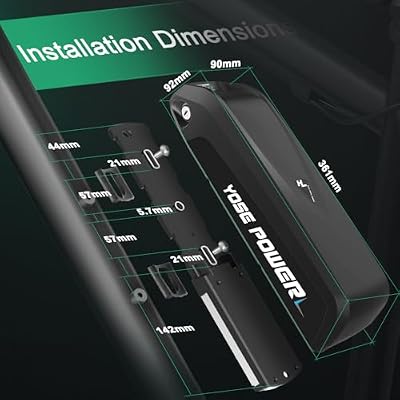
The pack itself may be fine, and the buyers still ended up shipping it back. A downtube battery lives or dies on bay dimensions, and the listing prints its size as 90 by 111 by 367 millimeters. Measure the bay on your own bike with your own tape before ordering, and match the discharge connector, since a 4-pin port does not interoperate with anything else.
The electrical numbers, checked
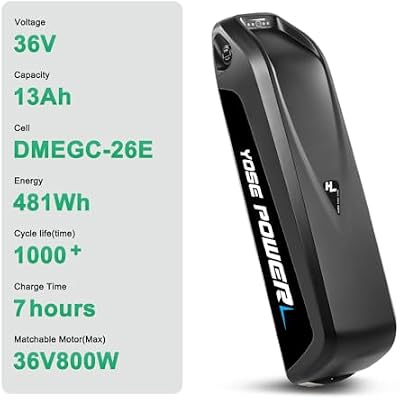
The parameters bullet gives a standard discharge current of 10A and a maximum of 20A.
On the title's 36V reading, that is 360W continuous and 720W at the ceiling. On the spec table's 48V reading it is 480W and 960W. The highlight bullet claims compatibility with 200W to 1000W motors, and the top of that range sits at or over the maximum current either way.
A 1000W motor under full load wants more than 20 amps on 36 volts, so treat the claim as a marketing bracket rather than an engineering statement. Motors up to about 500W have real headroom, and that covers the older city bikes this pack is actually for.
The charging claim hangs together. Thirteen amp-hours at a 2A charger is 6.5 hours minimum, so the advertised 7 hours to full leaves room for the charge taper and is consistent with the 13Ah title. The pack also carries a USB port for charging a phone, a keyed lock, and an LED charge indicator, which is a sensible feature set for a downtube pack left on a bike outdoors.
One spec row deserves dismissal rather than interpretation. The cell composition reads Lithium Metal, which is a different battery family entirely from the lithium-ion cells in every ebike pack. It is template junk, the same row that appears on listings across the category, and the correct reading is unspecified li-ion cells.
The manufacturer part number row reads 4pins discharging port, which is a feature description sitting in a part number field. The service type rows say scooter on a page selling an ebike downtube battery. Nobody curated this spec table.
The one-star texts, and who answers when it goes wrong
The two one-star texts describe different failures. The April 17 account says the battery would not recharge after the first use, and that efforts to fix or return went in a circle, with Amazon pointing to the brand and the brand pointing back to Amazon, while the instructions were called woefully inadequate. The June 5 account is the fitment failure already covered, with the refund refused at the end.
Against that, the seller was praised three separate times, including inside two of the failure stories: the October return with FedEx help, the June 7 buyer who could not use the pack but will buy again, and a Spanish-language April text praising the service without reservation.
The most-voted text in the record, at two helpful votes, simply reports the pack more powerful than the original battery it replaced. A brand-direct storefront that answers messages well is worth something in this tier, and the record shows it, but the April runaround shows the same storefront cannot resolve a refund once a case leaves its hands.
The warranty row reads 18 months for kit and battery, which is longer than the one-year terms common at this price. The best sellers rank sits at #1,148 in Powersports Batteries, a mid-band number consistent with a replacement part that sells steadily to owners of older bikes.
Buyers cross-shopping 36V replacements should also read the ShunTongDa DCH-006 review for the measurement-first method, and the SMSeler 48V 7.5Ah review for the same lesson from the opposite direction, a listing whose fitment numbers were the only reliable thing on the page.
Frequently Asked Questions
Is this a 36V or 48V battery?
The title and model number both say 36V, and the title's charger model string contains 42 volts, which is 36V charging math. The spec table's voltage row says 48 volts and the parameters bullet quotes a 54.6V charger, which is 48V math. The weight of evidence sits with 36V, and you should not order until the charger that ships or the seller's direct answer confirms it.
What motors can this pack run?
Standard discharge is 10A and maximum is 20A, which on 36 volts is 360W continuous and 720W at the ceiling. Motors up to about 500W run with real headroom. The 1000W figure in the highlight sits beyond the pack's maximum current and should be read as a bracket, not a rating.
How far does 468Wh go?
At a gentle 15 watt-hours per mile of pedal assist, about 31 miles. Under heavy throttle closer to 30 watt-hours per mile, about 16. Range on any ebike depends on motor usage, the degree of assistance chosen, hills, and the weight of bike and rider, and where this pack lands inside those variables depends on whether the cells deliver rated capacity, which no buyer has measured in writing.
Can I return it if it does not fit?
One owner could not, after asking the seller about fit before ordering. Another returned theirs with the seller's help through the FedEx process. The two accounts disagree, so treat the return as uncertain and let the tape measure settle fit before you order.
Is Yose Power a reliable brand?
The record shows a brand-direct storefront that answers messages well and stands behind orders in three separate accounts. The one first-use charging failure ended in a support loop between Amazon and the brand that nobody won, so the service record is good but not spotless.