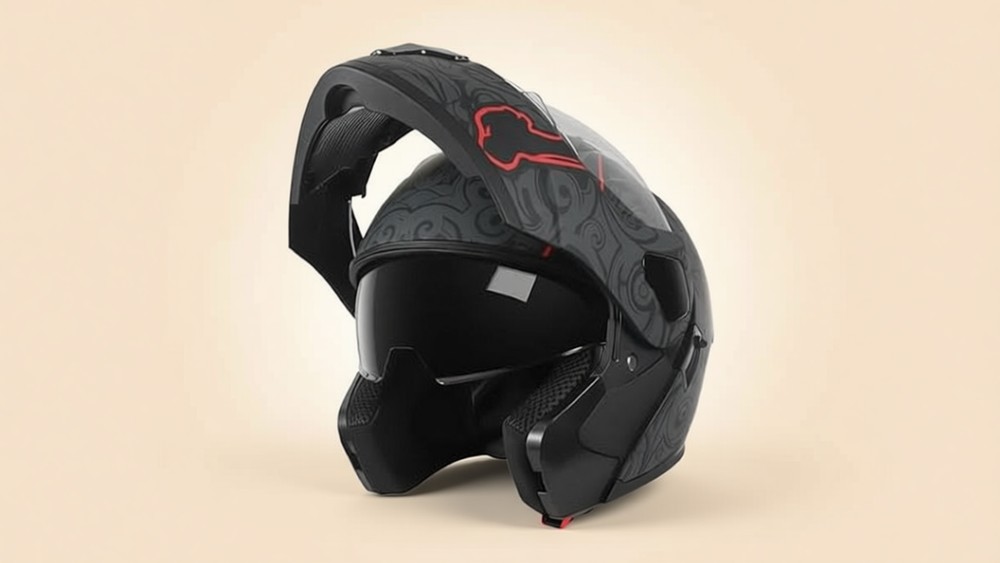
A modular helmet asks you to trust two products at once: the shell that takes the impact, and the hinge that lets the chin bar flip up at the coffee stop. The SPARK adult modular sells that pair on a budget, with a dual visor and a skull graphic option, and its buyer record is one of the strangest we have read this year.
We rebuilt this review from the live listing and all 29 written buyer texts on the ASIN, because the old version leaned on the DOT wording in the title without asking what that word covers on a flip-up helmet. The answer matters more than any comfort note below.
Three crash accounts, and what they can and cannot tell you
The most-voted text on the listing, at eight helpful votes, is an ATV crash account. The rider broke their neck and back along with other injuries, reports that their head and face came through intact, and says hospital staff credited the helmet. They plan to buy another once they're back on their feet.
Two more crash accounts sit in the record. One rider went down hard enough that the bike rolled over them, and the helmet's only damage was a scratch in the visor. Another buyer watched a friend go down badly, credited the helmet with saving them, and bought one on the strength of it.
There's a fourth account, and we want to be careful with it. A five-star text describes being hit by a car at 50 mph, thrown 40 feet, and walking away from it with six broken bones and no concussion. It is also the only unverified purchase among the five-star texts, so treat it as a story rather than evidence.
What none of the crash accounts describe is the flip mechanism's state after impact. The chin bar's latch is the part a modular adds to the crash equation, and no buyer reports whether it held closed. That gap can't be filled from the outside.
The noise is the record's one consistent fault
If the crash stories are the record's spine, wind noise is its daily complaint, and it repeats across four separate texts. One rider with nearly 20 years of experience reports gaskets around the visors sealing badly enough to produce a constant whistle at speed. Another describes whistling and roar at highway speed so loud it became a distraction, and gave up on the helmet.
Two more owners put numbers on it. One says the helmet is very loud inside at anything above 80, more so than an expensive name-brand lid, and still called it worth the money after it survived their wreck. A two-star update reports wind noise and vibration above 65 after a few months of ownership.
The same airflow gets praise from the other side of the record. A summer rider says the venting is generous and the noise is the price of it, and the same text calls the fit great. Read those together and the trade is clear: this shell moves a lot of air, and air moving past a budget seal makes noise.
The moving parts, the fit and the weight
Three owners hit hardware problems on the moving parts, and the failures are cheap ones that a buyer can check for in the first week.
One family bought two of these helmets and reports both needed constant repairs, with the flip section coming unscrewed at least once a week. One unit arrived with the tinted-visor lever already broken, and another came back from an owner who ordered used-like-new with a sun visor that would not retract at all.
The record also contains the fix for the most common self-inflicted failure. One owner's text carries the lesson in its title: use the switch on the side to lift the visor, don't manhandle it. Their helmet survived a first scary moment when the tinted visor would not pop out, and they settled into liking the helmet afterward.
Liner quality is the other build complaint. One buyer reports the inner padding coming loose after a single ride, with new cushions thinner than the worn ones they were replacing, and calls the price great but the quality below par. Against that, other owners call the build obviously budget but acceptable for the job, one of them using it specifically for cold-weather rides with the front opened up.
The spec row lists 3.1 pounds, and one owner's first reaction on opening the box was disbelief that a helmet could be that light. The record splits on fit in both directions, which is normal for a budget shell with one head shape. One buyer followed the size chart and calls it accurate, while another found the helmet so tight it felt suffocating.
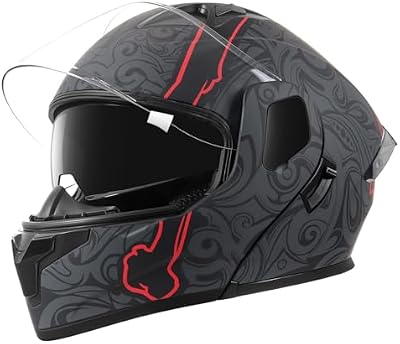
Small practical notes round it out. A buyer's girlfriend wears her SPARK modular daily and calls it light and easy to take off. Cheap headphones fit inside one owner's helmet without breaking the fit, which matters if you ride with audio, and the flip-up front gets named as a kindness for riders who feel closed in under a full-face shield.
What DOT means on a modular helmet
The title leans on DOT certification, and the word is doing less work than it looks like. DOT is a self-certification standard in the United States, and Wikipedia's motorcycle helmet article makes the point that matters here: the DOT standard does not require chin bar testing, so the flip-up half of this helmet carries no tested rating behind it.
The category context is worth knowing while you shop. Full-face helmets offer the most protection in the studies, because 35 percent of crashes show major impact on the chin-bar area, and helmet use across the board cuts head-injury risk by 69 percent and death risk by 42 percent.
Europe's ECE 22.05 scheme gives modular helmets whose chin bars passed testing a -P suffix on the certification number, and rides with the bar open add drag and may raise neck-injury risk in a crash, so many modular makers design theirs to be ridden closed only.
None of that says this helmet is unsafe. Three crash accounts say otherwise. It says the DOT wording in the title covers the shell, and the hinge is on you to inspect, lubricate and check for the unscrewing that one family lived with weekly.
Worth it on a budget, with eyes open
On our motorcycle helmet comparison table, this helmet sits close to the middle of the 257 we track by price, and the specs box there renders its live position. Compared with the LS2 Strobe II modular or the Typhoon TH158, you're paying less and giving up a tested hinge history, which is the honest framing of the trade.
Buy the SPARK modular if your budget is fixed, your head matches the chart, and you'll inspect the hinge weekly the way the record teaches. Pay more if you ride highways daily, because the wind-noise complaints cluster at exactly those speeds, and noise is the one fault no amount of care fixes.
FAQ: the rating the flip section never gets, the gaskets one owner traced and the latch no account describes
Is the SPARK modular helmet DOT certified?
The title says so, and DOT is a self-certification, so the maker asserts the shell meets FMVSS 218. What DOT does not test is the chin bar of a modular helmet, so the flip-up section has no certified rating behind it on any DOT modular, this one included.
Is the wind noise fixable?
Not really. Four owners describe whistle and roar at highway speed, one traced it to the gaskets around the visors, and one accepted it as the cost of the generous venting. A helmet that moves this much air past a budget seal will make noise, and the record has no successful fix in it.
Does the flip mechanism hold up?
Mixed. Three owners report hardware failures on the moving parts, including a flip section that came unscrewed weekly on both of a two-helmet purchase. Others report trouble-free use, and the practical lesson in the record is to lift the visor with the side switch rather than by hand.
What do the crash accounts actually show?
Three verified accounts describe riders walking away from serious crashes while wearing this helmet, one with hospital staff crediting it. A fourth, more dramatic account is unverified. None of the accounts describes the state of the chin-bar latch after impact, which is the part a modular buyer most needs to know.