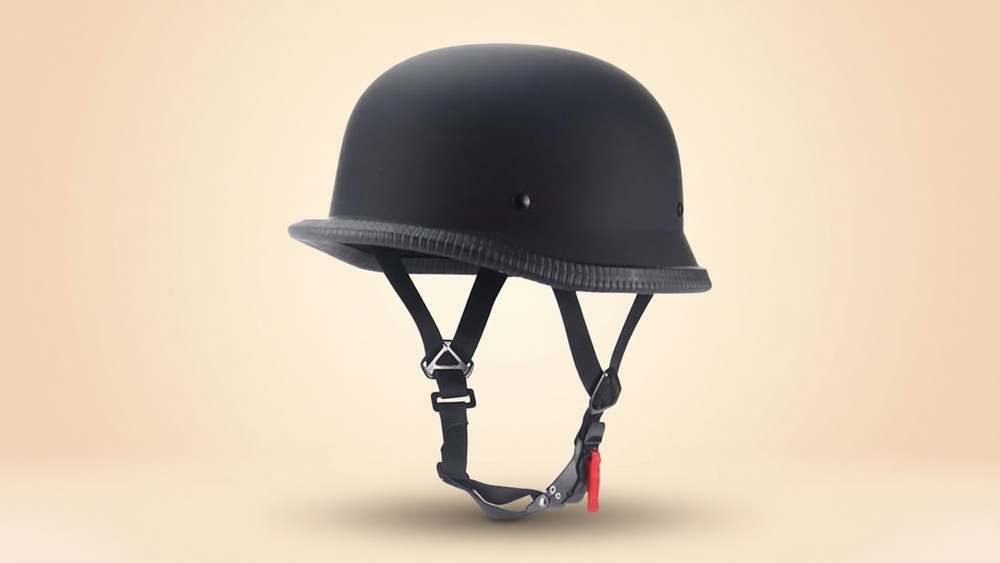
A German style half helmet is bought with the eyes first. The silhouette is the sale, the price is usually small, and everything else, protection numbers included, becomes fine print that nobody reads until the box is open.
The Woljay is one of the cheapest of the 257 helmets we track, and its owner record is unusually clean. Thirteen written reviews have text, and every one of them carries Amazon's purchase badge. There is no promo-shaped filler anywhere in the record, which is rare at this price and worth saying out loud, because that cleanliness is exactly what makes the record's one real disagreement stand out.
This article walks through that record. The sizing reports come first, because that is where owners split. Then the crash account, the DOT label, the mask the listing advertises, and what the price does and does not buy.
The short verdict: the Woljay Vintage Motorcycle Half Helmet looks the part, holds 4.4 stars across 195 ratings, and its price sits in the cheapest fifth of the helmets in our comparison table. The warning in the record is narrow but sharp: at the larger sizes, the reports say this shell runs small.
Thirteen owners, all of them badged
The listing shows 195 ratings and 57 written reviews, and thirteen of those reviews carry text.
All thirteen carry Amazon's purchase badge. I track thin records all the time in this campaign, and the usual pattern is a couple of five-star texts that read like the bullet list and carry no badge. This record has none of that.
What the record actually contains is small and specific. One owner has fitted the helmet to their son's moped and reports compliments.
One rider on a bicycle says they feel safe in it. One owner has had a helmet stolen off a parked bike and ordered the same one again, which is about as plain a repeat-purchase signal as a text can carry. Most of the rest are one line: nice helmet, great product, good quality.
The newest text, from October 18, 2026, is a five-star video with no recoverable words, so it does not enter the count. That leaves the substance sitting in a handful of longer texts, and two of them shape this whole article.
One is the crash account in the next section. The other is the sizing split.
The sizing reports point one direction, and it is not up
Three separate owners, in three separate texts, describe the same problem at the same sizes.
One Large wearer reports the Large fit like a child's medium and adds that you would need an egg-shaped head for it to work at all.
A second Large buyer says the same thing more bluntly: the large size fit a child's head, and they had to buy an XXL to fit their own. A third owner reports the helmet ran much smaller than expected, small enough that it fit them but not their husband, who wears an XL.
Counted honestly, that is three small-run reports, all of them at Large or XL, against three owners who report a good fit, one of whom names a medium while the other two name no size at all. A fourth owner lands in between, calling the fit a little more snug than they would have liked.
That pattern is the useful part. The complaints do not scatter across the size range. They cluster on the exact sizes a rider with a bigger head would order, while the one report that names a medium is happy.
The egg-shape comment adds a shape caveat that the listing's own size chart, which the spec table does not print, never addresses.
So my advice is narrower than the usual "size up" line. If your head takes a medium, the record likes this helmet. If it takes a Large or an XL, the record says expect a child-sized fit, measure your head, check the seller's chart before you order, and keep the return window in mind.
One of the unhappy Large buyers solved it with an XXL reorder and kept the helmet, so the problem has a known workaround, but you should not buy a Large expecting it.
The deer, the crash account, and what the DOT label means
The longest text in the record is a five-star account from December 2025. A deer ran out in front of the rider one day before Christmas, and the rider credits the helmet directly: without it, they say, they would not be here today, and they plan to buy another.
I want to be careful with that sentence. It is one owner's account of their own crash, not a test, and I cannot verify what happened or what the helmet contributed. But it is the only impact datum this record contains.
The certification question sits next to that account. The bullets claim DOT FMVSS No. 218, and the spec table carries a row that says Specification Met: DOT.
In the United States, DOT compliance is a self-certification: the manufacturer tests its own helmet and attests to the result, and no independent lab touches the helmet before it ships. (Wikipedia, Motorcycle helmet)
That is not a knock on this helmet specifically. Every budget shell on the market carries the same kind of label. The broader numbers are what matter at this price: helmets cut head-injury risk by about 69% and death risk by about 42% in the research that page summarizes.
A certified helmet beats riding with none, and a half shell sits at the bottom of the coverage ladder, leaving the chin and face exposed in a way a full face does not.
One more piece of small print: the spec table carries no warranty row at all. If the crash account teaches anything, it is the standard guidance that a helmet's liner is built for one impact and should be replaced after a crash, whatever the price.
The mask the listing sells and no owner mentions
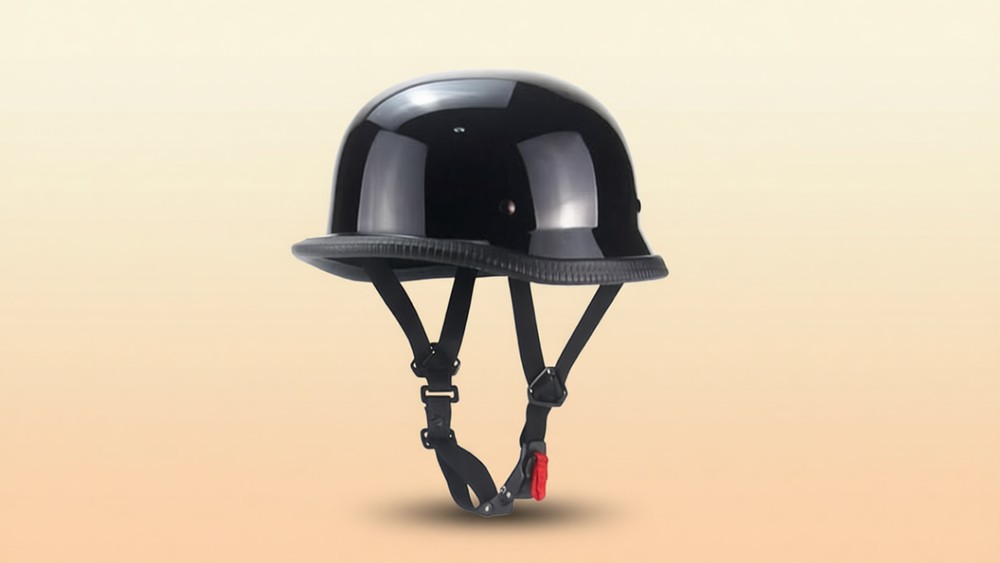
Bullet three says the length of the mask can be adjusted, and describes a breathable lining that is easy to clean. Here is the part that stopped me: in thirteen texts, not one owner mentions a mask, a visor, or a liner.
Not to praise it, not to complain about it. The word never comes up.
The spec table does not help, because there is no Included Components row. Nothing on the page I can see says what actually ships in the box, and the spec table also prints an ASIN that does not match the page address, which is the usual sign of copied variant data rather than a red flag on its own.
I am not going to tell you the mask does not exist, because I have no evidence either way. What I can tell you is that no buyer has confirmed it, so treat that bullet as unverified and ask the seller what ships before you order. If the mask is the reason you are considering this helmet, that question is the whole purchase.
What the price buys, and what the record cannot tell you
On price, this helmet sits in the cheapest fifth of everything we track, and the comparison table shows where it lands today. That is the strongest fact in its favor and the reason it sells.
The record cannot tell you three things you would probably like to know. Nobody mentions wind noise, so I cannot say whether it is quiet or loud at speed, only that no owner has complained about it, which is mildly interesting on an open-face design but proves nothing. Nobody says how the helmet ages, so longevity past a few months is undocumented.
And nobody names a highway, so the riding evidence covers mopeds, bicycles, and one crash with a deer, nothing faster.
If you want a second German style shell to compare against, the ZGMZLBBD half helmet sits at a similar price and carries its own record: four goggle complaints, its own sizing split, and the same kind of DOT label. Between the two, the choice is mostly which listing's small print you would rather live with.
Frequently asked questions
Is the DOT certification checked by anyone before it ships?
No. FMVSS 218 is a self-certification standard, so the manufacturer tests and attests, and government checks happen later on helmets bought at retail.
What size should I order?
The record likes the medium and flags the Large and XL as running small, with one buyer solving it by reordering in XXL. Measure your head and check the seller's chart, because the listing's spec table prints no size rows.
Is it safe for highway riding?
No owner in the record reports highway use, so there is no evidence either way. A half helmet leaves the chin and face exposed, and the general guidance is that more coverage protects more.
What comes in the box?
The listing does not say. There is no Included Components row, and the adjustable mask no owner has mentioned remains unconfirmed, so ask the seller before you buy.
Should I replace it after a crash?
Yes. A helmet's impact liner takes one hit by design, and replacing the helmet after any crash is the standard guidance regardless of price.
The Woljay listing on Amazon is where the current price and size chart live. Buy it for the look and the price, size it from the small reports, and treat everything the record has not confirmed as a question for the seller.