Modular helmets used to mean one thing: you wanted to talk at the gas stop without unstrapping your whole lid. The compromise stayed the same for years. You paid more, carried more weight on your neck, and gave up a little protection for the hinge.
That trade is getting harder to price. The certification labels on the box say less than they seem to. A helmet can carry the newest European standard and still skip the one part a flip-front depends on most, the latch that holds the chin bar shut.
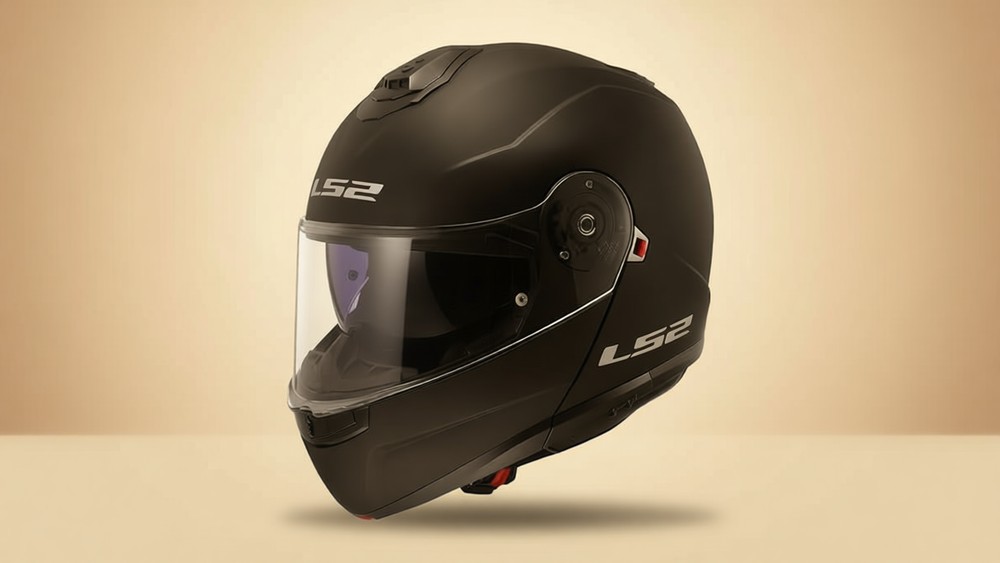
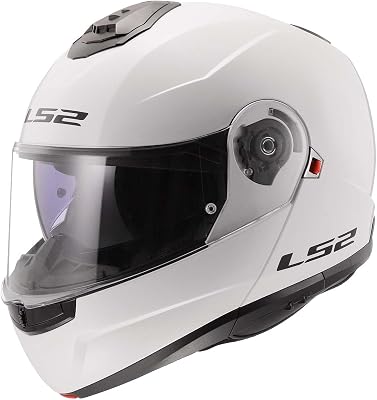
Budget brands have moved into that space, and LS2 is one of the established names among them. The Strobe II is their budget modular, the one that keeps showing up under two hundred dollars with an ECE 22.06 sticker on the box.
Here's what you get for the money, what the sticker doesn't tell you, and how the fit runs on real heads.
The LS2 Strobe II is a budget flip-front wearing the newest European certification label, at about one hundred seventy dollars, in the pricier third of the 257 helmets we track.
Owners have liked the wide view and the glasses fit, and two have said it runs small. No one has reported how it holds up past the first month. It fits a rider who measures their head first, wants ECE 22.06 on a budget, and plans to run an intercom in the speaker recesses.
What ECE 22.06 buys you, and what no standard tests
The listing claims ECE 22.06 approval with a rotational-energy system, yet the spec table only shows a DOT rating. Both standards check how strong the chin bar is, so the bar itself is covered. What no standard tests is the latch that holds the face guard shut.
That gap matters more on a flip-front than on a full-face helmet, because a latch is a moving part living in a crash zone. SHARP, the UK test programme, publishes a latch percentage for system helmets: how many of its 30 impact tests the face guard stayed locked through. It publishes that number separately from the star rating because the standards don't require the test.
The research SHARP built its weighting on puts helmet detachment in 10 to 14 percent of casualties, which is why retention deserves the same attention as shell strength.
So treat the sticker as a floor, not a summary. Check for the ECE label on the strap or shell when the helmet arrives, because the bullets and the spec table on this listing disagree, and only the label on the helmet settles it.
It runs small: measure your head before you order
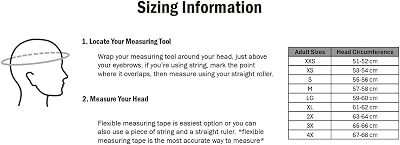
The sizing reports agree with each other: one owner measured for a large and ordered a 2X-Large, while another has found the fit tight and expects the break-in period to loosen it. The method that avoids both outcomes is a cloth tape around your head, about an inch above the eyebrows, matched to the maker's chart rather than to the letter on your current helmet.
A new helmet should feel snug all over without pressure points, because the liners compress in the first few weeks. Guess from habit and you'll likely receive one that's too tight, since the maker's letters run under what the tape says. The glasses angle is real: one rider with two other LS2 helmets wears glasses under the drop-down visor and calls the fit good.
Spend the first week checking the spots that don't break in. Forehead pressure, temple pressure, and the frames of your glasses pressing your cheek all stay after the liner settles, and a return window is the time to catch them.
The sun shield, and the Pinlock you still have to buy
The built-in drop-down sun shield is the convenience that defines this price bracket, and one owner has found the main shield can stay up at lower speeds, which is its own kind of feature on a modular. The outer shield is Pinlock-ready. The anti-fog insert is not in the box, so fog-free cold-weather riding costs more than the sticker price.
No captured owner has reported fog behavior yet, so the cold-weather story on this helmet is unfinished. What you can check on day one is mechanical: shield travel, the sun-shield lever, and whether the insert slot takes a Pinlock cleanly. If you ride in a climate that fogs shields, price the insert into the purchase before you compare it against helmets that include one.
Speaker recesses and a wide eye port
One owner has found the speaker recesses accept Sena speakers with no pressure on the ears, a step up from their LS2 Valliant II. Recessed speakers are what make a modular helmet intercom-friendly, because the hardware sits in the shell instead of against your ear. Our intercom comparison table shows what people hang in helmets like this one.
A first-time modular buyer has said the view feels as open as a 3/4 helmet, and another has agreed the view is wide. That openness is the other half of the modular pitch: you can ride with the shield up at low speed and still have the chin bar there when traffic picks up.
The maker describes the shell as a Kinetic Polymer Alloy, built to flex and manage energy. The listing states an item weight of 5 pounds, which reads like boxed weight rather than a helmet on your head, and no owner states a worn weight, so hold that figure loosely until you've balanced one in your hands.
The decision: certification now, or a proven record later
About one hundred seventy dollars puts this helmet in the pricier third of the gear we track.
What that buys: current-generation certification on paper, a drop-down sun shield, recesses for intercom speakers, and a fit that glasses wearers have praised. What it doesn't buy is a track record. Every captured owner wrote within days of riding it, so latch wear, wind noise at highway speed, and a winter of fog are all unwritten.
Buy it if you want ECE 22.06 on a budget, your tape measurement agrees with the chart, and you'll check the fit and the strap label inside the return window. Keep the box until you've done both.
Spend differently if you ride high highway mileage and need a latch and a noise level with years of owner reports behind them. In that case the money goes further on a helmet with a longer record, even at a higher sticker.
FAQ
Is this helmet ECE 22.06 certified?
The listing bullets claim ECE 22.06 approval, but the spec table only lists DOT certification for the Strobe II. Check the label on the strap or shell when it arrives, because that label is the claim that counts.
Does the LS2 Strobe II run small?
Two owners have said so: one measured for a large and ordered a 2X-Large, and another calls the fit tight. Measure your head circumference and follow the chart rather than trusting your current helmet's letter.
Can I wear glasses while riding?
One owner with two other LS2 helmets wears glasses under the drop-down visor and calls the fit good. The drop-down sun shield means you don't swap shields to block sun, which is part of why glasses work here.
Does it fit intercom speakers?
The helmet has internal recesses, and one owner reports Sena speakers sit in them with no ear pressure, unlike on the Valliant II. You can see this helmet on Amazon if you want to check the recess depth against your own unit.
Is the Pinlock insert included?
No. The shield is Pinlock-ready and the anti-fog insert is sold separately, so budget for it if you ride in cold or damp conditions.