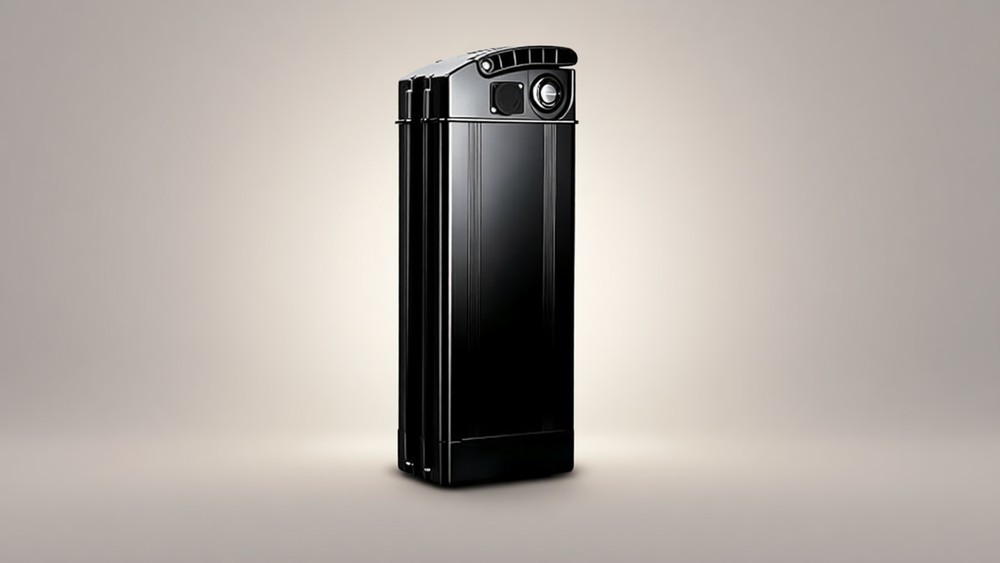
You found a cheap 48V pack with a compact footprint, the listing looked complete, and then it vanished from Amazon. This is a rebuild of the SHEWAIHE 48V 13Ah from the recorded listing data, written as a replacement-buying guide. The spec sheet survives in full, and one detail on it shapes the whole install: this pack discharges from the top.
What the recorded listing says
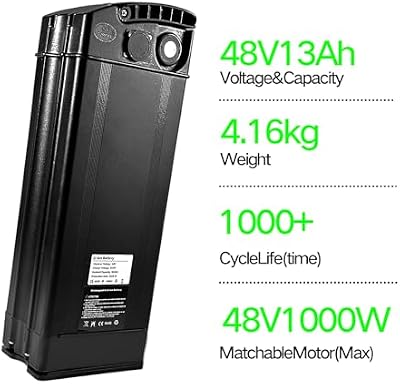
The listing sold a 48V 13Ah downtube pack with 624Wh, a 40A continuous BMS, and a motor band of 0-1000W. It measured 14.37 by 5.12 by 3.43 inches and claimed 10.8 pounds. The box held the battery, a mounting bracket for the seat tube or a frame rail, a charger, two wrenches, six screws and two keys for the lock. The recorded full charge was 54.6V.
Our data row carries no rating fields, and the July 2026 article recorded two reviews averaging 4.2 stars, positive about compactness, with no written texts captured. I can't re-check either figure now that the listing is dead, and I won't invent reviewer detail that was never recorded.
On value, this pack sat in the pricier third of the 324 packs we track at about twenty-nine cents per watt-hour. The live position renders in the specs box of the battery comparison table. It was not a bargain even before the listing died, and the honest rebuild says so.
The top outlet is the whole install
Most downtube packs put the charge and discharge port on the bottom or the face. This one mounted it on top, and that single fact decides your cable routing. A bottom-discharge pack hides its wiring against the downtube, where the frame rails protect it. A top-discharge pack sends the power cable up and over the battery, out in the open, before it drops down toward the motor.
That matters in three concrete ways. First, measure the clearance above the mounting position: the connector plus a plugged-in cable needs a few inches of headroom that a tight triangle frame may not have. Second, think about rain, because a cable running over the top of the pack sits right in the water path on a downtube mount. Third, if your bike's existing wiring enters the frame from below, plan the reroute before you order, not after. Everything else about this pack was ordinary. The outlet position was the thing a buyer had to plan around.

Power math that holds
The 40A board at 48V allows 1920W continuous, and the listing claimed 0-1000W motors. A 1000W motor draws about 21A at 48V, so the claim sits well inside the board, with room to spare. That's the honest direction, the opposite of the listings this season that pair a 1500W claim with a 20A board. If you ran this pack on a 750W motor, it drew about 16A, comfortably mid-band. The board was never the weak point of this listing.
The charger math checks out too. Thirteen cells in series at 4.2V each gives 54.6V, which matches the recorded full charge, so this was a 13-series pack charged by the standard 48V rule. The recorded charger was 2A, and 13Ah divided by 2A gives a 6.5-hour floor, which matches the recorded 6 to 7 hour charge window. The taper at the top of the charge explains the extra half hour. One warning carries over from the records: this is 48V gear. A 52V system expects 58.8V at full charge, and mixing the two damages something expensive, usually the controller.
Range follows from the same anchor we scale every pack against: the em3ev 48V battery guide lists a 960Wh pack at 30 to 40 miles on throttle and 50 to 65 with pedal assist. This pack is 0.65 of that tank, so the scaled figures are roughly 19 to 26 miles at full throttle and 32 to 42 with low assist. Hills, wind and a heavy rider pull both numbers down. The old article's figure of 20 to 30 miles was built on a consumption assumption we no longer use, and the scaled band is the honest replacement.
A weight worth metering
The claimed 10.8 pounds is 4.90kg for 624Wh, which works out to about 0.127 kWh per kilogram at pack level. Complete packs normally land between 0.13 and 0.16 kWh per kilogram, because lithium-ion cells run 0.16 to 0.30 kWh per kilogram bare, per Wikipedia's lithium-ion battery page, and the case, BMS and bracket add weight on top. This claimed figure sits just below the normal band.
That means the cells would need to be near the bottom of the bare-cell band and the hardware unusually lean. It's possible, and it's tight enough that the number deserves a check on arrival. Put the pack on a scale when it lands. If it weighs meaningfully less than claimed, the capacity figure deserves the same suspicion, and a capacity meter costs about the same as one tank of gas.
Choosing a replacement
The search needs four matches, and the records give you all four. Voltage: 48V nominal, 54.6V full, never mix with 52V gear. Connector: the records never named it, so photograph your battery's discharge port and the controller side before ordering. Size: 14.37 by 5.12 by 3.43 inches with a seat-tube or frame-rail bracket, and that 14.4-inch length is the dimension most frames will argue about. Mount: the bracket bolted to the frame with six screws and the pack locked with a key.
SHEWAIHE's other 48V shells stay live where this one died: the 48V 15Ah Hailong pack covers the classic bottle-shaped shell, and the 48V 20Ah Silver Fish covers the long-tail case. Sort the comparison table by price per watt-hour before you commit, because the 13Ah size class is exactly where cheap-per-Wh and small-footprint stop agreeing.
Frequently Asked Questions
Why does the top-mounted outlet matter?
It changes cable routing. The power cable runs up and over the pack instead of hiding against the downtube, so you need headroom above the mount and a rain plan for the exposed run.
How long did a full charge take?
About 6 to 7 hours on the recorded 2A charger, matching the 6.5-hour floor of 13Ah divided by 2A plus the charge taper.
Could it run a 1500W motor?
The 40A board could supply it, about 31A at 48V, but no record shows anyone running one, and the listing claimed only 0-1000W. Treat 1000W as the design point.
What range could a buyer expect?
Scaled from the em3ev anchor, about 19 to 26 miles at full throttle and 32 to 42 with low pedal assist, before hills and wind take their share.
Was this pack good value?
About twenty-nine cents per watt-hour, the pricier third of our 324-row table. The compact footprint and the honest 1000W claim were the reasons to pay it, not the price itself.