Mesh intercom used to be the thing you paid a premium-tier price to get. Sena put the same protocol in the Spider ST1 and dropped the price to where a Bluetooth headset used to sit, so a rider joining a group of 50-series owners can now buy in without replacing anyone else's headset.
But mesh range figures don't mean what they look like they mean. The listing says 5 miles. Sena's own page says something smaller, and the difference matters a lot when you're the sweep rider half a mile behind your group and the trees close in.
Then there's the weather question, which this record answers in an uncomfortable way. One owner lost a unit to rain. Another's sat indoors all winter and never woke up.
This review walks through what the 824 ratings actually say, where the listing and the spec page disagree, and what the owners who've put real miles on it would tell you before you spend 239.00 on a single unit.
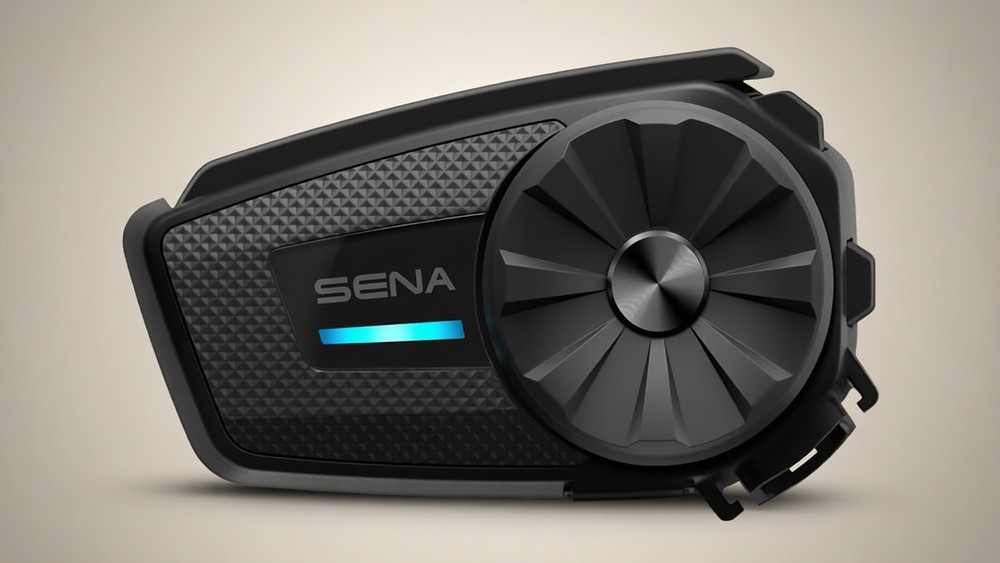
The Sena Spider ST1 is the cheapest door into Sena's mesh network, and it gets there by dropping everything except the mesh itself: one jog dial, one side button, and a price that sits where Bluetooth-only headsets used to live.
Amazon sells it as a single pack at 239.00, it carried 4.3 stars from 824 ratings when we checked, and the spec table promises a 2-year warranty. Per rider, that price lands among the most expensive of everything in our intercom comparison table, so the honest question is what the extra money buys.
What it buys is a real mesh core with an unusually deep purchase record behind it. All 14 written reviews we captured are purchase-confirmed, the most-endorsed text praises the install and the call clarity, and one snowmobile rider has logged about 8 hours of battery with a full charge back on in about 60 minutes.
What drags on it: the headline range number doesn't survive Sena's own spec page, no IP rating exists anywhere on the listing or the spec page, and two owners have lost units to rain and to a hot winter storage shelf.
The 8 km headline against Sena's own 2 km page
Amazon's spec table says the communication range is 5 miles, which is 8 km, and the first bullet repeats the same figure with a stutter: "up to range of up to 5 miles / 8 km". Sena's own product page tells a different story, listing the mesh working distance as up to 2 km, about 1.2 miles, in open terrain.
The reason for the gap is how mesh range gets measured. A mesh network relays, so every rider in the chain passes the signal to the next one, and the headline figure describes the whole network rather than one link. Sena attaches the 8 km figure to Group Mesh with a minimum of 6 riders spaced at 1.6 km intervals.
Ride with two friends and you don't get 8 km of coverage, you get about 2 km per link through open country, and less once hills, trees or buildings sit between you.
Two smaller conflicts sit in the same table. The Amazon bullet says 9 channels on Open Mesh where Sena says 6, and Amazon lists 12 hours of battery life where Sena says up to 18 hours of talk time. No owner in the record has measured any distance at all, so treat the smaller number as the one you can plan around.
No IP code, one rain death, one dead winter
Nothing about the Spider ST1 carries an ingress protection code. Amazon's spec table says Water Resistant, Sena's own page lists no water-resistance rating at all, and that missing rating stops being a paperwork detail the moment you read the record.
One owner, a professional tree climber who runs comms in a climbing helmet, has reported that a first ST1 died in a strong rain storm, and the 4-star rating that carries the story says making the headset waterproof would be child's play.
Weather isn't the only killer. Another owner's ST1 ran one riding season, sat inside through winter, and wouldn't turn on the next spring no matter how long it charged. Between those two stories, the 2-year warranty is the real weather protection here: register the headset, and if anything fails early, use the warranty rather than riding on a suspicion.

Quality control has missed at the pack level too. One box arrived without the main unit inside, and one buyer's set of two wouldn't talk to each other until support shipped a replacement. Both stories end with the company making it right, which is worth something, but both are failure modes you should know about before the ride, not during it.
What 824 ratings with an inverted middle actually say
The histogram has a healthy core and a strange middle. Sixty-eight percent of the 824 ratings are five stars, which is a solid base for any headset at this price, but twelve percent sit at three stars while only ten percent sit at four. An inverted middle like that usually means a real cluster of lukewarm experiences rather than one smooth curve of opinion.
The written record is small but deep. The most-endorsed text, from July 2024 with 5 helpful votes, praises an easy install, a phone call where the listener couldn't tell the rider was on a bike, and app equalizer presets that improved the music.
The longest field report comes from a snowmobile trip: about 8 hours of battery with charge left, a full charge in about 60 minutes, and a verdict that it was the most reliable option in the field for the group.

Negatives concentrate on hardware and lifespan rather than the mesh itself: the rain death, the winter death, the missing main unit, and the set that wouldn't mesh until a replacement arrived. What you don't find in the record is a single owner report about the advertised range, which is why the section above leans on Sena's own page instead.
Living with one jog dial and a mesh-only brain
Daily use is built around one large jog dial and a single side button, and the app handles the rest: channel selection for Open Mesh, private groups, and the equalizer presets. Mesh Intercom 3.0 carries the rider-to-rider link, Bluetooth 5.2 carries the phone, and Audio Multitasking lets music or GPS directions sit underneath a mesh conversation instead of replacing it.
The box covers both helmet styles. Sena includes a wired boom microphone and a wired lavalier, plus HD speakers with multiple pad thicknesses so the speakers can sit closer to your ears without pressing the helmet liner against them. Charging runs over USB-C, the full charge takes 2.5 hours, and Sena's quick-charge claim gives 2 hours of talk from 20 minutes on the cable.
Compatibility is the quiet reason to pick this over a rival budget mesh unit. Sena states the ST1 meshes with the RT1, 50S, 50R, 30K and Momentum EVO, and Bluetooth-only Sena headsets join a group through the +Mesh adapter, so one ST1 can slot into an existing group without anyone else buying anything. Browse the intercom comparison table to see where it lands against those units per rider.
Buy it for the group you ride with, not the distance it claims
The ST1 makes sense if you ride with a Sena mesh group or want to start one at the lowest entry price, ride mostly in dry conditions, and plan your route around the 2 km per-link distance instead of the 8 km headline. It's the cheapest way to join that ecosystem without replacing anyone else's headset.
Spend differently if sustained rain or a hot storage space is part of your routine, because the record contains one rain death and one winter death and neither Amazon nor Sena publishes an IP rating for the Spider ST1.
Spend differently too if per-rider value is the deciding factor, because this single pack sits among the most expensive of everything we track and the comparison table shows the cheaper bands side by side. The mesh core works and the record likes it. The marketing numbers around it are the part to discount. The ST1 2-pack trims that per-helmet cost by about seven percent against two singles, and its record adds the one-mile lake field test and the box-that-would-not-mesh account.
FAQ
How far does the Spider ST1 really reach?
Sena's own spec page lists the mesh working distance as up to 2 km, about 1.2 miles, in open terrain. The 8 km figure is a Group Mesh network distance that needs at least 6 riders spaced at 1.6 km intervals to relay the signal. No owner in the record has measured either figure.
Is the Spider ST1 waterproof?
No IP code exists for the Spider ST1 anywhere. Amazon's table says Water Resistant, Sena's page lists no rating at all, and one owner has reported a headset that died in a strong rain storm. The 2-year warranty is the practical protection.
Does it work with the 50S, 50R or 30K?
Sena states the ST1 meshes with all its mesh-equipped headsets, including the RT1, 50S, 50R, 30K and Momentum EVO. Bluetooth-only Sena units can join a mesh group through the +Mesh adapter.
How long does the battery last?
The two sources disagree: Amazon's table says 12 hours, Sena's page says up to 18 hours of talk time. The longest owner report is about 8 hours on a snowmobile trip with charge remaining, and a full charge took about 60 minutes on the cable.
What about pairing problems?
Mesh needs no pairing ritual: the ST1 boots into mesh mode and connects to the group. The record does contain one set that wouldn't mesh between its own two units until support shipped a replacement, so test both on day one while the return window is open.