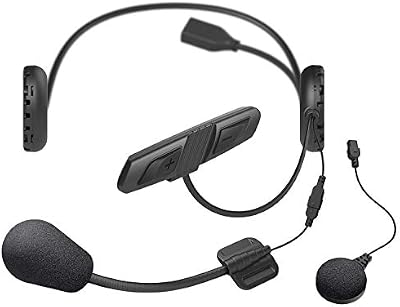
Sena's budget shelf starts here, and the first thing to know is that the shelf has two rungs at exactly the same price. The 3S Plus Universal and the 3S Plus Boom are the same two-rider headset sold as different mic bundles, and the Universal box holds more: a boom microphone and a flat wired microphone, with the fasteners and sponges for both.
The second thing to know comes from the record. The Universal rung carries 488 ratings at 4.1 stars against the Boom's 230 at 3.9, and the owners describe a product that does one job well. This is a rider-to-passenger intercom with phone calls on the side, not a group system, and the texts that say so most clearly are the ones with the most votes behind them.
This review walks through the rung choice, the spec table that cannot decide whether the headset has buttons or a touchscreen, the wind and speed limits the owners hit, and the one failure account that shows up twice in the same box.
The rung with more in the box
We probed both rungs on the same day before writing this. The Universal kit and the covered Boom kit both sell at 99.00, both in stock, so the price ladder is flat and the decision is purely about what arrives.
The Universal box holds the attachable boom microphone, the wired standard microphone, hook-and-loop fasteners for the wired mic, microphone sponges, and a USB-C power and data cable. The Boom rung ships the boom-mic design only. If your garage holds one closed helmet and one open-face helmet, or you ride both styles, the Universal kit is the only version that covers both without a second purchase.
The records are not shared, which matters as much as the box. The Universal rung prints 4.1 stars from 488 ratings with a histogram of 61/16/11/3/9. The Boom rung we reviewed in October prints 3.9 from 230.
Two pools, two verdicts, one headset, and the rung with the better average is the one that includes more hardware.
Per rider the kit works out to 49.50. Our intercom comparison table prices every row the same way, and that figure sits at 144th of the 210 units we track, 57th among the two-rider units. That is the pricier third of the full table and the middle of the two-rider shelf. It is well above the two-rider budget brands and well under Sena's own mesh line.
The spec table cannot decide what this thing is
The table on this listing has the familiar headphones-template noise, and one row contradicts the other three. A Control Method row says touch.
Three separate rows, the Control Button Configuration, the Control Unit Buttons, and the Button Configuration, all say three physical buttons on the main unit. The photos show three buttons. The touch row is the junk row.
Two more rows describe hardware this headset does not have. A Noise Control row claims active noise cancellation on a 99.00 two-way intercom, and nothing in the bullets or the owner record supports it.
A Frequency Response row prints 10000 hertz while the Frequency Range row two lines down prints the full 20 Hz to 20,000 Hz audio band. Read the band row, skip the rest.
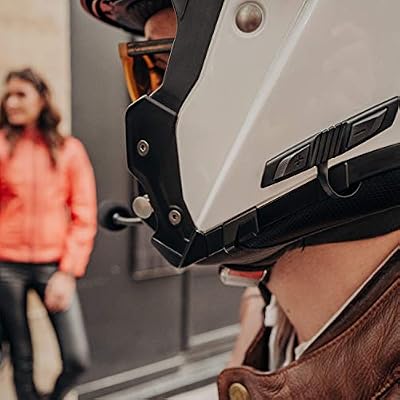
The mounting rows argue too. An Inline Remote row describes a bar-mounted control while the Mounting Location row says the side of the helmet, and the photos show a helmet clamp. The 3S Plus clamps to the helmet.
None of this changes what you receive, but a buyer checking the table for a handlebar remote would order wrong.
The useful rows are the quiet ones: Bluetooth 5.3, a 400-meter intercom range, 20 hours of talk time with a 3-hour recharge, 23mm drivers, 6.7 ounces per unit, and a 2-year warranty that runs longer than most of the budget band.
Built for one passenger, not a group
The most-voted text on the record is also the clearest brief on what this headset is. One owner has described it as limited as a com for group rides but great as a com for a rider and passenger, and great for tunes with the caveat that the speakers could be better.
Seven people found that text useful, which makes it the record's center of gravity, and it matches the hardware: a 2-way intercom has no mesh mode and no group pairing to offer.
The 400-meter range row deserves the same honesty the owners give it. Not one text on the record reports a measured distance.
Bluetooth at typical radio classes reaches 40 to 400 meters in clear line of sight (Wikipedia), and a two-rider intercom at speed with helmets and wind between the riders has never once hit a quoted maximum in any record we have read. Treat 400 meters as the listing's line-of-sight ceiling, not a plan.
Where the record does agree is on calls and installation. Phone calls work well across four texts, the 3S Plus connects easily ride after ride, and installation into helmets from open-face to full-face gets called easy in five. The same texts put battery life at good against the 20-hour row, with one edit that punctures it, covered below.
Wind, small speakers, and a failure that repeated
The complaints cluster exactly where the spec sheet is smallest. The 23mm drivers are less than two-thirds the size of the 40mm units on the budget shelf, and helmet speakers have no enclosure, so the seal between driver and ear carries the volume (Wikipedia).
One rider has found the music volume a little too low for the highway with a tinny edge, and the top-voted text said the same thing about tunes.
Wind is the second recurring limit. An unverified text from August reports hours spent pairing through the app before falling back to manual pairing, then wind noise so loud the two riders could not hear each other.
A three-star text from the same month reports the boom mic struggling to pick up speech at cruising speeds, with the honest note that helmet choice affects this a lot. Both mic styles are in the box on this rung, so a closed-helmet rider who hits the wind wall can swap to the wired mic without buying anything.
Then there is the account that shows the failure mode. One badged text describes going through two units with the same pattern: after about a week of 20-minute commutes the speaker turned buzzy and distorted, and by the third week one speaker had stopped working, both times.
The same text reports too little volume above about 40 mph, pressure points from the speaker housing, and good microphone quality on calls. One account, two units, one pattern, and it is the reason the 2-year warranty and a test week inside the return window belong in the plan.
The battery edit sits in the top-voted text itself. After praising the headset, the owner has added that they wished the battery lasted longer, because it needs charging up for every ride. Against the 20-hour talk-time row, that is a music-and-standby drain claim, not a contradiction, but a rider planning a two-day trip should pack the USB-C cable.

Which rung to order
The decision this family forces is small and one-sided. Both rungs cost 99.00 today, the Universal ships both microphone styles, and its record is bigger and better. Unless you specifically want the boom-only kit that the Boom rung review covers, the Universal kit is the rung to order.
Know what you are buying first. This is a two-person headset with no group features at a price that buys one helmet's worth of communication, and the record says it does that job well when the wind stays reasonable. If you need mesh, group ride features, or honest music volume at highway speed, Sena's own 5R Lite is the next rung up and the Spider RT1 is the mesh door, both priced accordingly on the comparison table.
Common Questions
Does the Universal kit fit an open-face helmet?
Yes, and that is the point of the two microphones. The listing's own rows put helmet compatibility from open-face to full-face, the wired mic mounts with the included hook-and-loop fasteners, and the record contains open-face users on both rungs of this family.
Can two 3S Plus units talk to each other out of the box?
They pair as a rider-to-rider pair over Bluetooth, and the record's pairing reports are mostly one-press easy, with one unverified text describing hours lost to the app before a manual pairing worked. Pair the headsets directly first and add the phone second.
Is the 400-meter range real?
Nobody on the record measured it, and the physics argues against quoting it at speed. Bluetooth's typical open-air classes reach 40 to 400 meters in clear line of sight, and helmets, terrain, and wind cut into that. Plan for the pair to hold a conversation between two bikes riding together, not for a fixed distance.
How does it compare with the cheaper budget brands?
It costs two to five times the cheapest two-rider units we track, and the record pays for it in call quality and the 2-year warranty. What it does not buy is loud music, mesh, or group features, which is exactly what the top-voted owner text says.