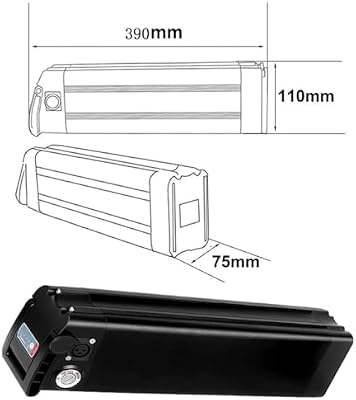
Silver fish batteries live or die by fit. The case slides into a cradle behind the seat tube, so a replacement has to match the old pack's height, connector and voltage before anything else on the spec sheet matters. SDTYYP prints the height right in the title: 390mm, 15.3 inches, 48 volts, 15.6 amp hours.
On paper the pack reads well. An aluminum shell instead of plastic, a key lock, an ON/OFF switch, LED level lights and an IP68 waterproof claim, at 229. Then the record goes quiet: the listing has been on sale for months and shows no customer ratings at all, not one.
That's a strange position to buy from. Every spec is checkable, the seller is the brand's own storefront, and yet nobody has publicly owned this exact pack long enough to say how it holds up. The pricing makes it stranger still, because the same shell in a bigger capacity costs less per watt-hour.
What follows walks the numbers a buyer can check from the listing alone: the capacity ladder, the two-BMS question, the charging floor, and what IP68 does and doesn't promise on a pack full of connectors.
The verdict, stated plainly: the SDTYYP 48V 15.6Ah is a spec-sheet purchase. The listing is live and In Stock from SDTYYP's own storefront at 229, the specs hold up to the math, and the buyer record is empty. If the fit matches your bike, you're trading reputation risk for a strong paper spec, and the return window is your safety net.
What the listing offers, and what it doesn't
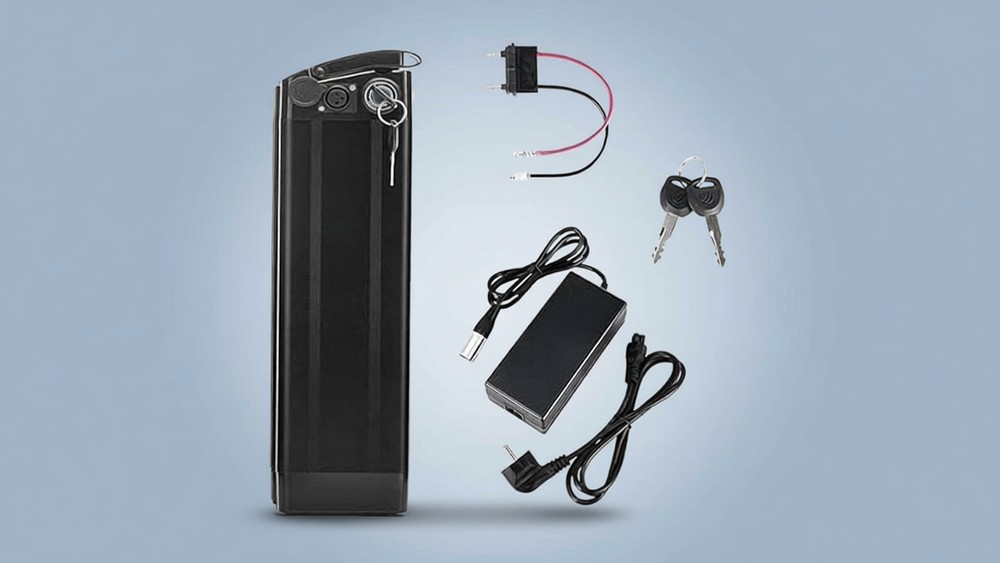
The energy math checks out: 48 x 15.6 = 748.8 watt-hours in a case the title measures at 390mm tall. The aluminum alloy shell carries a key lock, an ON/OFF switch, a carrying handle, a power display and LED level lights. The title promises a charger in the box, and the seller runs a customization service if your mount needs something unusual.
What it doesn't offer is any owner history. No ratings, no written reviews, no best-seller rank printed on the page. We first covered this pack in August, when the record was already empty, and in November it still is. A zero rating on a months-old listing isn't proof of anything by itself, but it does mean every claim below comes from the listing, not from buyers.
Range, on category math: real-world consumption for a 48V hub-drive bike runs roughly 24 to 31 watt-hours per mile on throttle and roughly 15 to 19 on light pedal assist, per the em3ev 48V guide. At 748.8Wh this pack lands just above the guide's 15Ah row, which reads 22 to 28 throttle miles and 35 to 45 on light assist. Scale it and you get about 23 to 29 throttle miles, about 36 to 46 pedal-assist miles. That's a commuting tank, not a touring one.
The capacity ladder prices the rungs
Here's the part the listing won't tell you, because it comes from our own comparison table. We track the SDTYYP silver fish shell in three 48V capacities, and the price per watt-hour falls as the pack grows. The 15.6Ah rung costs 229, about 31 cents per watt-hour. The 18Ah rung costs 259 for 864Wh, about 30 cents. The 21Ah rung costs 269 for 1008Wh, about 27 cents.
So roughly 40 more dollars buys 5.4Ah more capacity, about a third more energy, at a lower price per unit of energy. That's the fixed-cost pattern: every pack carries the case, the BMS, the lock, the display and the shipping, and those costs spread thinner as the cell stack grows. In our table this 15.6Ah rung sits in the pricier third of everything we track, and its own bigger siblings undercut it. If capacity per dollar drives your decision, the 21Ah version is the honest buy, provided your cradle takes the same case height and your range needs the extra weight.
There's a fair counterargument. If your old pack was 15.6Ah and your frame only clears this height, the rung tax is the price of a drop-in swap, and the 18Ah version splits the difference for about 30 more dollars.
One listing, two boards
The bullet copy says this pack carries a "built-in 25A/30A BMS protection board". Which one ships on this listing? The page never says. That's a 1200W versus 1440W question at 48 volts, and it's the buyer's problem to settle.
The motor bracket doesn't make the question urgent. The listing says it suits 250W to 1000W motors, and a 1000W motor draws about 20.8A at 48V nominal, comfortably inside either board with reserve to spare. Even the 25A reading leaves you margin you'd never touch at this motor size. The claim fits the hardware either way, which is rarer than it should be on budget listings.
Two other copy warts are worth knowing before you order. The first bullet prints "36V 48V 15.6Ah,18Ah,21Ah" all at once, because the same shell family spans two voltages and three capacities, and the bullet never narrows itself down. Order by the title's 48V 15.6Ah, not by the bullet. And the feature bullet ends mid-sentence on the live page, "to get you out of the.", which tells you something about how much care went into the listing's wording. Neither wart changes the electrical picture. Both suggest checking your order confirmation carefully.
Charging and the 800-cycle claim
The title says the charger ships, but no amp rating is printed anywhere on the page, so no charge-time promise can be checked. The floor you can compute yourself: 15.6Ah at a 2A charger takes 7.8 hours at minimum, and a 3A charger cuts that to about 5.2 hours. Whatever arrives in the box, a 48V nominal pack is a 13-cell series string and takes a 54.6V charger, per the same em3ev guide. If a 42V charger shows up, it belongs to a 36V pack and will never fill this one.
The cycle claim is the quiet strong point: "battery capacity exceeds 80% after 800 cycles". Lithium-ion cells commonly last several hundred to about 1,200 full cycles, and the standard definition of cycle life is the point where capacity falls to 80 percent, per Wikipedia's lithium-ion battery page. This claim sits inside that band and uses the band's own convention, rather than the 1,000-to-1,500-cycle numbers budget listings like to print with no chemistry named. It's a modest claim, and modest claims are the ones that survive the math.
What IP68 means, and how the pack mounts
IP68 decodes as two digits. The 6 means dust-tight, no ingress at all. The 8 means protected against continuous immersion under conditions the manufacturer states, per Wikipedia's IP code page. On a phone, that's a dropped-in-the-pool rating. On an ebike battery with a charge port, a discharge connector and a key barrel, continuous submersion isn't an operating condition anyone should plan for. The honest reading: a fully sealed enclosure that shrugs off rain, road spray and a wash-down, not a pack you ride into a lake.
The aluminum claim is separate from the sealing claim, and it's plausible on its own terms. Aluminum conducts heat better than the ABS plastic most budget packs use, so hard, long loads push heat out of the case faster. That's a material fact, not a waterproofing one, and the listing prints the two in the same breath, as if one proved the other.
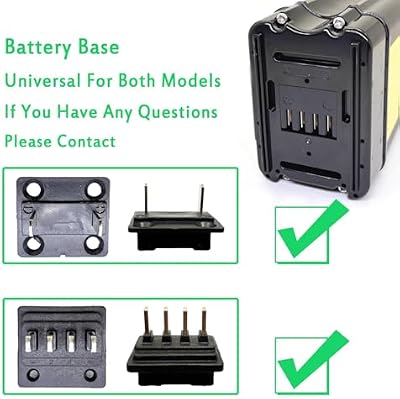
Mounting is the standard silver fish setup: the case slides into a cradle bolted behind the seat tube, the lock holds it in place, and an immobilizer is supposed to keep the pack from powering on while locked. One gap worth flagging: the discharge connector type is never printed on the live page. If your old pack's connector isn't a match, you're into adapter territory or a returned pack, so photograph your old pack's base and compare before you order. The 390mm height is the other gate. Measure the old case or the frame clearance first.
Frequently Asked Questions
Which motors can this battery run?
The listing brackets 250W to 1000W motors, and the electrical math supports it under either BMS reading: a 1000W motor at 48V draws about 20.8A, inside both the 25A and 30A boards. Below that, a 500W motor draws about 10.4A and a 250W motor about half that. The bracket is honest at the top, which is where budget brackets usually fail.
Is the IP68 rating real waterproofing?
It's real as an enclosure rating: dust-tight and sealed against continuous immersion under stated test conditions. For a battery with connectors and a key barrel, treat it as heavy rain and wash-down protection. Don't plan rides through water deep enough to reach the pack, and don't pressure-wash the connector end.
How long does charging take?
No amp rating is printed, so the listing makes no checkable charge-time claim. At a typical 2A charger, 15.6Ah needs at least 7.8 hours. A 3A charger brings the floor to about 5.2 hours. Check the charger's voltage is 54.6V for this 13-cell pack before the first full charge.
Will it fit my ebike?
Two measurements decide it. The case stands 390mm tall, so check your frame's clearance behind the seat tube against that number, and check that your bike uses a silver fish cradle at all. The discharge connector type isn't printed on the listing, so match it against your old pack's base or budget for an adapter.
Why does the listing have no reviews?
That's the record as it stands, not an answer anyone can give. We counted zero ratings in August and the page still shows none in November. Buy it on the spec sheet and the return window, and treat the first season as your own warranty test.