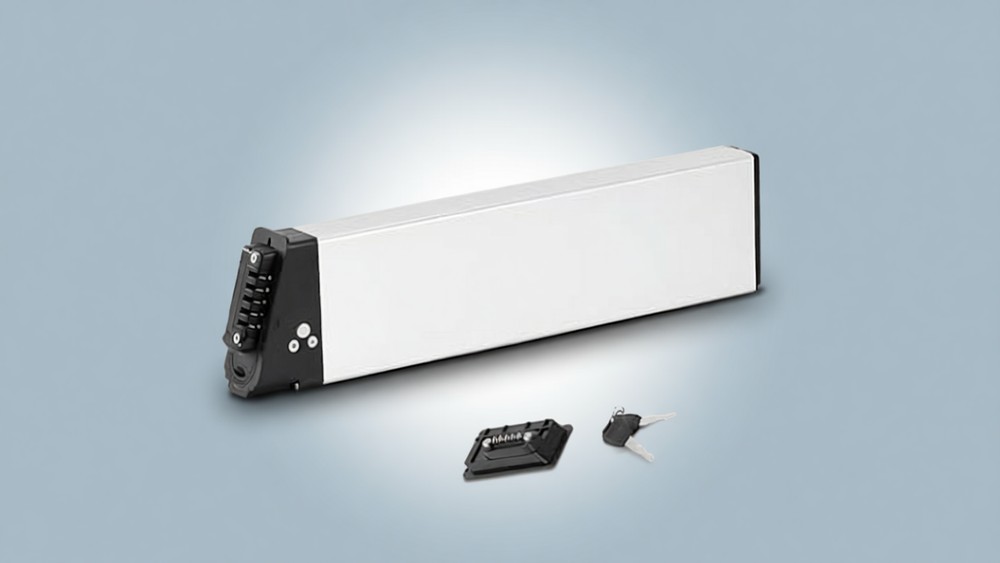
A dying stock battery on a Lectric XP or a Samebike LO26 leaves you with one call that matters more than any spec sheet: the new pack has to match the cavity the old pack came out of. The DCH006 shape is an internal battery, so there's no rail to adapt and no bracket to swap. Either the new case matches the old one or the bike stays parked.
That's why the Yose Power 48V 11.6Ah DCH006 replacement earned notice in the first place. It named the exact bikes it fits, printed the case dimensions, and offered a modest 556.8Wh instead of pretending to transform anyone's range.
Modest is the honest word here. This pack holds about twenty percent more energy than the 9.6Ah units some of these bikes shipped with, and that's the whole story.
Early November 2026, the listing is failing. It still renders with a price near 233, but Amazon shows it as currently unavailable with no restock promise, and the price has climbed about twenty percent above the 193 we recorded. A single 5.0 rating has appeared on the shell, with no rating count ever shown.
Everything below reworks the review from the recorded listing data: what the pack was, where its BMS arithmetic actually stands, what range 556.8Wh honestly supports, and how today's replacement class compares now that chargers ship as standard.
As a recorded spec sheet, this was the case-matched option for a dying internal pack: exact named fits, printed case dimensions, and an honest capacity figure. Its claim to your money rests on the case match, not on value. On price per watt-hour it sat among the most expensive positions on our battery comparison table, and the value row reads worse today than the replacement class around it.
A listing that died in stages
Most dead listings vanish without a trace. This one is fading in place, which is its own kind of warning.
On our November 2 check the page still renders a price near 233, a line that reads currently unavailable, and a 5.0 out of 5 stars widget. Back in August, when this article was first written, the listing counted zero reviews. The star widget appeared sometime between those two dates, and no rating count ever rendered with it.
For a buyer the practical meaning is simple. You can't order this exact pack right now from its own listing. The tagged Amazon search is where any purchase would start, and everything in this article is what to check before you commit to any pack that claims the same shape.
A single rating of unknown size is not an owner record, so this review carries none of the owner-report language a reviewed pack would earn.
What the DCH006 pack actually was
The arithmetic starts with 48 volts times 11.6 amp-hours, which is 556.8 watt-hours. The listing named its fits precisely: the Lectric XP line, the Samebike LO26, the 20LVXD30, the XWLX09, and the Fiido M1 Pro, with the plain Fiido M1 excluded by the title itself.
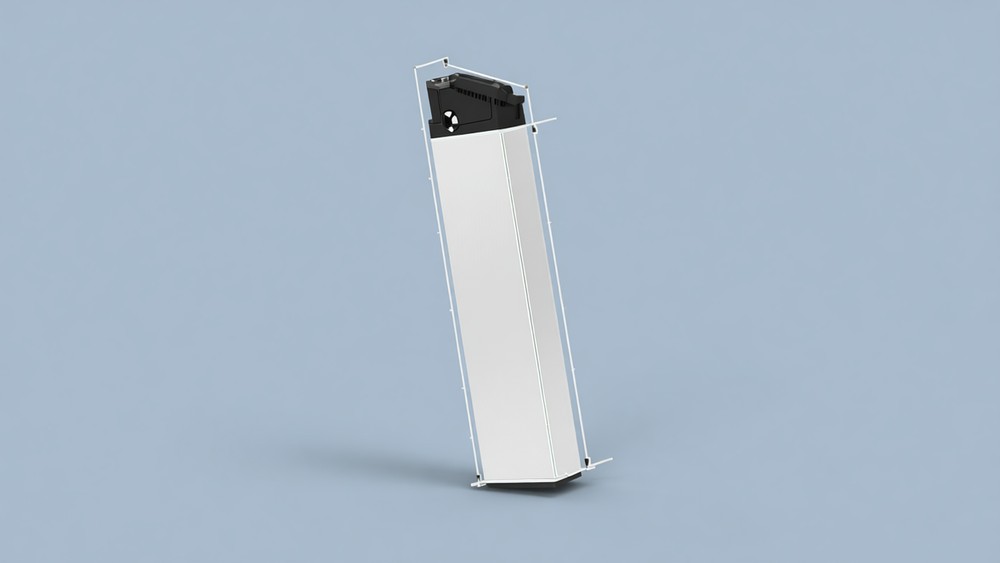
The recorded case dimensions were 430mm x 43mm x 103mm, and the old article called case size the most important spec on the page. That call was right. A built-in pack has one route into the bike, the cavity the manufacturer left, and a millimeter of extra thickness is a failed install, not a spec quibble.
The case was plastic with no marked water rating, which is normal for a battery you never remove from the frame. Weight, cell model, and cycle-life figures were never recorded anywhere in the listing record, so this review cannot grade them and will not pretend to.
The stock-pack comparison
Some of these bikes shipped with a 9.6Ah stock pack, which works out to about 460.8 watt-hours. The 11.6Ah rung holds about twenty-one percent more energy than that.
In practice that is the difference between a worn stock pack that quits at fifteen miles and a fresh pack that carries a moderate-assist commute without anxiety. It isn't a range upgrade in any dramatic sense. Nobody swapping from a healthy pack would notice the step, and the buyers this pack made sense for were riders replacing a dead original.
The BMS arithmetic the old text got wrong
The recorded listing claimed a 20A BMS. The old article's own text split that into about 10A continuous with 20A peaks, but that split was never printed on the listing, so both figures carry through this review as recorded claims with their source noted.
Here's the problem the old text papered over. A 750W motor at 48V draws about 15.6 amps at full draw. That number sits between the two recorded figures, above the 10A continuous gloss and below the 20A peak.
So a full-throttle 750W run depended on burst headroom the listing never specified, and the old article's promise that the pack works with 750W motors regardless of throttle tuning was contradicted by its own continuous figure.
The honest version: any motor at 480W or less (10A x 48V) sits inside even the lower reading at all times, a 750W motor is fine on moderate pedal assist where real draw lands well under the rating, and sustained full throttle on 750W was always the part nobody could check.
Range on 556.8Wh, honestly computed
The manufacturer claim the old article recorded was 26 to 86 miles on pedal assist. That band is too wide to plan with, so wide that it covers both a throttle-heavy hilly ride and a gentle flat commute without saying which.
The category anchor table we use reads 30 to 40 miles of throttle-only riding and 50 to 65 with light pedal assist on a 960Wh pack, per the em3ev 48V battery guide. This pack holds 0.58 of that anchor, which scales to about 17 to 23 throttle-only miles and about 29 to 38 with light pedal assist. Hills, cold, and a heavier rider push the low end down.
The old article also printed a first-person claim of 35 to 40 miles at half throttle. That was a ride nobody can verify, and it's gone from this review. What remains is the arithmetic and the honest statement that nobody published a tested range for this pack before the listing failed.
Charging without a charger in the box
The old FAQ recorded that the pack shipped without a charger, so the buyer's own charger did the work. The recorded charge time was about seven hours from empty. A 2A charger needs about 5.8 hours to refill 11.6Ah, so the recorded figure implies a charger near 1.7A, on the slow side of the class.
No charger voltage was ever printed, but the rule for any 48V pack is fixed: 13 cells in series means a charger that terminates at 54.6V, and anything else undercharges or overcharges the cells.
What the rest of the replacement class does differently
A category scan of the DCH006 replacement listings in early November 2026 shows how much the class moved while this pack faded.
The current rungs from ShunTongDa, SDTYYP, and the generic brands ship with a charger in the box as standard, offer BMS options up to 30A, and sell at 10.4Ah to 12.8Ah sizes for the same Lectric XP, Samebike, and Jasion fitment family. Against that crowd, a pack with no charger, a 20A board, and a smaller tank has to win on something other than completeness.
On our table the value row is plain about it: at 0.35 per watt-hour this pack sat among the most expensive positions we track, and we say that rather than dress it up. If your cavity takes this shape, check any new pack for three printed things before ordering: the exact case dimensions, the BMS amp rating, and a charger in the box. Those three lines decide more than any brand name.
Yose Power's other packs we've reviewed tell the same fit-first story from the shell side too, including the 52V 13Ah downtube rung.
Frequently asked questions
Can you still buy this exact pack?
Not from its own listing as of early November 2026. The page renders but reads currently unavailable with no restock promise, and the price shown has drifted about twenty percent above the recorded figure. Any purchase would run through third-party sellers or the tagged search, where the seller and the pack's state are yours to verify.
Will it fit a Fiido M1?
No, and the listing said so in its own title. The fit list covers the Fiido M1 Pro and explicitly excludes the plain M1. The two bikes look similar and take different packs, which is exactly the kind of mix-up a case-size check catches.
What charger does a pack like this need?
A 48V charger that terminates at 54.6V, because 13 cell groups in series times 4.2 volts per cell sets the ceiling. This pack shipped without one, and the recorded seven-hour refill suggests a charger near 1.7A. Most packs in this class now include a charger, so check the box contents before you buy any new pack.
How much range over the stock 9.6Ah pack?
About twenty-one percent more energy, 556.8Wh against roughly 460.8Wh. On the range arithmetic above, that moves a light-pedal-assist rider from the mid-to-high twenties in miles toward the mid-thirties, and a throttle rider from about 14 to 19 toward 17 to 23. It's a modest step, and it was always priced like a replacement, not like an upgrade.