Silver fish replacements fail at the connector more often than at the cell, and this listing is a case study in why.
The SDTYYP 36V 15.6Ah silver fish battery looks like every other slim case on the market. Its page describes five packs at once. Its owners describe a pack that needed adapting before it rode.
I went through every written review, every printed number, and the text on the listing's own cards. The battery inside has no defect reports against it. The fit is the gamble, and four of the seven people who wrote about this pack paid something, or improvised something, to solve it.
This article walks the record first, then the numbers: the two BMS ratings that straddle the motor band, the waterproofing claim, the charge floor, and the parts of the page that argue with each other. Every figure below traces to the listing or to a buyer's account of it.
Four owners, four adaptations
Seven people have written about this pack, all with purchase badges, and four of them describe work at the mount.
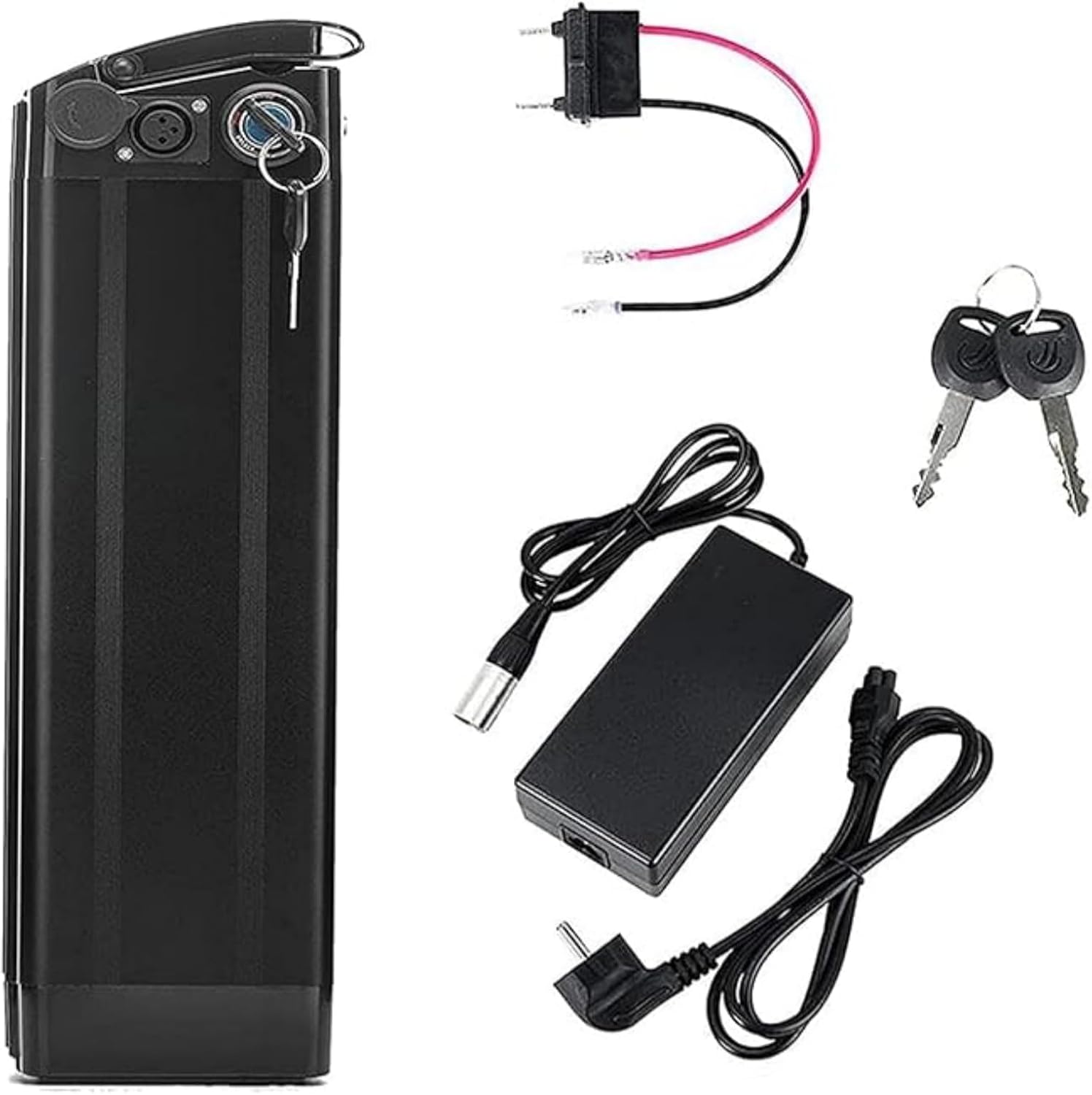
The most helpful text on the page, at two votes, is a warning more than a recommendation. Its author bought the pack without checking pin count and found the wiring did not match the bike. The pack's own extra wiring covered the gap, along with a new base and a slide bar in the box, and the plan became a shop overhaul for the following spring.
One owner has swapped the bracket that arrived with the battery for the original, after which the original electric connection worked and the pack delivered at least 40 kilometers of range. A third says it plainly: the pack wasn't quite a drop-in replacement, but it was made to work. The fourth, a Canadian buyer writing in French, had connectors that did not match at all and paid a shop more than a hundred in labor to bridge the gap.
That last text is the counterweight, a three-star. The listing didn't indicate any of that work, and the buyer says so. It is the full downside of this pack in one sentence, and it's a fitment downside.
Nobody reports a dead cell, a short capacity, or a failure. The risk you take here is at the connector, and the box seems to know it.
One page, five packs
Bullet one on this listing reads like a catalog line: 36V, 48V, 15.6Ah, 18Ah, 21Ah, suitable for 250W to 1000W motors. That's the whole SDTYYP ladder in one sentence. The comparison table sorts these rungs by price per watt-hour so you can see which one you actually want, because the listing will not tell you.
We have covered four of the five rungs. The 48V 15.6Ah, the 48V 18Ah, the 48V 21Ah and the 36V 21Ah each have their own article, and the 36V 21Ah page is this page's template with bigger numbers: the same bullet text, the same two-BMS-numbers sentence, the same French-only cycle card.
So the first job is picking the rung. This one carries 15.6Ah at 36V, which is 561.6 watt-hours, the smallest capacity in the family.
If your rides stay under about 25 miles, the smaller pack saves money and weight. If you need the range, the 21Ah sibling carries 756 watt-hours for a higher price we recorded at 229.00 when its own article went up. Both are silver fish cases of the same length, so the choice is capacity, not shape.
What the numbers and the record close
The safety bullet promises a "25A/30A BMS" in one breath, the same pair the 21Ah sibling prints. At 25 amps continuous, a 36V pack sustains 900 watts.
At 30 amps it sustains 1080, and the listing's own motor band stops at 1000W. One number sits under the band, one pokes over it. Plan around 900 watts and every motor in the printed band stays fed.
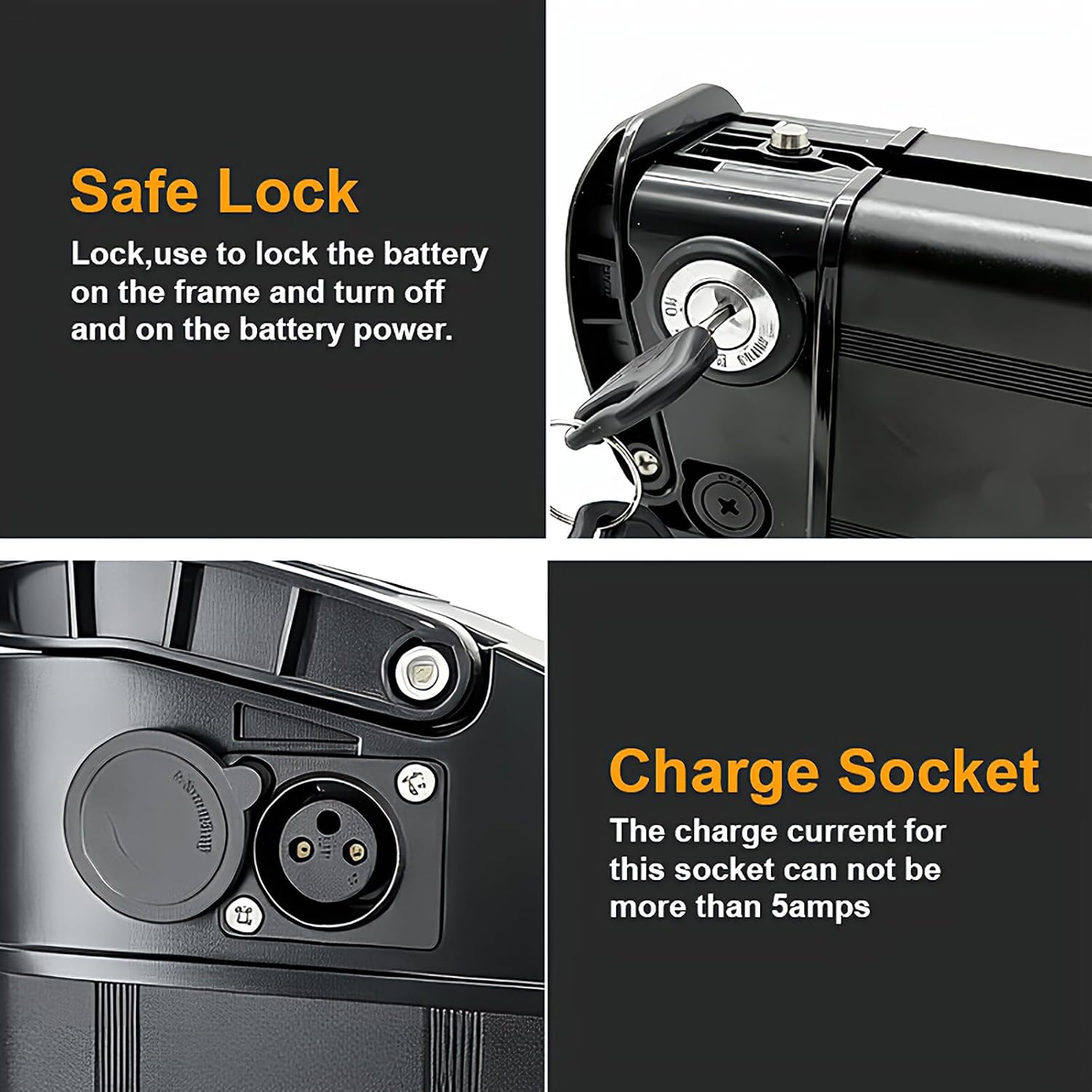
The charge socket card caps that socket at 5 amps. With 15.6Ah inside, a full refill from empty needs at least 3.1 hours, and no charge-time claim is printed anywhere. If your old charger pushes the common 2 amps, the same refill stretches past seven hours.
The weight rows agree with each other, which is rarer than it should be in this market. The details table prints 5 kilograms of battery and 11 pounds of pack, and 5 kilograms converts to 11.02 pounds. Divide 561.6 watt-hours by 5 kilograms and the pack works out near 0.11 kWh/kg, an ordinary figure at pack level once the case, board and wiring are counted.
Nothing here suggests inflated capacity on paper, though the only true test is a meter, and no owner has published one yet. The rating side tells a similar story. Nine people have rated this pack, and the scores split about 6 five-star, 2 four-star, 1 three-star, with no one or two-star ratings at all. The seven written texts span July 2025 to August 2026, three of them from Canada.
What the record settles: the pack arrives, it powers bikes, and the seller's support answers when a connector question comes up, which one Canadian owner notes directly. What it doesn't settle: how the cells hold capacity past a year, since the oldest text is barely old enough to ask, and nobody has measured the true amp-hours against the label.
The French cycle card in the gallery prints a 1000+ cycle figure, and it's the only place any cycle count appears. Commodity packs of this type commonly manage 400 to 1,200 cycles in the published literature, so the claim sits in the upper half of a plausible band. It's also printed only in French on a marketing card, which is exactly where the 21Ah sibling prints its identical card. We treat it as a target, not a spec.
The waterproofing claim, taken seriously
Bullet four calls the aluminum shell IP68, the strongest water claim we have recorded on any pack in this campaign. The IP code standard gives IP68 a precise meaning: dust tight, and safe under continuous submersion at the depth the maker states. The listing states no depth, which already softens the claim.
Then the page shows you an exposed charge socket and a discharge cable running to your controller. A pack that is genuinely submersible does not carry an open socket on its top plate. The 5-amp card makes the point itself, instructing you about a socket you'd never touch in the rain if submersion were real.
Treat IP68 here as rain and splash protection with a clear conscience. Don't park this pack in a puddle because a bullet said so. Lithium-ion packs of this class have no user-serviceable parts inside, and water across the discharge pins is exactly the short-circuit case the protection card claims to handle, which is not the same as wanting to test it.
Frequently asked questions
Will it drop in unmodified?
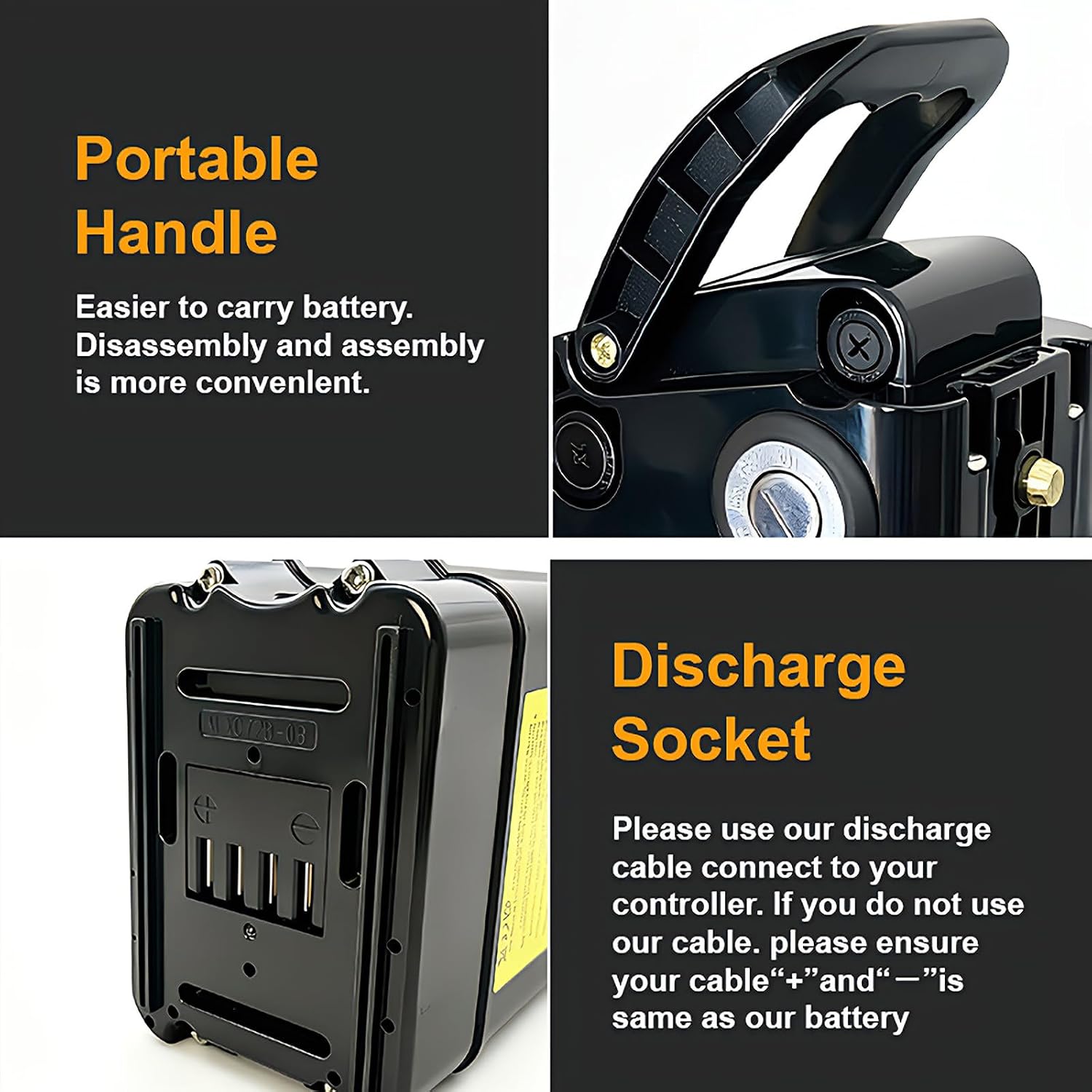
Check three things in order: the cradle length on your frame, the discharge connector on your controller, and the pin count of both.
The owners who adapted this pack all hit one of those three. The box often contains the bridge parts, extra wiring, a base, a slide bar, but one owner still paid a shop more than a hundred to finish the job. If your bike is a standard Hailong-cradle model with a matching connector, the odds improve a lot.
Does it come with a charger?
The live listing promises nothing. Its included-components row names a lock and stops there, no bullet mentions a charger, and no gallery card shows one. Our own data row says "with charger" and our row is wrong on this point, inherited from the family template.
Assume the charger from your old pack carries over, and match its connector to the 5-amp socket before you order.
How far does it go on a charge?
The arithmetic gives 561.6 watt-hours, and typical pedal-assist riding burns 20 to 25 watt-hours per mile, so plan on roughly 22 to 28 miles with more available at lower assist. The one range figure an owner has published, at least 40 kilometers or about 25 miles, lands inside that band. Full throttle shortens every one of those numbers, sometimes by half.
Measure first, then trust the record
This pack earns a cautious yes for a specific buyer: someone replacing a 36V silver fish battery whose cradle and connector already match, who wants the smallest capacity in the SDTYYP ladder, and who knows the pack sits in the pricier third of the comparison table on price per watt-hour. The record behind it is clean, if short, and the box carries the adaptation parts that three owners needed.
It earns a slow walk for everyone else. The listing describes five packs at once, promises a charger nowhere, and prints the market's boldest waterproofing claim next to an open socket.
Count your pins, measure your cradle, and price the adapter work before you click buy. The battery inside seems sound. Getting it onto your bike is the part this page does not guarantee.