Shopping for a 48V 20Ah pack means picking from a wall of near-identical listings, and most of them eventually disappear. PowerVault's 960Wh external box pack disappeared early. It went out of stock quietly, then the listing itself came down, and by November 2026 the Amazon page returns a Page Not Found error.
That changes what a review can do. There's no live listing to re-check, no growing review count to revisit, and no seller to ask about the connector type the original page never stated. What's left is a snapshot: the recorded price, the spec sheet our February 2026 article captured, and a rating field that never filled in at all.
Below, the wattage ladder in the title gets tested against the board that has to carry it, the charge time gets recomputed from the charger the listing named, and the range math gets scaled from an independent anchor rather than copied forward. Where the record says nothing, it says so plainly.
The PowerVault 48V 20Ah external box pack is the rare rebuild where the math agrees with the listing. The wattage ladder in its title tops out at 1000W, and the 30A board it shipped with carries 1440W, so every claimed motor fits with room to spare.
The charge estimate survives its own floor too, which almost nothing else in this category has managed. The problem was never the specs. It's that the record around them never grew: no rating, no review count, and a listing that died before any of it could accumulate.
A Record That Froze Before It Started
The row we keep for this pack holds a price, the 48V 20Ah capacity at 960 watt-hours, and an external box form factor. That's all. No rating, no review count, and no review text was ever captured, so there is no owner history to weigh and none will ever arrive.
The old article's paragraphs about early five-star feedback named no count and no source, and since the data we kept shows no rating at all, those paragraphs are gone rather than reworded.
At 0.24 per watt-hour, the pack sits in the middle of the 324 batteries we track, neither a standout nor a trap.
Mid-band value on a dead listing is a strange thing to judge, because the number can't be acted on. It matters only as a benchmark: if a live 48V 20Ah pack quotes a worse figure than this, you're paying more per watt-hour than a no-name box that vanished without collecting a single recorded rating.
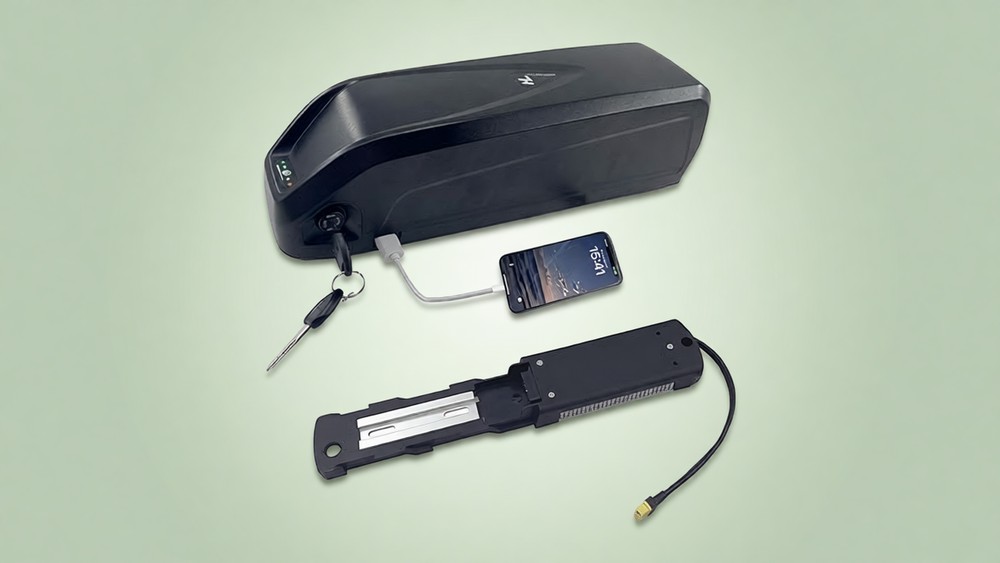
What the freeze does settle is the spec sheet. The February capture recorded a 30A BMS, a 2A charger, a base stand, a key lock, and an LED charge indicator, and those features came from the listing itself, not from inference. They're the standard useful set for an equipped 20Ah box, and they're the part of the record a replacement shopper can actually copy.
The Wattage Ladder Fits Its Own Board
The listing title reads like keyword soup: 250W, 350W, 500W, 700W, 900W, 1000W, strung together with no punctuation. Sellers write these ladders for search matches, not for engineers. But every rung is a claim, and the claims can be tested, because the title also names the board: 30A.
At 48V, a 30A BMS passes 1440W continuous. The largest rung on the ladder, 1000W, draws about 21A at that voltage, which sits inside the board with roughly 44 percent of the ceiling unused.
Every smaller rung fits with more room still. There's no claimed motor in the title that the shipped board cannot carry, so the fit claim, no matter how badly formatted, was honest.
That's the opposite of the failure this category keeps producing. The dayaoenne 48V 15Ah carried a 2000W claim on the same size board, about 40 percent past what the BMS could pass. PowerVault's ladder asked its board for less than it had.
One pack overstated by two-fifths, the other left two-fifths idle, and both wrote their titles the same sloppy way.
Why the headroom matters
Headroom isn't free performance, it's margin. A controller that pulls hard on hills or accelerates from a stop draws spikes well above its rated wattage, and a board with 44 percent of spare capacity absorbs those spikes without tripping. A rider on a 750W motor sits even deeper inside the ceiling.
The only buyer who should hesitate on power is one building past 1400W, and that buyer isn't shopping this category anyway.
A Ten-Hour Charge, and the Old Estimate That Survived
The title calls the included charger "fast". It's a 2A unit, and 2A into 20Ah is the opposite of fast: twenty hours of capacity fed two at a time is a ten-hour floor from near-empty, every time, with no rounding that helps. A "fast charger" label on a 2A brick is title soup of the same species as the wattage ladder.
Here's the part worth recording. The old article's own FAQ said a 2A charger takes about ten hours from near-empty, which is exactly what the arithmetic gives.
The estimate matched the floor. In this rebuild campaign, most old charge estimates have failed their own math when checked, most famously the lolrko 48V 20Ah folding pack whose 5-7 hour estimate collapsed against a 10-hour floor at 2A. PowerVault's number survived the same test because whoever wrote it did the division.
Overnight math
A ten-hour floor shapes how you use the pack rather than disqualifying it. Plug in after an evening ride and it's full by morning, every night, with the LED indicator showing where it sits. What it can't absorb is a mid-day recovery: a pack drained on the morning commute isn't back for an evening one.
Riders who need same-day turnaround want a 3A or 5A charger, and the record never stated whether this listing offered one.
What the Stand, Lock, and LED Are Worth
The February spec box recorded three accessories that separate an equipped box pack from a bare one. The base stand holds the pack upright on a floor while it charges off the bike, which sounds trivial until you've balanced a 20Ah box against a wall for ten hours. The key lock secures the pack to its mount, which deters the opportunistic removal a loose box invites.
The LED strip shows the charge level without powering the bike, so you can check the pack before a ride instead of discovering a low battery at the trailhead.
None of the three is unique to this pack, and that's the point. They're the checklist, not a differentiator, and their recorded presence tells you the listing was aiming above the cheapest tier.

Mounting on a rack or in a bag
As an external box, this pack mounts on rear rack straps, in a large triangle bag, or on a custom bracket, with no frame modification. Rear rack is the usual choice at this capacity because the weight sits over the wheel instead of in the frame.
One number a rack shopper wants was never recorded: the weight. The old article estimated 10 to 13 pounds, but an estimate isn't a spec, and at 960Wh the density check can't close, because that weight range straddles the plausible band for a complete pack. Anyone matching a rack's load rating should treat the weight as unknown.
Range at the Anchor Capacity
At 960Wh, this pack sits exactly on the capacity that independent guides use as their reference point.
The em3ev 48V 20Ah guide puts a 960Wh pack at 30 to 40 miles on pedal assist and 50 to 65 with generous pedaling, and since the anchor capacity matches this pack's, no scaling is needed. Those bands assume honest capacity, which is the open question on any no-name box, but the math starts from the right place.
The old article claimed 30 to 50 miles, which overlaps the anchor only in the middle. The anchor's split is more useful because it separates the two things riders actually do: assist everything and get the low band, pedal hard and reach for the high one. A 25-mile round-trip commute fits either way.

FAQ: Buying a Pack Whose Listing Is Gone
Can I still buy this exact pack? No. The listing returns a Page Not Found error as of November 2026, and the record is frozen. Anyone shopping the same spec sheet is choosing from the current 48V 20Ah field, which changes constantly.
What should a replacement match? Four things, in order: 48V nominal, the capacity band you actually need, a BMS sized to your motor with margin, and a connector your controller accepts. The connector was never recorded for this pack, which is the one spec a replacement buyer must confirm on any new listing before ordering.
Is 0.24 per watt-hour a good number? It's mid-band across the packs we track, not a bargain and not a trap. The battery comparison table sorts the live field by that same figure, so you can place any current listing against it in one glance.
How long do 960Wh cells last? Chemistry dependent, but lithium-ion cells generally deliver 400 to 1,200 full cycles before capacity fades toward 80 percent, per Wikipedia's lithium-ion battery overview. At one full cycle a day, that's a spread from about a year to over three, which is why cell quality matters more than any title claim.
Was the early feedback positive? The record can't say. Our data kept no rating and no count, and the old article's five-star paragraph named no numbers behind it, so there is nothing to confirm or contradict. Treat this pack as unrated, because by the only record that survives, it is.
What charger voltage should a replacement ship with? For a 48V pack, a label reading 54.6V is the expected value, from 13 cells at 4.2V each. This pack's charger voltage was never recorded, so it can't be checked against that rule, but any 48V replacement you buy today should pass it.