Mesh intercom used to be the feature that split the market in two. Cardo and Sena put it in their expensive lines, and everyone else sold Bluetooth conference systems that chain rider to rider. A mesh radio under 100 changes that math, or appears to.
NYTALK claims Mesh 3.0 for up to 10 riders at a 3 km range, IP67 waterproofing and 40 mm speakers, on hardware from a Shenzhen factory most riders have never heard of. Its selling page is messy in ways that matter.
A bullet promises 15 to 18 hours of battery. The spec table below it says 25.
The written record is short: 59 ratings, 10 texts, most without purchase confirmation behind them. This review walks through what those texts support, what the listing argues with itself about, and who should pay for mesh and who should buy the brand's cheaper radio instead.
A mesh radio priced like a Bluetooth one, with one owner spelling out the catch
The NYTALK X10 sells as a single pack at 94.99, and our intercom comparison table prices it in the cheapest fifth of the 192 intercoms we track on price per rider. For a radio sold on mesh, that price band is the story before anyone reads a single review.
The rating record is friendly to it: 4.5 from 59, two-thirds at 5 stars, and not one 1-star text. That's a rarer shape than it sounds. The catch is in the record's most useful text, written by a buyer who has owned both NYTALK radios, and it decides who this radio makes sense for.
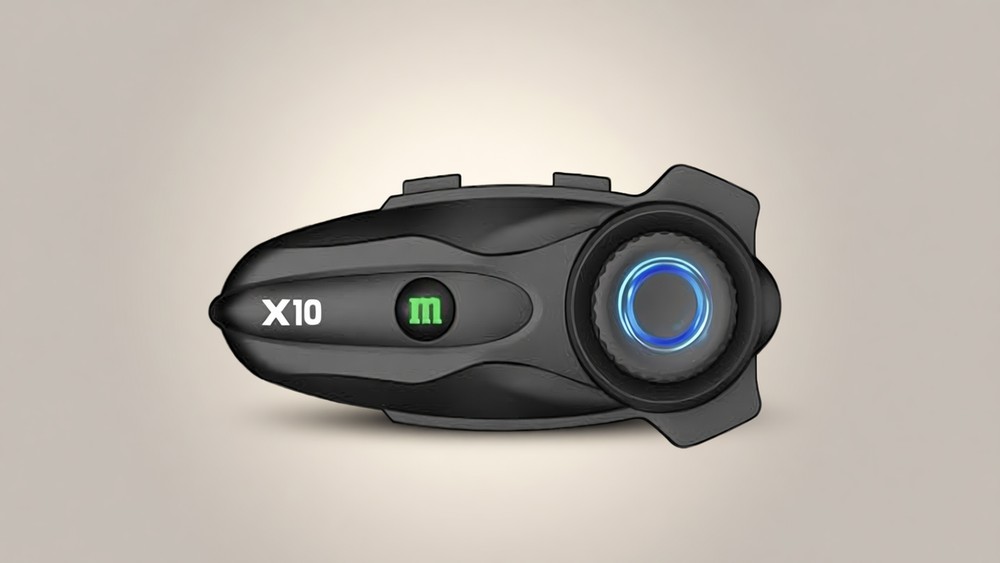
The page argues with itself about the battery
Start with the figure the listing cannot settle on. The battery bullet promises 15 to 18 hours for music, calls and intercom from a 1000 mAh cell.
The spec table underneath says Battery Average Life 25 hours. Both numbers sit on the same page, and they are not close. One of them is wrong, and the page does not say which.
The spec table has other problems. It files the 3 km figure under Bluetooth Range, which is a category error. In Bluetooth's most widely used mode, transmission power sits at 2.5 milliwatts and reaches about 10 metres, per Wikipedia's Bluetooth page.
A 3 km claim cannot be a Bluetooth range, it is the mesh range the bullet describes, filed in the wrong row. The same table marks Noise Control as Active Noise Cancellation, which a passive helmet speaker with microphone noise reduction does not have, and prints a Frequency Response of 20400 hertz, a garbled figure. Bullet four ends in the phrase the safety on the road safety safety guaranteed.
What does hold is concrete. The waterproofing is IP67. The working temperature band is -10C to 40C.
The warranty line promises 2 years, there is an Anatel certification number from Brazil, the weight is 1.76 ounces, and charging runs over USB Type-C. Those are the parts of the page written with care.
What the only upgrade report actually says
One owner has upgraded from the X1 to the X10 and written the text this record turns on. They hoped the newer radio would improve volume and sound quality, and report that it doesn't: the X10 sounds as good as its little brother, and no better.
What the upgrade bought is the ability to mesh with others on group rides, which the X1 can't do at all. Their closing advice is the plainest sentence in the record: if you just want Bluetooth music, buy the X1.
Another owner has compared it directly against a Sena. They call the X10 a real value against much more expensive radios, say the Sena carries more features, and report that for their use, talking with a pillion passenger, this one works just as well. The cross-brand part needed extra setup, and they point buyers at YouTube videos to get it done.
So the cross-brand claim on the bullet is real, but it is not one-click real.

How to read a record this thin
Ten texts sit under the 4.5 average, and only three carry purchase confirmation. Six of the eight 5-star texts do not, and two of them restate the listing's own feature names without a single ride detail between them. One purchase-confirmed text praises the two-unit package, which is a strange thing to say about a listing whose title and spec table both say 1 Pack.
Three texts earn their place anyway. One describes pairing that doesn't collapse when a rider drops out of range and rejoins, audio that holds over wind noise instead of turning to static, a clamp mount that doesn't rattle against the shell, and buttons large enough to hit with gloves on.
The most-endorsed text in the record, with two helpful votes, comes from an owner who uses the radio mainly for phone calls and music and reports callers hear them clearly at moderate speeds.
What no text covers is the part a mesh buyer most wants to know. Nobody has described a large mesh group ride.
Nobody has measured a distance. Nobody has reported battery life after months of use. The 3 km figure and the 10-rider figure are both untested promises as far as this record goes.
Pay for the mesh, or buy the X1 and keep the change
The decision this radio forces is the one its own upgrade report draws. If your rides are group rides, the kind where riders spread out and drop in and out of range, mesh is the feature Bluetooth conference intercoms don't offer.
In a general mesh network every node relays for the others and the network reorganizes itself as nodes come and go, per Wikipedia's mesh networking page, and losing a rider costs the group a relay rather than a connection. At this price the X10 sits in the cheapest fifth per rider on our comparison table, and the cheaper mesh alternatives are rare enough that the table is worth a look either way.
If your riding is phone calls, music and one passenger, the verified upgrade report says the X10 sounds no better than the X1, so the cheaper radio does the same job for less. Cross-brand buyers should expect the YouTube setup the Sena owner described, and should expect mesh itself to stay inside the brand, because vendor mesh implementations share no common standard.
Pair buyers have a two-pack sibling on its own listing, and if you want to see what mesh looks like at the expensive end, our Packtalk Pro review covers the other extreme. The NYTALK N8 is the brand's 8-rider mesh unit, listed cheaper per headset.

FAQ: the 3km range nothing on the record has ridden, the cross-brand link that took work and the 1000mAh cell behind two disagreeing hour claims
Is the 3 km range real?
No text in the record measures any distance, so nobody knows. What is certain is that the figure does not come from Bluetooth itself, whose most widely used mode reaches about 10 metres at 2.5 milliwatts.
Mesh extends a group by relaying between units, so the honest answer is that the range depends on how many riders stand between you and the one you're talking to, and nobody has published a measurement for this radio.
Does it talk to other brands?
The one owner who tried it says yes, with work. They ride with a Sena and needed extra setup found on YouTube videos to make the two talk. Mesh groups are a different matter: the mesh stays between NYTALK units.
How long does the battery last?
The listing argues with itself: 15 to 18 hours in the bullet, 25 hours in the spec table, from a 1000 mAh battery. Not one owner text reports battery life, in either direction, so both figures are unconfirmed claims.
Is it really waterproof?
The rating is IP67, which covers dust tightness and immersion on paper. The working temperature band is -10C to 40C. No owner has described rain or a dunking, so the rating stays an untested promise with good paperwork.
Does one box hold one unit or two?
The title says 1 Pack and the spec table says Number of Items 1. One purchase-confirmed review praises a two-unit package, which doesn't match this listing, so check the variant selector before ordering and assume one unit unless the page you land on says otherwise.