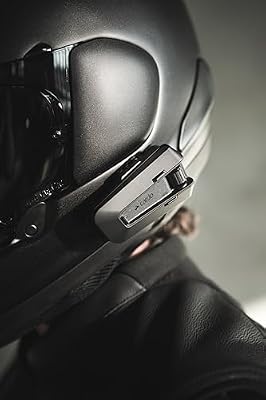
The Packtalk Pro is the top of Cardo's line, and its price reads like it: 449.95 for one rider's kit, which lands among the most expensive per rider of the 192 communicators we track. A tenth of its 919 ratings sit at one star, which is a heavy tail for a flagship, and I started there on purpose.
The premium buys two things above the cheaper Cardo models, better audio hardware and crash detection, and the record speaks clearly about one of them. The audio and the app draw real praise from purchase-confirmed owners. The crash feature has no confirmed save anywhere in 919 ratings, and one confirmed failure in a real crash.
That doesn't make it a bad product, and most of the record says the opposite. It makes it a product you should buy for what it does daily rather than for the feature you hope never to use. Here's what I found in the 20 detailed texts, every one of them carrying a purchase confirmation, and I'll keep the two sides of it separate.
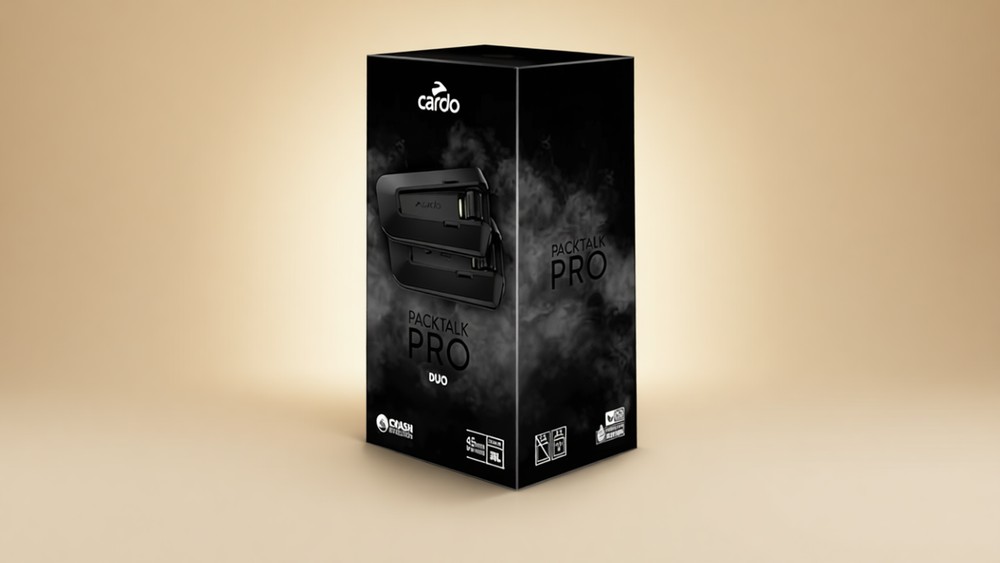
What 449.95 buys, and what the page never states
The hardware list is flagship-grade on paper. Second-generation Dynamic Mesh handles the group link, JBL-tuned 45mm speakers drive the audio, and the magnetic Air Mount snaps the whole thing off the helmet for charging. The spec table adds an IP67 rating, a three-year warranty, USB-C charging, and a listed weight of 1.94 ounces, and the listing sits third among bestsellers in its category.
Now the gap. The spec table states no talk time and no intercom range anywhere, and neither do the bullets. On a 449.95 intercom, the two numbers a buyer most wants to weigh against cheaper models are simply absent, so battery life and reach rest on owner reports alone. I find that a strange omission at this price, and it makes our intercom comparison more useful than the listing, because there the range and battery figures for every model we track sit side by side. You're not missing anything by skipping the listing's spec table, and that's a rare thing for me to write.
The value math needs the same plain treatment. The dual pack runs 827.96, which works out to about 414 per rider, and even that bulk price doesn't lift the Packtalk Pro out of the most expensive band we track. Our own recorded price sat about 52 off the live ask at last check, so the number in the specs box may lag what Amazon wants today. You're paying this much for the top of the category's standing as much as for the box.
Crash detection: one failure, one survival story, zero saves
Start with the text that should stop every reader for a moment. One owner bought the Pro specifically for its crash detection, then crashed hard enough to crack the helmet. No emergency message went out, despite the owner reporting active cell service and a live Bluetooth link at the time. That text is purchase-confirmed, recent, and it's the only account in the record of the feature facing a real crash with real stakes. I wouldn't order one and trust it on day one, and I'll show you why the record can't settle it either way.
The counterweight is a stranger story. Another owner hit a deer in January 2026, wrecked the bike, and got hurt. Six and a half months later a phone randomly reconnected to the Pro still on the helmet, which had been ripped off its mount and still held about half a charge. It plays music and takes calls to this day. It's the best survival report in the record, and I want to be precise about what it isn't: the owner never says the crash feature fired an emergency call. A box surviving a crash is not the same thing as a box summoning help after one.
A third owner puts the honest frame on it without meaning to, buying the Pro for the crash detection and automatic emergency calling while hoping never to find out whether they work. Across 919 ratings, that's where the feature lives: zero confirmed saves, one confirmed non-save, one story of a box living through it. Treat it as a backup layer, not a system, and don't pay the premium for it alone. That's my honest read after going through the record twice.
Firmware is where the trouble clusters
Three texts circle the same wound. One owner's Pro refused every firmware update, failing at the last second through the app and again through a PC after restarts and re-pairing. Their own research online turned up what they describe as a known bad batch, serials starting 613 through 618, that never accepts an update, and theirs fell in it. I'd pin that batch claim on the owner's legwork rather than on Cardo, but the experience matches a second one-star that says flatly the device won't take the new firmware it needs for full function.
The longer view is kinder. A December 2025 buyer who found plenty to criticize added a star the following August, after an update brought the public mesh channel and a reworked app, and their text doubles as the best feature list in the record. Clear sound, loud enough with earplugs, automatic power on and off with motion, some mic noise canceling. Against that: getting started means going online through the phone app, the app is clunky and permission-hungry, streaming apps don't play natively through the Cardo app, and there's no active noise canceling on the speakers, which the spec table backs up with a noise-control line that reads none.
That same owner called it the best helmet headset on the market at the time and still felt the experience hadn't shown why it costs what it costs. I've quoted a lot of owners here, and that's the line I'd keep. It's the fairest single sentence in the whole record, as I read it.
When it works, owners are loud about it
The most-endorsed text in the record, 23 helpful votes, comes from a Sena owner who switched and never looked back. Their account of the Sena they left is specific and unkind, an unpolished app, budget-earbud speakers, and audio mixing that dimmed music without warning. Their account of the Packtalk Pro is just as specific: a modern app that works, and speakers they compare to wired Apple earbuds, passable at everything and good at voice. A second switcher from Sena logged three days and 750 miles on one charge, and reports that callers can't tell he's doing 75 on the highway.
The battery reports deserve the emphasis the listing refuses to give them. Between the 750-mile text and several owners crediting the auto on/off feature, the practical picture is a device that sips power once you've left the bike and goes days between charges. Voice controls earn their own fan club, with owners changing volume and skipping tracks without touching anything, and one rider on a loud Ducati reports being surprised by how well the audio cuts through. My favorite detail in the whole record is smaller than any of that: one owner has ridden with it in the rain for months and reports it holding up great.
Not every ear agrees. One owner finds it not as loud as expected and clears the mounting as the cause, which fits the pattern that the 45mm drivers give you character and clarity more than raw volume. If you ride with earplugs, and you should, the loud-enough-with-earplugs report matters more than either complaint. I don't think either gripe kills it, and neither does the record.
A dead device at 90 days met a three-year warranty
The heaviest negative in the record, 17 helpful votes, comes from a years-long Cardo customer whose Pro went unresponsive within 90 days. Cardo's support confirmed it defective, and then the process went sideways: the buyer had to pay shipping for the return and provide tracking, waited out a five-day replacement promise, and was eventually told the new device is on backorder. No refund, no fix, and no defective model sent back to try the Amazon route instead.
One case proves nothing about the failure rate, and the 74 percent five-star histogram argues the devices mostly work. What the case shows is the shape of the hole in the safety net. The spec table promises a three-year warranty, and the one recorded walk through its front door ended with the buyer holding nothing for months. A second text describes a Pro that never powered on out of the box or after two hours of charging, though that buyer's path through support went unrecorded.
My advice for anyone buying at this price: keep the return window in front of the warranty. Amazon's process is written down and time-boxed, and the record suggests using it first if anything's wrong early. I'd want my money back fast, and that window is where that happens.
FAQ: the unconfirmed crash saves, the one-ecosystem rule and the unprinted talk time
Is crash detection reliable?
The record holds no confirmed save in 919 ratings, one purchase-confirmed report of it failing to send an emergency message in a real crash, and one durability story that doesn't mention it at all. Buy the Pro for its audio, app and battery, and treat the safety feature as a backup you should never count on.
Will it mesh with a Sena or another brand?
Plan on one ecosystem per group. Mesh makers have never agreed on a common standard, so mesh networks from different vendors aren't assured to work together, and helmet communicators follow that rule. The Sena riders in the record switched whole, they didn't pair across.
Is it really waterproof?
The rating is IP67, which means dust tight plus protection against soaking, though the IP code leaves test depth and time to the maker to spell out. One owner reports months of riding in rain without trouble. I'd still keep it out of deliberate dunking.
How is the battery life?
The listing states no talk time anywhere. Owners report three days and 750 miles on one charge, and the auto on/off feature that puts the device to sleep when you walk away is the most-repeated compliment in the record. Charging runs through USB-C on the side.
Should I buy the single or the dual pack?
The dual pack runs 827.96, about 414 per rider against 449.95 single, so a two-rider household saves about 36 a head and gets one shared ecosystem from day one. Either way the Pro sits among the most expensive per rider of the 192 communicators we track, and the comparison table holds the live figures if a cheaper Cardo covers your needs. If this one's for you, buy the Packtalk Pro here with the crash-detection record in mind.