Downtube packs with a USB port and a keyed lock have become a shelf of their own on Amazon, and most of them look alike because a lot of them come from the same places.
The LOCKBUS 48V 20Ah battery promises 960 watt-hours, a 40A board, an IP65 shell and power for motors up to 1500W, at a price that lands in the cheaper third of our table. On paper that is a strong list for the money.
The reason I paid attention is smaller than the spec sheet. The model number on this page is FP4820R0-097, and we have now seen that exact string on two other packs with two other brand names. This is the third shell on the same code, which tells you more about what you are actually buying than any bullet does, so that is where the review starts.
One model number, three shells
The silver fish LZIXYM pack we covered in early October carries FP4820R0-097, and so does the folding LZIXYM we rebuilt a few weeks later. Both name the same manufacturer, Dongguan Yizhan Electronics Technology, and so does this LOCKBUS. Three storefronts, one model code, one factory.
The family also holds the 13Ah tier, where LGNUO, LOCKBUS and LZIXYM all sell packs on the FP4813 code, so six listings across three brand names now trace back to the same building.
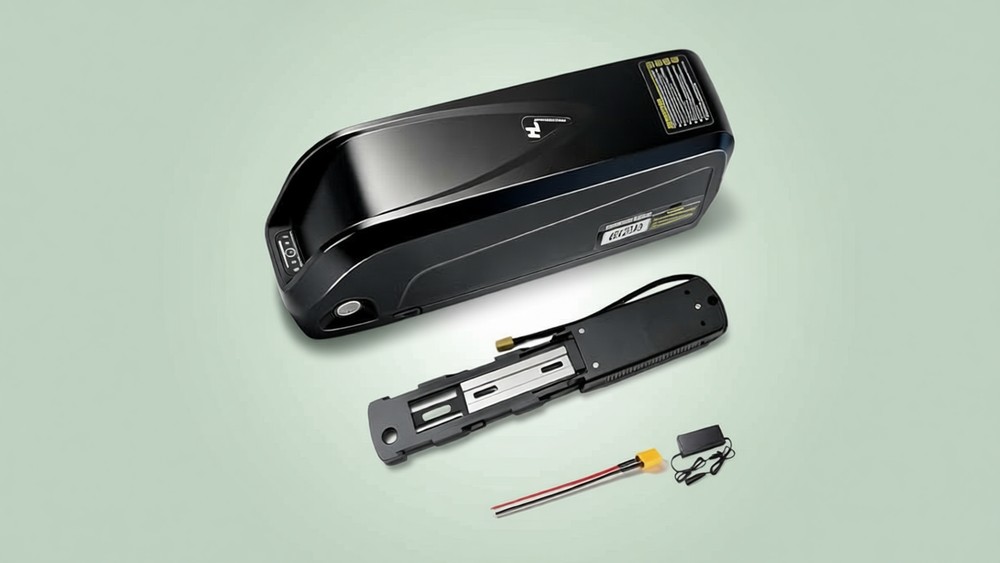
The shells differ, and the differences matter more than the logo. The silver fish runs long and thin at 390 by 75 by 111 millimeters, with a 25A board, a 750W claim, a 4-pin port on the bottom and no charger in the box.
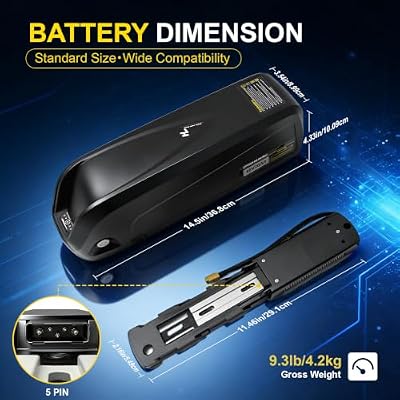
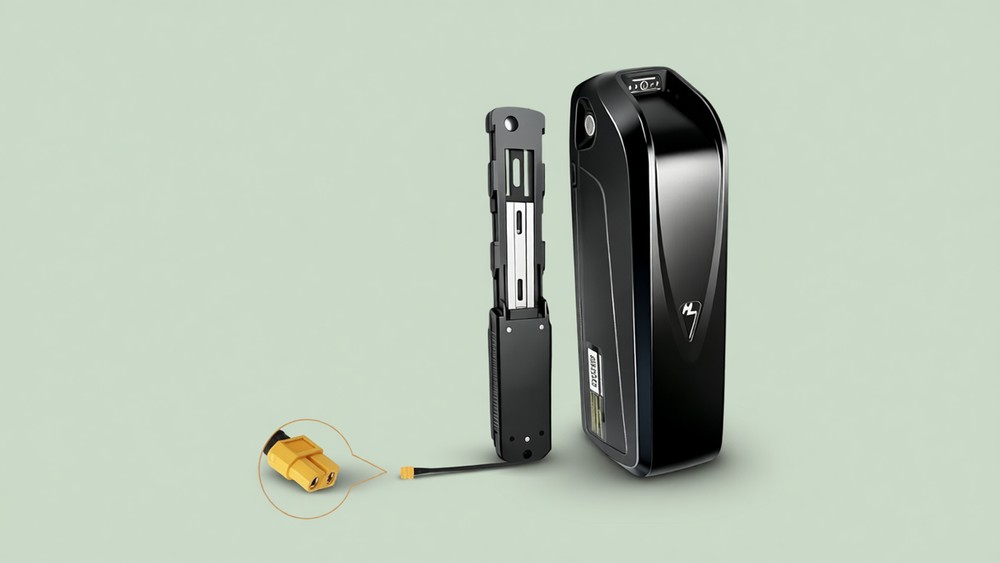
The folding case is shorter and deeper, with a 30A board, a 1200W claim and a 3-pin port on top. This LOCKBUS is the biggest of the three in every electrical sense: a 40A board, a 1500W claim, an XT60 lead, a charger, and a case at 368 by 90 by 130 millimeters that carries the USB port and the lock.
What the shared code means for a buyer is simple. The model number identifies the platform, not the pack, so two listings with the same code can ship different cases, different boards and different prices.
Compare the case in front of you against the bay on your bike rather than trusting the string, and price the three shells against each other, because we have seen the same 960 watt-hours sell for 199.99 and 209.00 on the other two.
The USB port the bullets forget
The title leads with USB Port, in the same breath as the 40A BMS, and then not one of the five bullets mentions USB again.
Bullet three runs through the LED indicator, the anti-theft lock and the IP65 casing and stops. The port presumably exists, since the title names it, but nothing written on the page states its output, so a feature that appears only in the title is a feature worth confirming before you plan a phone charge around it.
The rest of the hardware list is specific enough to check on arrival. IP65 means jets of water, not submersion, which is the standard rating language and fine for a pack that lives on a downtube in the rain, as Wikipedia's IP code article lays out.
The keyed lock is the anti-theft story, and it also holds the pack to its mount, so if you ride with the battery off the bike often, the lock becomes a daily ritual rather than a security feature.
A record of one, read carefully
The whole review record on this page is one text from September, five stars, no purchase badge, one sentence long. It praises the battery and nothing else, with no bike model, no mileage and no measurement in it. I am not going to lean on that, because a record like that cannot support weight, and saying so plainly is more useful than pretending otherwise.
What can support a buying decision here is the spec sheet, and the spec sheet holds up better than most at this price. The electrical claims agree with each other, the charger voltage matches the cell count, and the weights two rows agree on leave room for everything a real pack carries, which is more than several listings this month managed.
Where the record is silent, the return window is your instrument. Charge it fully, ride it, and if a range test comes in far short of what 960 watt-hours should deliver on your bike, you still have time to send it back.
The power math and the three weights
The 40A board is the honest headline. Forty amps across 48 volts is a 1920W ceiling, and the largest motor claim on the page, 1500W, draws about 31 amps at full load, so the claim sits inside the board with room to spare.
A 1000W motor draws about 21 amps and a 750W commuter about 16. That is the honest direction, and it is worth noting because several sibling listings this month overran their own boards, including the LOCKBUS 13Ah, whose 20A board sat a hair under its own 1000W claim.
The weights print three ways and two of them agree. The bullet says 11.24 pounds, printed with the l missing, and converts it to 5.10 kilograms, which is correct.
The Battery Weight row says 11.2 pounds. The row for item weight says 9 pounds, which is about a fifth under the other two and has no reading that helps a buyer, since the pack cannot weigh 9 and 11.2 pounds at once. Trust the two that agree, and weigh on arrival anyway.
The energy budget backs the bigger figure. Nine hundred sixty watt-hours needs roughly 3.2 to 6 kilograms of bare cells at the standard 0.16 to 0.30 kilowatt-hours per kilogram band, and 5.10 kilograms total leaves room for the case, the board and the wiring inside that budget. Unlike several packs we checked this month, this listing's weight does not argue against its capacity claim.
The charger prints 54.6V at 3A, which is the correct 13-series voltage, and at 20 amp-hours a 3A brick needs about six and a half hours for a full charge, so plan overnight charges rather than lunch breaks.
The 1000-cycle claim sits at the top of the typical band for this chemistry, and Wikipedia's lithium-ion article explains why cycle life depends heavily on how deep you discharge and where the pack lives, so treat the claim as a ceiling, not a promise.
Price, stock and the family ladder
At the current 208.99, this pack works out to about 22 cents per watt-hour, which places it 55th of the 301 packs on our comparison table, inside the cheaper third. The live rank renders in the specs box on this page and moves with the price, and the price has been moving, since our row still carries 215.99, a few dollars over the live box.
The stock line reads Only 7 left, which on a listing this thin is as much a scarcity tactic as a fact, though the seller is the same Xinrun E-Commerce that sells the LOCKBUS 13Ah we reviewed, so the storefront is consistent across the family.
The family ladder is where the value lives. The folding LZIXYM shell on the same model code sells for 199.99 with a 30A board and a charger, about 21 cents per watt-hour, and it has the deeper record at four ratings to this one's one.
The silver fish costs 209.00 without a charger. If your bike takes the LOCKBUS case shape, the stronger board and the wider motor claim are worth the small premium, and if it takes any of the three shapes, the folding LZIXYM 20Ah is the better-documented door into the same platform.
The silver fish LZIXYM 20Ah covers the long thin option, and the LOCKBUS 13Ah covers the smaller tier with its own board-margin lesson.
Common questions about this LOCKBUS pack
Is the USB port real?
The title says it and the bullets never mention it, which is the listing's strangest habit. Nothing written on the page states the port's output, so if it ships as titled, treat it as a convenience charge for a phone, not a plan. Ask the seller what the port puts out if you would actually use it.
Can I trust a pack with one review?
Not on the strength of the review, which is one unbadged sentence. Trust the things that check out instead: the 40A board clears the 1500W claim with room, the charger voltage matches a 13-series pack, the printed weight fits the energy budget, and the one-year warranty is middling rather than stingy. Buy inside the return window and test the range against your bike's appetite in the first two weeks.
How does it compare to the other packs on the same model number?
It is the most powerful shell of the three, with the 40A board against the folding case's 30A and the silver fish's 25A, and the only one of the three that claims a USB port.
The folding shell is cheaper with a charger included and a deeper review record, and it carries a keyed lock of its own, going by the keys in its box. The silver fish is the long thin shape some frames demand. Match the case to the bay first, then pick by price and record.