Folding ebikes punish batteries twice, first because the frames are small and second because makers rarely agree on where the pack should live. The LZIXYM 48V 20Ah folding battery claims a folding-bike shape with a big 960 watt-hour reserve, a 30A board and a discharge port on top of the case, which is a spec list worth taking seriously on paper.
The thing that made me look twice is not on the spec list. The model number on this page is FP4820R0-097, and that exact string also prints on a silver fish LZIXYM pack we reviewed in October. One model number, two different cases, two different BMS ratings. Once you see it, the rest of the listing makes more sense, so that is where this review starts.
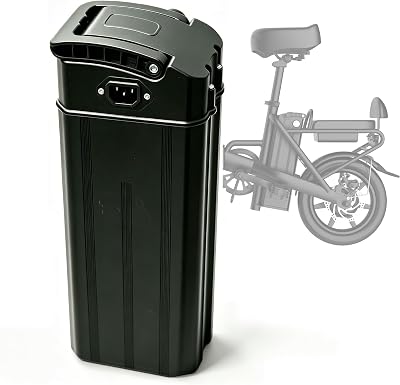
One model number, two shells
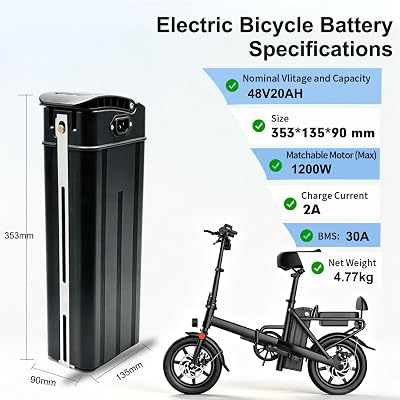
The silver fish twin sells for 209.00 against this one's 199.99, and both listings name the same manufacturer, Dongguan Yizhan Electronics Technology. The shells do not match. The silver fish runs 390 by 75 by 111 millimeters, long and thin, with a 25A board, a 750W motor claim and a 4-pin port on the bottom. This folding case runs 353 by 135 by 90 millimeters, shorter, nearly twice as deep and a touch thinner, with a 30A board, a 1200W claim and a 3-pin port on top. The silver fish ships without a charger, this one ships with one.
I can't tell you which arrangement is the "real" one, because the model code does not split the difference. Both shells also print the same junk weight row, seven pounds, which the next section takes apart. What a buyer should take from this is simple: the model number identifies the platform, not the pack, so compare the case you are buying against the case you need rather than trusting the code.
The family goes deeper than these two. The same factory builds the LGNUO and LOCKBUS 13Ah packs we covered earlier this month, and the LZIXYM 13Ah listing carries the same FP48 code with the capacity digit inside it, FP4813 against this one's FP4820. Five listings, three brand names, one factory, one naming scheme. That is not a scandal, plenty of brands are storefronts over a shared factory, but it explains why the listings read like siblings.
Every text is a replacement story
Our September article found a record of one rating, a single five-star review, and said that told you almost nothing. Seven weeks later the record holds four ratings and four texts, all landed between early September and late October, and the spread has not turned negative. The average sits at 4.6 with a 63/37 split between five and four stars and nothing below.
What struck me reading the four texts is that three of the four buyers came here because another pack failed. One bought a bike new, watched its original battery die in about a week, decided returning the bike was more hassle than buying a new pack, and reports no problems since. One bought this for a son whose pack would not work or hold a charge. The third, the off-list story, says the pack didn't fit one bike's base at all but works as a second battery on an Euy F7, held on with a Velcro strap and a typo for the ages.
The fourth text, unbadged and template-shaped, says the pack arrived quickly and has been working great, and it carries the only helpful votes on the page.
Read as a group, that is a record with zero criticism of this pack inside it. No dead on arrival, no capacity complaint, no range complaint. It is also a record with almost no product information in it, because nobody measured anything. The fitment caution is real though, and one owner solved a bad fit with a strap rather than a mount, so measure your bay and expect to work for the install if your bike is not on the listing's mental map. For range expectations, the usual pedal-assist spread runs 25 to 75 miles per charge across common pack sizes, and Wikipedia's e-bike article sketches that band, with terrain and assist level doing most of the deciding.
The weight row argues with the bullet
Two weights print on this page and they disagree by a third. The details row says seven pounds, about 3.2 kilograms. The bullet says 4.77 kilograms, about 10.5 pounds. Both cannot be true, and the energy math says which one to believe.
Nine hundred sixty watt-hours needs roughly 3.2 to 6 kilograms of bare cells at the standard 0.16 to 0.30 kilowatt-hours per kilogram energy band. The seven-pound row would leave nothing at all for the case, the board and the wiring, because 3.2 kilograms is the entire cell budget at the very top of the band. The bullet's 4.77 kilograms reads as about 0.20 kilowatt-hours per kilogram at pack level, which sits inside the band and leaves room for everything else. The same seven-pound row prints on the silver fish twin, whose own bullet claims 4.8 kilograms, so the row looks like copy-paste junk that follows the platform across listings rather than a measurement of anything.
The practical advice is the same as it has been all month. Trust the bullet over the row, and weigh the pack when it arrives with a bathroom scale. If it comes in near seven pounds rather than ten and a half, the capacity claim inside is in doubt, and you want to know that inside the return window. A cheap multimeter or a full charge-and-ride test will settle it in an afternoon.
The power math and the box
The 30A board holds its end of the bargain. Thirty amps across 48 volts is a 1440W ceiling, and the largest motor claim on the page, 1200W, draws about 25 amps at full load, so the claim sits inside with room. A 1000W motor draws about 21 amps and a 500W commuter about 10. That is the honest direction, unlike several listings this month whose motor claims overrun their own boards, and the family record agrees, since the silver fish twin's 25A board raised a 1200W ceiling over a 750W claim.
The box is better equipped than the twin's. You get the battery, a holder, a charger, two keys and a manual, and the charger is the reason this pack wins the family value fight, because the silver fish ships without one and you would be shopping for a 54.6V charger separately.
The charger's amp rating is not printed anywhere, so no charge-time floor can be worked out, and at 20 amp-hours a slow 2A brick would need ten hours, so if a fast turnaround matters, ask the seller what the brick puts out before you order. The listing's own text prints the word charger with a stray hyphen in the middle, the same template typo we have found on two other listings this month, which is a small thing that tells you who writes these pages.
Two fitment notes survive from our own earlier coverage. The title says folding ebike battery and the bullets say the pack mounts on a seat tube in minutes, the same contradiction our September article flagged, still unresolved. And the 3-pin discharge port on top is a genuine convenience over bottom-mounted ports, but it only helps if your controller cable expects three pins on that end, so check the plug before the price convinces you.
What the energy costs
At 199.99 for 960 watt-hours, this pack works out to about 21 cents per watt-hour, which lands in the cheapest fifth of the 301 packs we track on our comparison table. The live rank renders in the specs box on this page, so check it there as prices move. That is genuinely good value for the energy, and it is worth leading with.
The twin comparison sharpens it. The silver fish costs 209.00 for the same 960 watt-hours, about 22 cents per watt-hour, and it omits the charger, so this folding shell is the cheaper door into the same platform and the better-equipped one. If your frame takes either shape, the choice is mostly geometry. If it takes only the long thin shape, note that the silver fish LZIXYM 20Ah carries its own review with a deeper record, six ratings to this one's four.
One caution belongs here rather than in the fine print. The cheapest fifth of the table is full of house-brand packs with short histories, and this one's warranty runs one year. The value is real, but it is the value of a platform that several storefronts share, not of a brand with a service history behind it. The LOCKBUS 13Ah from the same factory family prices higher per watt-hour if you need less energy.
Common questions about the LZIXYM 48V 20Ah folding pack
Will it fit a folding ebike?
Measure first, because the title and the bullets disagree about the mount. The case runs 353 by 135 by 90 millimeters, which is deeper than most folding frames expect, and the bullets describe a seat tube mount with a holder rather than a folding-specific bay. One owner gave up on a base fit entirely and strapped the pack to an Euy F7. Check the bay depth and the 3-pin plug before ordering.
Is the seven-pound weight row real?
No, and the listing's own bullet disagrees with it. The bullet says 4.77 kilograms, about 10.5 pounds, and the energy math says a 960 watt-hour pack cannot ship at seven pounds with a case and a board included. Weigh the pack on arrival. Near ten and a half pounds matches the claim, anything close to seven means the cells inside are not what the label says.
Can I trust a pack with four reviews?
The four texts are consistent and none criticizes the pack, but none measures it either, and one of the four carries no purchase badge. What backs the record up is the electrical math holding, the plausible bullet weight, the charger in the box and the one-year warranty. Ask the seller the charger's amp output and the case weight before ordering, and keep the return window in mind while the first charge cycle settles.