A 30A BMS claim on a 36-volt pack at this price usually means something is wrong. Most 36-volt batteries in this price category ship with a 20A or 25A restriction, which dictates what happens when you try to run a 750W motor on your ebike. That is, LGNUO put a 30A continuous BMS in their 36V 10Ah Hailong Pack. Because of this single specification alone, this battery is going to be looked at by people running a 500W to 750W hub motor on a tight budget.
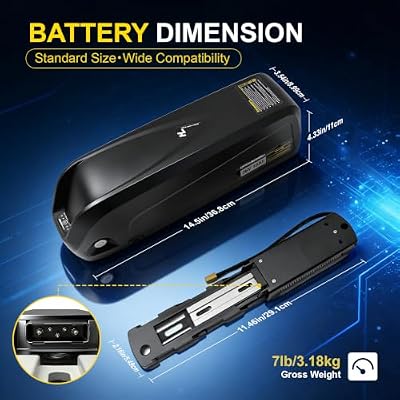
To get the bad news out of the way now. The 10Ah at 36 volts provides a total of 360 watt-hours. At 36 cents per watt-hour this puts us into the middle of the pack for the Hailong size format. The case measures 14.5 x 3.54 x 4.33 inches, standard Hailong case sizes that attach via bolts to most steel and aluminum downtubes with bottle-shaped mounts.
Inside, the product listing states "Grade A" lithium-ion cells. "Grade A" means these lithium-ion cells should retain their rated capacity and cycling capabilities without severe performance degradation. As a buyer you cannot confirm whether or not a budget brand bought you "Grade A" cells.
Instead you need to accept the first 50+ charge cycles as your own testing period. If the capacity holds after your summer of riding then it will likely continue to hold.
At 7 pounds the added weight is noticeable. On a cruiser or commuter frame it adds enough mass that it's nearly unnoticeable due to the fact it hangs down near the downtube where it doesn't affect the handling. On a folding bicycle it adds some serious heft.
BMS, Charger, and Other Features
LGNUO built-in a full 30A continuous BMS into their 36V 10Ah Hailong Pack to protect it from overcharging, under-discharging, overcurrent, and short circuits. Simply put, a hub motor using 36V and pulling 20-plus amps at full throttle will wear down the battery faster than expected unless it has an adequate BMS rating. This will prevent the pack from shutting down prematurely during prolonged hill climbing. Note, you don't need this much BMS protection on smaller motors.
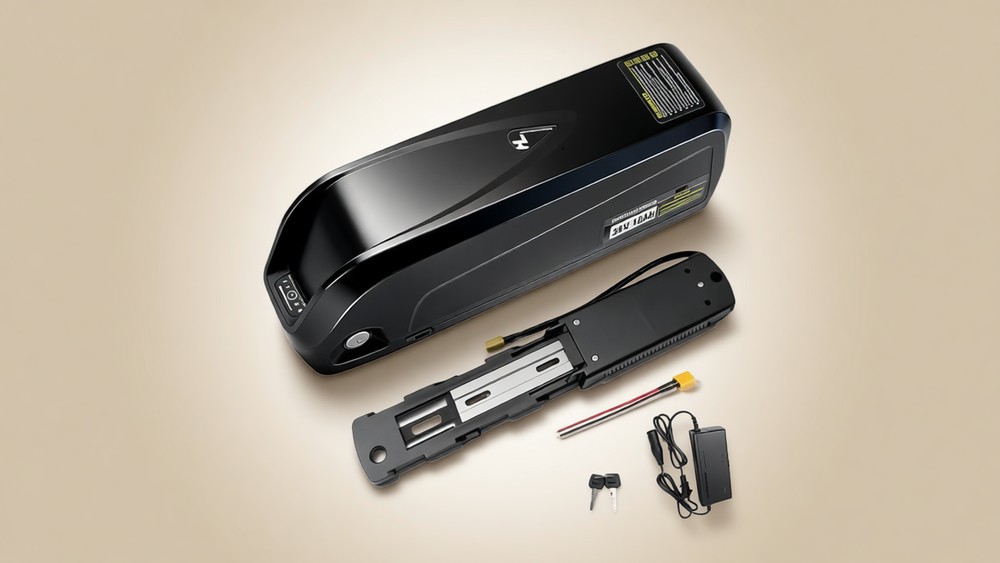
The full package includes all hardware necessary to install this battery including mounting brackets (standard Hailong style), a 42V 2A charger, two key fobs for locking, XT-60 connectors for connecting to your motor and controller, and a user manual. The power switch locks out power drain while parked. The included charger also features a USB output, which appears to be a novelty until you find yourself 12 miles away from your home with your phone dead and there isn't another vehicle nearby to borrow.
As expected based on what the listing includes, the package contents read like most Hailong packs: mounting bracket, charger, keys, connectors, manual. The difference is the 30A ceiling behind the XT-60 connector, which is the spec that matters when a hill gets long.
Owners of similar Hailong-format packs tend to report the same handful of themes. Charging the pack fully before the first ride preserves cell balance. Storing it indoors through a cold winter protects the case and the BMS. And keeping the contacts dry after rain riding prevents the corrosion that generates most of the one-star feedback on cheap packs.
As a side note from the seller, please charge this battery to its fullest potential prior to taking it on its maiden voyage. Lithium cells shipped at storage voltage and driving it off the shelf reduces its lifespan.
Range and Real-World Results
We can estimate how far this pack travels based on several factors.
First, we know we have 360Wh available. We assume moderate usage, in other words actual ridership. Using an average speed of approximately 8 mph and assuming we average approximately 80% efficiency, which accounts for losses from friction and wind resistance, we arrive at an estimated distance of approximately 24 miles for steady-state pedaling on flat terrain. As you add hills or heavier ridership, you can expect anywhere from 15 to 20 miles depending on how aggressively you ride.
Of course, pedal assist changes everything. Low PAS modes allow this pack to achieve distances up to 30 miles plus, depending upon how heavy you weigh, due to your leg power carrying most of the load.
This pack would be perfect for commuters working within a radius of approximately 25 miles or less each day.
For reference, the included 42V 2A charger takes around five hours to replenish the pack to 90% capacity.
Who Would Use This Battery
Three types of buyers would be interested in purchasing this pack:
- The owner of a hub-motor equipped ebike wanting to replace their OEM battery with an aftermarket replacement.
- Anyone looking to build an affordable ebike with a 30A BMS capable motor between 350W and 750W and wants an aftermarket battery that meets or exceeds OEM specs.
- Ebike owners with scooters as they often use 36V batteries as well and have limited options in terms of pricing.
Avoid purchasing this battery if:
- Your daily commute will exceed the stated range.
- You are trying to get the highest possible range per dollar.
- Your controller requires more than 30A continuous.
The absence of customer reviews on this listing is the one honest caveat. Early adopters take a small risk, and the reasonable mitigation is buying through Amazon where the return window protects you. Check the current listing details before you commit, compare the rest of the field on our battery table, and read the buying guides on our blog before you spend.
Frequently Asked Questions
Will It Work with My Bike?
It will fit most any frame that has a standard Hailong downtube mount. This includes most (but certainly not all) steel and aluminum step over and step through bikes. Check your current mounting plate to confirm whether you can use this system or measure it prior to ordering.
Can I Install It If I Have a 1000W Motor?
Although listed as compatible, be realistic about your expectations. At full throttle a 1000W motor draws very close to the 30 Amp BMS limit. Therefore, sustained full throttle climbing could result in the BMS cutting off power. The best compatibility is likely with motors of less than 750 Watts.
How Many Total Miles Do Grade-A Batteries Generally Last?
In a properly functioning pack, Grade A cells generally last hundreds of full cycle usage before noticeable decline in capacity occurs. If used regularly by a daily commuter, they can last two to three years.
Is the Built-in USB Port of Value?
Yes. The USB charging port provides a means of charging a cell phone or light while stopped. As with any load, it reduces the available voltage from the pack, therefore treat it as an "emergency" feature and not a true power bank.
What Type of Charger Should I Purchase When Replacing the Stock Charger?
As long as the charger is rated at 42 Volts DC and 2 Amps and has the proper barrel plug connection, it will function as a replacement. If you are looking to reduce the recharge time to approximately 3.5 hours you would need to upgrade to a charger rated at 3 Amps. Further details regarding purchasing options for a new charger can be found on our blog.
Does It Come with Keys?
Yes, two keys for the lock plate, which secures the pack to the frame against casual grabs.