Replacing a dead pack is one of the most consequential purchases an ebike owner makes.
The battery is the most expensive single part of the bike, a wrong-capacity or wrong-chemistry pack can sit useless on a shelf, and the listing that looks easiest to order is often the one that answers the fewest questions. Silver Fish format narrows the field, which helps. It doesn't answer the questions that matter.
The Yasco 48V 13Ah is the extreme case of that problem. When we checked the listing in late October 2026, it carried not one rating and not one written review, confirmed signed in. Its spec table is ten rows and only one of them carries a spec.
One bullet describes the whole item. There's no owner record to lean on at all, so this page has to be an evaluation of the listing rather than a test of the pack, and it will say plainly where that stops.
What the listing does say is still enough to run some checks. This article walks through what the page hides, the charger and capacity arithmetic a buyer should do anyway, and what the compatibility bullet actually tells you about which bikes this pack can serve.
The Yasco 48V 13Ah silver fish battery is a hard one to recommend on the evidence, because there is no evidence.
The listing costs 187.00, which works out to about 30 cents per watt-hour for the 624Wh the title describes, and that price sits in the pricier third of the 301 packs we track. A buyer would be paying above the band's middle for a pack whose cells, BMS, charger and dimensions are all unnamed.
The one-year warranty row is the only promise on the page, and no owner has ever tested it. If your old pack is a standard Silver Fish case and you accept the risk of an unrated listing, the form factor fits the plan. Everyone else has better-documented options at this price, and our battery comparison table sorts them.
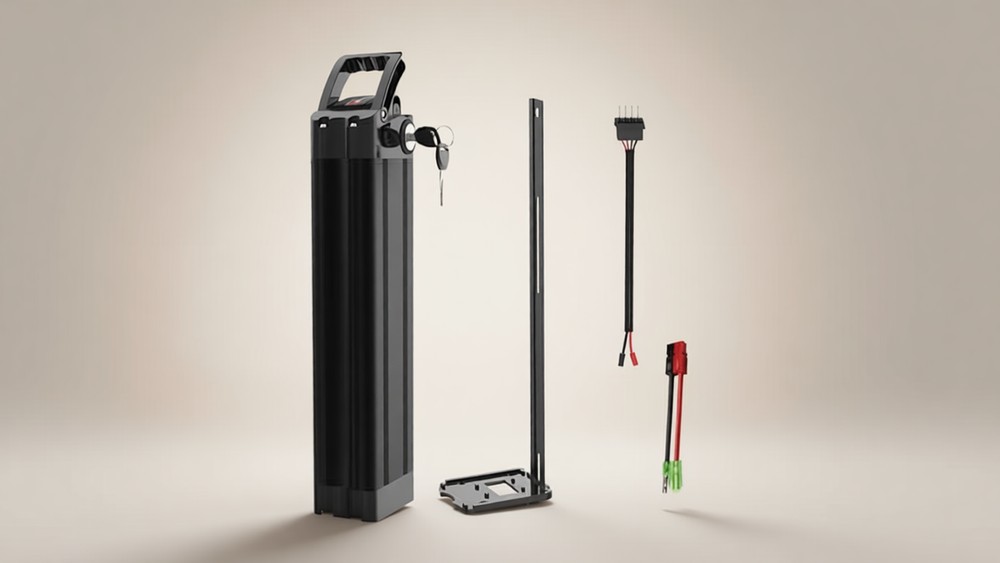
The listing says almost nothing
Start with what a battery listing needs to say and this one doesn't. The spec table carries the brand, a material, a count, the ASIN and two warranty words. The only electrical fact in the whole table is the Color row, which reads 48V 13Ah.
Voltage and capacity, the two numbers that define a battery, are hiding inside a color name.
Everything else a buyer needs is missing, and the gaps matter. There's no BMS amperage, so you can't check the pack against your controller's draw before ordering. There are no case dimensions, so you can't check it against your frame tray or your old pack.
There's no charge time, no cycle-life figure, no cell brand, no connector type, no weight and no IP rating. The Included Components row reads whole pack, which names nothing, and the page never says whether a charger ships. There is no Best Sellers Rank row either, which most listings in this band print.
The material row reads Plastic twice, for the case and the material type. That is not a criticism of plastic cases, which are standard at this price. It is an example of a spec table so thin it repeats itself rather than adding information.
Three different names sit behind this pack. The brand is Yasco, the manufacturer is listed as Wallen Power Technology, and the seller when we checked was GreenPowertech. None of these has a stated relationship to the others, which is common in this market and worth knowing before any warranty conversation.
How to buy a pack nobody has rated
A zero-record listing isn't automatically a bad product. It's an unverified one, and the burden of checking moves from the crowd to you. The checks are mechanical.
Ask the seller the three questions the page will not answer: whose cells are inside, what the BMS passes in amps, and whether a charger ships in the box. A seller who answers all three with specifics is a different risk than one who sends a greeting card reply, and the answer speed on Amazon messaging tells you what a warranty claim would feel like.
Match the pack to the bike yourself. A 48V 13Ah pack delivers 624 watt-hours, and a controller's peak draw has to sit under whatever the BMS passes, which is exactly the number the listing withholds. If your controller peaks above the board's limit, the bike cuts out on climbs, so that's the one figure to get in writing.
Our comparison table shows the capacity and price position of every pack we track, including this one in its specs box.
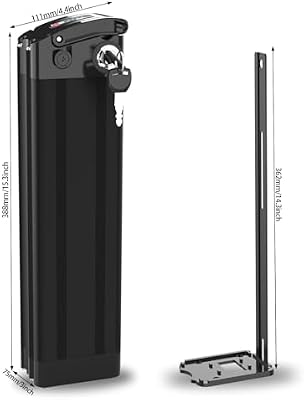
Measure the old pack before you order the new one. Silver Fish cases share a sliding-bracket format but not exact dimensions, and tray height varies between bikes. This listing gives you no measurements at all, so the length and height of the pack you are replacing are the only numbers you will have.
The charger math you have to run yourself
Because the listing never names a charger, the buyer owns this arithmetic. A 48V lithium pack is 13 cells in series.
Lithium-ion cells charge to 4.2 volts each, so a full 48V pack reads 54.6 volts, and the correct charger is labeled 54.6V output. That voltage naming is why the label never says 48V on a 48V charger.
The mismatches are the part that bites. A 36V charger stops at 42 volts and undercharges the pack, which reads as short range rather than as a fault.
A 52V charger pushes toward 58.8 volts and overcharges a 13-cell pack, which is the failure mode nobody wants in their hallway. If the seller does not volunteer the charger voltage, get it in writing before the pack ships.
Charging habits matter more than charger branding. Lithium packs last longest with room-temperature charging and shallow discharge cycles, and lithium-ion has no memory effect, so partial charges carry no penalty. A pack that lives on a porch in winter or routinely drains to empty will age faster than the same cells treated gently, whatever brand is printed on the heat shrink.
What the compatibility bullet really says
The listing's single bullet is a compatibility sentence, and it is more informative than it looks. The pack fits most motor kits, the bullet says, giving Bafang and Tongsheng as examples, and it does not fit Bosch, Shimano, Yamaha or Panasonic.
Read the two lists as market segments rather than a fitting guide. Bafang and Tongsheng build mid-drive conversion motors, the kind a DIY builder bolts onto a plain bike, so the bullet is aimed at kit builders whose motor takes any pack with the right voltage and connector.
Bosch, Shimano, Yamaha and Panasonic build complete systems where the battery talks to the motor and mount is proprietary, and those bikes reject third-party packs by design. The bullet is accurate on both counts. It also quietly tells you this pack is a kit-and-hub-motor product, not a replacement for a brand-name bike's battery, which the title never states.
One more consequence follows from the bullet's own examples. The compatibility claim covers motors up to whatever the unnamed BMS can feed, and the listing caps nothing. A 13Ah pack at 624Wh suits a mid-size hub build or an assist-heavy commuter.
A high-power build asking for sustained 30-plus amps needs a board rating the page does not give.

What the price buys, and who should take the risk
The arithmetic on price is the one place the listing cannot mislead. 48V times 13Ah is 624Wh, and at 187.00 that is about 30 cents per watt-hour.
The packs we track that publish their cell brand and BMS rating routinely come in under that number, some of them by a wide margin. Paying a pricier-third price for an anonymous pack is a trade a documented listing could justify. This one has a one-year warranty row and nothing else behind it.
Range, as always, is arithmetic rather than a claim. A mid-size hub motor with moderate pedal assist consumes somewhere near 15 to 20 watt-hours per mile, which puts 624Wh at roughly 30 to 40 miles, and throttle-only riding cuts that meaningfully. The listing itself claims no range, so there's no vendor figure to distrust here either.
This pack makes sense for one buyer: someone whose old Silver Fish pack has died, whose frame tray takes the format, who has a charger already or will confirm the voltage in writing, and who accepts an unrated listing to keep the upfront cost down. Everyone else should spend the same money on a pack whose listing answers the questions this one refuses to.
A documented 48V 13Ah pack at this capacity shows what the missing rows look like when a seller fills them in.
The Yasco 48V 13Ah listing on Amazon is where the current price and stock state live, and the stock was down to ten units when we checked. If a record accumulates on this ASIN, this page's read changes, and the specs box above will carry the rating if one appears.
Frequently Asked Questions
Does the Yasco 48V 13Ah battery have any reviews?
No. The listing carried zero ratings and zero written reviews when we checked, confirmed signed in. There's no owner record on the page at all, so every judgment about it has to come from the listing text and your own measurements.
What charger does a 48V battery need?
A charger labeled 54.6V output, because 13 lithium cells in series charge to 13 times 4.2 volts. The listing never says whether a charger ships, so confirm the voltage with the seller before ordering and never substitute a 36V or 52V charger.
Will it fit my bike?
It's a Silver Fish sliding case, which fits a downtube bracket of the same format. The listing gives no dimensions, so measure your old pack's length and height and compare, or ask the seller for the case measurements in writing. Don't skip this one.
Why doesn't it fit Bosch or Shimano bikes?
Those systems pair a proprietary battery to the motor, and the bike rejects third-party packs. The bullet's compatibility with Bafang and Tongsheng kit motors is the useful half of the sentence. This is a conversion-kit and hub-motor pack, not a brand-bike replacement.
Is 30 cents per watt-hour a good price?
For an anonymous pack, no. It sits in the pricier third of the 301 packs we track, and documented listings at the same capacity often cost less. The price is only defensible if you specifically need a Silver Fish case today and accept the missing information.
You can check the current Yasco listing on Amazon for price and availability.