The Kaleila 48V 10.4Ah DCH-006 has a spec sheet that looks fine on a screen. The 2.7-star average across 10 reviews is what matters, and it is bad. Buyers report short real-world range and packs dying early. For most riders the honest advice is to keep scrolling.
Specs and Price
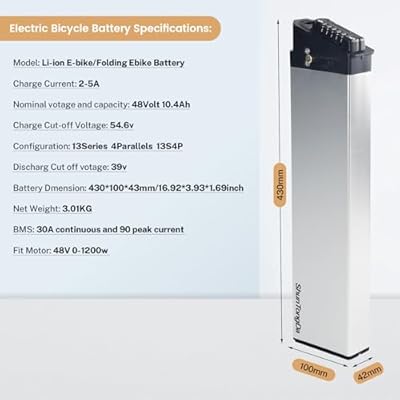
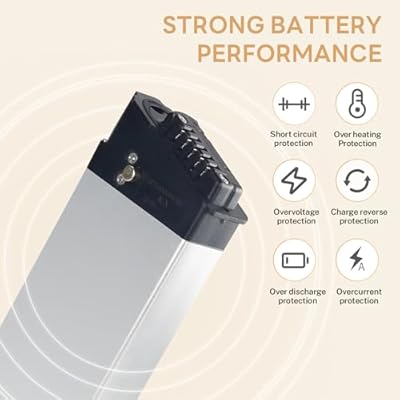
On paper this is 48V at 10.4Ah, or 499.2Wh, built from 18650 A-grade cells rated 3500mAh each. That is a normal spec sheet for a folding ebike pack, and it is exactly the problem: the paper says fine while the buyers say otherwise. Additionally, the internal 30A Battery Management System protects the individual cells from overcharging, over-discharging, over-currents and short-circuits. Every Li-ion pack has a 30A BMS handling overcharge, over-discharge, overcurrent, and short circuits. What the BMS cannot fix is cell quality. Weak cells sag under load, and a sagging pack triggers protective cutoffs, often mid-climb.
At roughly 38 cents per watt-hour, this sits well below name-brand pricing.
Cheap packs cut somewhere, and the review history suggests the cut landed in cell quality. Cheap usually translates into either a lower quality bms or lower-quality cells used internally. When you spend money on what amounts to nothing more than energy storage (as opposed to performance), you're typically trading-off longevity of the internal chemical reaction(s) within the cells. The 30A BMS can feed typical folding-ebike motors without tripping. How much usable current actually arrives depends entirely on the cells behind it. For a 250W to 500W folding bike the current ceiling is comfortable. A 750W build will ride the limit on every climb, and cell quality decides whether that feels sluggish or fine.
What you're paying for is a minimum spec sheet that emphasizes low cost rather than proven reliability.
Design and Mounting
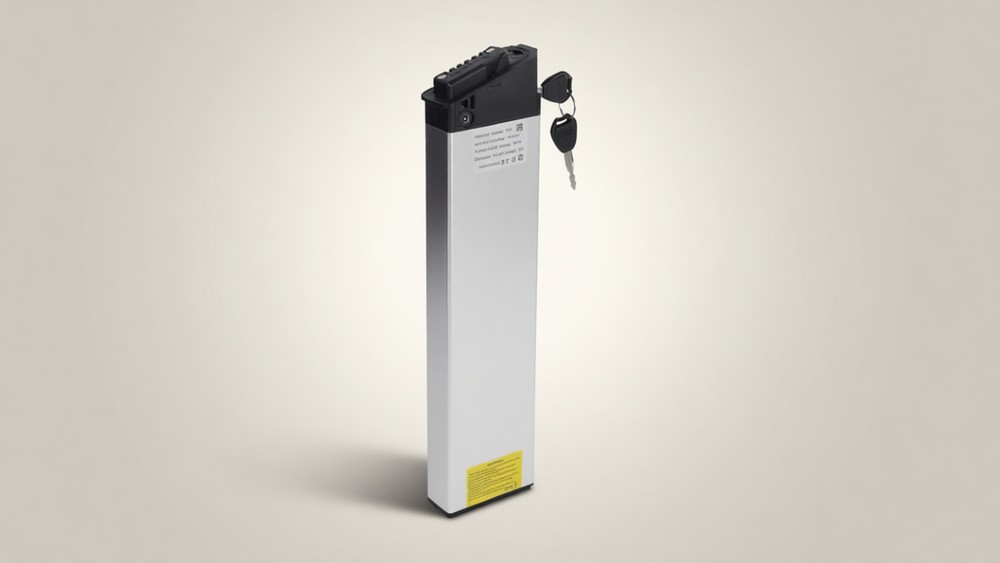
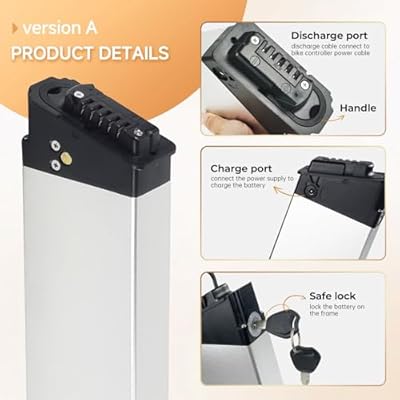
It is built for the DCH-006 slide-in cradle, which covers Anywheel, Xpedo, Mantis, and most folding ebikes using that mount. The physical design enables the battery to easily slide into the frame and mechanically attach via a locking pin. A standard 5-pin discharge connector handles removal and reinstall, so there is no special wiring between rides.
The key lock doubles as the power switch, so the pack cannot rattle itself awake inside a pannier. It is a nice touch, but it is also a mechanical part on a battery with a bad reliability record. If the lock degrades, the pack becomes dead weight. The IP65 casing handles rain and dust fine. Keep it out of pools and pressure washers. The sealed housing also keeps road grit out of the 5-pin connector, which is the failure point on most slide-in packs.
Due to the fact that this battery is designed for installation in a narrower tube-style frame – it has a relatively compact form factor. Slide-in fit matters here. A loose cradle lets the pack rattle and works the 5-pin connector loose, and connector resistance means heat in the cells.
Real-World Range and Power
At 499Wh, the theoretical range math looks reasonable. Reality depends on whether those 3500mAh cells hold voltage under load. Weak cells are like a gas tank with a pinhole: the gauge says you have range, the bike disagrees the moment you ask for power.
Power delivery runs through that 30A BMS. That should allow you to generate plenty of current for even the smallest motors found on most ebikes with foldable frames. High internal resistance shows up exactly where it hurts: throttle twists sag the voltage, the bike feels weak, and hills expose everything. That matches the complaint pattern in the reviews.
What Amazon Reviewers Are Saying
The 2.7-star average across 10 reviews is the loudest spec in this article. Reviewers report two failure modes: real range landing well below the advertised 499Wh, and packs dying early in ownership. Ten reviews is a small sample, but both complaints point the same direction, and neither points at careful quality control.
Who Should Buy This
The only honest use case is a dirt-cheap stopgap for a dead bike when no other option exists, bought with full knowledge it may quit without warning. If you depend on your ebike to get anywhere, spend more on a pack with a proven track record. A battery you cannot trust is not a bargain at any price.
Compare it against the rest in our ebike battery comparison table, or dig through the GoMotorbikes blog.
Check the latest price on Amazon.
Frequently Asked Questions
Is this battery compatible with the Lectric XP?
The listing does not specifically mention the Lectric XP by name. Although both the Lectric XP and Samebike use DCH-006 style batteries, the exact dimensions and connector may differ between the two. Measure your original battery and confirm the the 5-pin outlet before ordering to avoid fitment issues.
What does IP65 water resistance mean for an ebike battery?
IP65 refers to the level of resistance a device has to dust and water. Specifically, it means the battery is protected against dust ingress and can withstand being sprayed with low-pressure water jets from any direction. In practice, the Kaleila should handle light rain while riding but should not be exposed to prolonged or extreme wet conditions.
How long does the battery take to fully charge?
Plan on six to seven hours for a full charge from empty. That is slightly longer than some other ebike battery packs currently available. If quick turnaround between rides is important to you, factor this into your decision.
Why is the rating so low compared to other DCH-006 batteries?
The 2.7 star average across 10 reviews is low because a number of reviewers reported experiencing problems with fitment, quality, and performance. With a small review sample, a few negative experiences can significantly impact the overall rating. Reading the individual reviews on Amazon will give you a better sense of the specific issues people ran into.
Does this battery come with a charger?
The listing does not clearly specify whether a charger is included. If you already have the original charger from your folding ebike, it should work with this battery since it uses the same voltage and connector type. Contact Kaleila directly if you need confirmation before purchasing.
How does the 10.4Ah capacity compare to other variants in this listing?
The listing contains various capacity options including 10.4Ah, 12Ah, 12.8Ah, and 14Ah. The 10.4Ah variant at 499.2Wh is the least expensive option. The 14Ah variant at 672Wh offers approximately 35 percent more range per charge. All variants use the same DCH-006 form factor and the discharge port.