A single intercom at 45.99 that claims a 1500 meter range, a five-layer noise reduction stack, and music sharing for two riders is making a lot of promises for the money. The model is the JESIMAIK R18 Lite, it carries a 4.1 average across 207 ratings, and the rating histogram leans happy, with 52 percent five-star reviews.
The written record is 16 texts, 15 of them on confirmed purchases, and it answers the listing in a specific way. One measured number comes back against the range claim, about 500 to 600 meters from a buyer who has owned four headsets. Almost nobody notices the noise stack working. And the volume ceiling shows up in four separate texts from four directions.
One buyer also paid about 80 for a unit expecting a six-rider group and found out the two-way limit the hard way, which is worth understanding before you order.
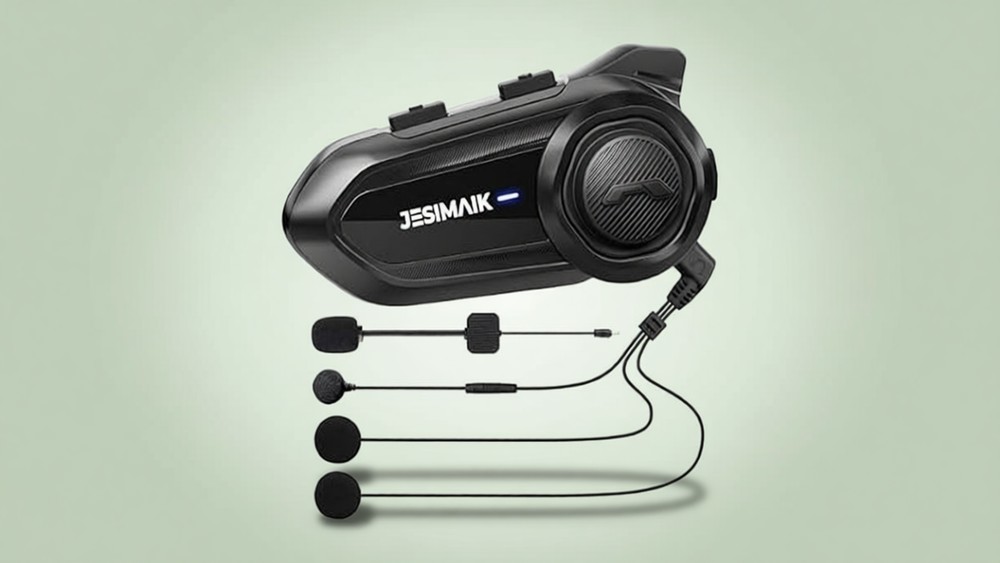
What the listing promises, and the name it censors
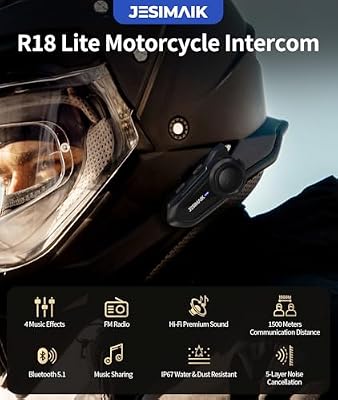
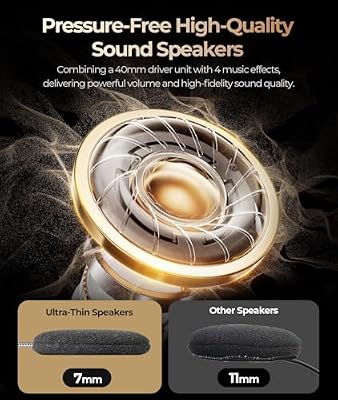
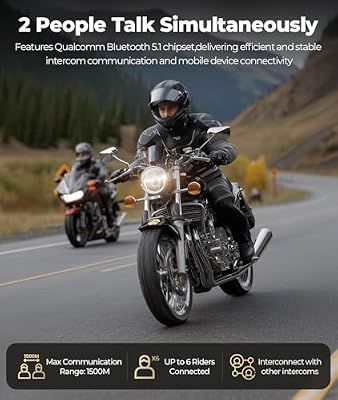
The spec sheet leads with a Qualcomm Bluetooth 5.1 chip and a maximum 1500 meter communication range in open areas, real-time two-way intercom, music sharing between two riders, and an FM radio for solo rides. The noise story is the boldest part: ENC 2.0, DSP, CVC 8.0, a hardware filter, and anti-pop mic foam stacked into a claimed 90 percent cancellation of wind noise and engine roar. Then come four sound effects, Standard, Bass, Rock and Pop, 7mm ultra-thin speakers built around 40mm drivers, glove-friendly buttons, USB-C charging, a 2-year warranty, and a #44 rank in Powersports Bluetooth Headsets.
One bullet deserves a closer look than the specs get. The universal-pairing claim names the cross-brands it works with as "CarXX and SeXX", which are censored spellings of the two biggest names in helmet intercoms. Somebody decided the actual brand names were a problem in their own listing, and that tells you how carefully this copy was assembled. The spec table plays a smaller version of the same game: the title says IP67 Waterproof, the table row says only Water Resistant.
Range context matters here, because 1500 meters is an enormous number for this radio class. Bluetooth 5.1 supports 40 to 400 meters at best, and in its most common low-power mode the typical range is 10 meters, per the radio standard's own figures. Claims beyond the radio class depend on open air and line of sight between two helmets. On our intercom table this R18 Lite sits near the middle of the 192 intercoms we track on price per rider, which is where an unbranded single should sit.
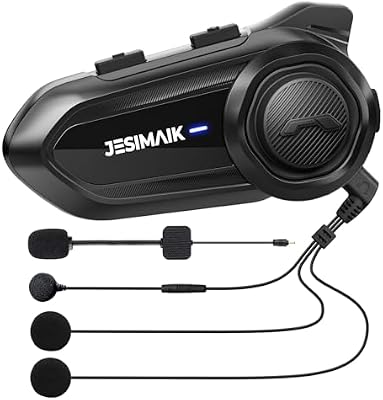
The 1500m claim against the record's own numbers
The only measured range report in the record comes from a buyer on their fourth motorcycle headset, and it lands at 500 to 600 meters for sure, with a connection that stays reliable and FM radio listed alongside it as the good parts. Two other texts gesture the same way without numbers, one reporting good range and clear transmissions, another saying it paired easily with the phone. Nobody reports riding anywhere near 1500 meters.
The record does settle one range question the listing buries. A buyer who paid about 80 for a unit expected to ride in a six-rider group, then discovered only one other headset connects at a time. They called it a waste and could not return it. The title says 2 Way, and the two-way description is honest, but a buyer skimming the universal-pairing bullet can easily walk into that trap, and one did.
The volume ceiling four owners hit from four directions
The most useful text in the record is a three-star with five helpful votes, written by a first-time comm buyer who judged that you get what you pay for. Their installation went fine, clip first, then peel-and-stick when the clip dug into their head, and the speaker placement took only trial and error. Then the ceiling: sound is clear at low to mid volume, but turning the volume up introduces distortion until the audio is barely recognizable. Music stops being enjoyable. Phone calls work in one direction, the other person hears you fine, but you can't hear them without pulling over, which defeats the purpose.
Three more owners hit the same ceiling from different angles. A two-star calls the highs way too harsh and the bass absent, and says that with better drivers this would be five stars. A third can't hear the other rider at highway speeds and keeps it to around town under 30 mph. A fourth ran full volume on both sets and still found the headsets not loud enough in traffic. The deep text adds the detail that matters for repairs: the speakers and mic connect through a USB-C port, and the owner's own suggested fix is a different set of speakers.
The battery story in that same deep text needs an honest telling. After a 3-hour ride with music playing full blast, the power voice still announced 100 percent. But the owner admits they had their own earbuds in listening to something else the whole time, so the radio played to nobody. Treat it as a hint the battery lasts, not a measurement.
Five layers of noise cancellation, noticed by nobody
The listing stacks five noise-reduction technologies and quantifies the result, up to 90 percent of wind noise, engine roar, echo and ambient interference cancelled. The buyer record quantifies nothing, but its direction is consistent. A two-star states in capital letters that it's definitely not noise cancelling. The highway-speed two-star noticed no noise cancelling at all. The fourth-headset owner allows that it's ok, but doesn't help much when there is a lot of wind or road noise.
One owner pushes back the other way, reporting it hears better than other microphones and does better than its competitors in wind, while still admitting some wind gets through. I'd call the record one mild positive against three explicit negatives, and that's a bad ratio for a stack this loudly advertised. The techniques themselves are real, CVC and ENC clean the voice on the sending headset, but they work best against steady engine hum and worst against the bursty buffeting wind makes, which is exactly what riders need cancelled most. I don't buy a 90 percent claim that three of the four owners who mention it never saw working.
What works, and who should buy it
The parts of the record that agree are the parts worth trusting. Installation is easy for most people, with one owner needing YouTube to finish the connectivity setup because the instructions are vague. The big button earns praise twice, once for answering calls and pausing music, once as just liking the look and feel. Phone pairing is easy. One owner has run it through rain, heat and cold with no complaints, which is more weather evidence than most budget units get. Support answered a technical issue immediately across multiple time zones, and one go-kart buyer who compared against the biggest name and chose the R18 Lite on price calls the microphone crystal clear with perfect volume.
Connectivity is the one genuine split: a four-word "hard to stay connected" sits against stays-connected-reliably, good range and easy pairing. On loudness the record doesn't split, so the decision follows from it. This fits a town rider, a solo music and GPS listener, or a budget first headset, and the 2-year warranty is real backing at this price. Pause if you ride at highway speeds, if you expect group riding beyond one partner, or if loud traffic is your daily environment. Nobody in the record tested music sharing, so buy it for the radio and the pair talk, not the shared playlist.
Buying two? The same headset sells as a two-pack on its own listing, and the arithmetic there favors this single: two separate boxes cost less than the pack.
If you're wondering how it sounds at full volume, four owners already answered that, and their answer is the reason this review reads the way it does.
On price per rider this sits mid-field among the two-rider units we track, and the live figure renders in the specs box above, so check the comparison table before you decide.
Frequently Asked Questions
How far does it actually reach?
The only measured report is 500 to 600 meters from a buyer who has owned four headsets. The listing claims 1500 meters in open areas. Bluetooth radios in this class top out far below that in real conditions, so treat the measured figure as the honest one.
Is it really waterproof?
The title says IP67 Waterproof and the spec table says Water Resistant. IP67 under the IEC standard means dust tight plus 30 minutes submerged a meter deep. One owner reports riding through rain, heat and cold with no complaints, which is the only weather evidence in the record.
How long does the battery last?
Nobody measured it. The best data point is an owner whose unit still announced 100 percent after a 3-hour ride with music playing, though they admit they were listening to something else through their own earbuds the whole time. The listing itself gives no hour figure for the R18 Lite.
Does the noise cancellation work?
Three of four owners who mention it say no or not much, one says it does better than competitors in wind. The claimed 90 percent figure has no support anywhere in the record.
Can it join a group ride?
No. It connects to one other headset at a time. One buyer paid about 80 expecting six riders and discovered the limit after the return window closed. The title says 2 Way, and that part is honest.
How hard is the installation?
Easy for most owners, peel-and-stick or clip, with speaker placement needing some trial and error. The written instructions are vague enough that one owner finished the setup with a YouTube video, so plan on that.