Group-ride intercom shopping has a pattern by now. The brands that own the category charge Sena and Cardo money, the budget shelves are full of listings that promise ten riders and marathon battery life, and nobody wants to be the crew member who bought the bad headsets.
The JESIMAIK 10-Rider Mesh Magnet Intercom sits in that budget shelf with one feature the expensive units do not bother with, a magnetic mount that lets you pull the whole unit off the helmet in a second.
I read the live listing and every owner text on it and checked the price against our intercom comparison table. This article walks through what the mount is really like to live with, what the ten-rider mesh claim has and has not been asked to do, and how much of the five-star record you should weigh fully.
The JESIMAIK 10-Rider Mesh Magnet Intercom makes sense for a rider who bounces between helmets, wants a group channel bigger than four, and does not want to spend headset-of-the-year money to get it.
The costs are specific rather than vague: the mount sticks to your helmet with exactly one adhesive pad per unit, the microphone record is the weakest part of the audio story, and a noticeable slice of the five-star record carries no purchase badge and reads like it was written near the listing.
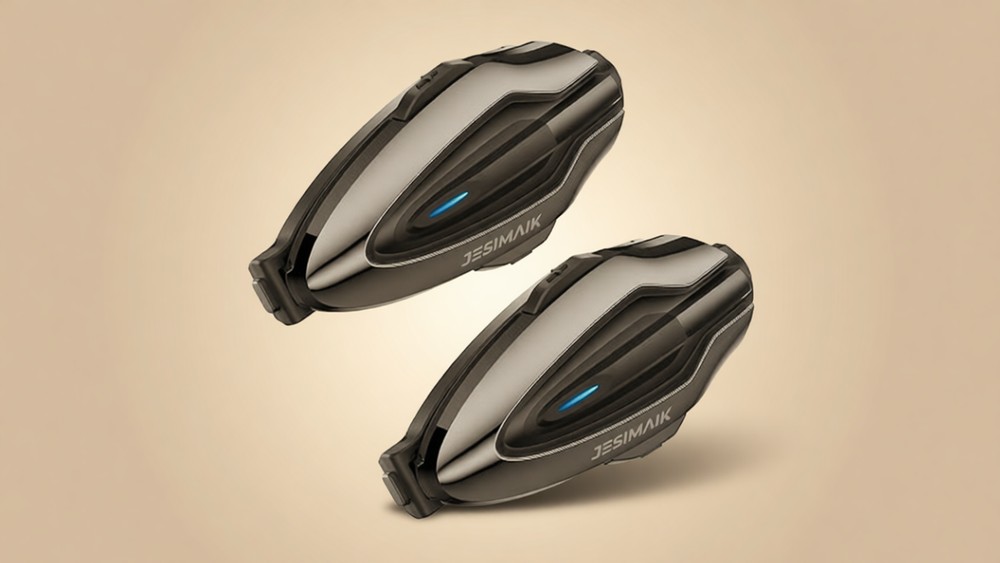
The mount is the product, and the sticky pad is its catch
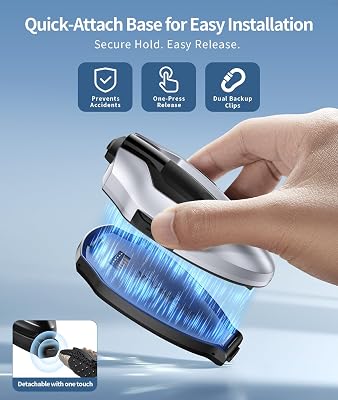
Everything the bullet copy leads with is true to the mechanism. The headset docks onto a magnetic base plate, so removal is a pull rather than a tab-fumbling session with gloves on, and the anti-theft pitch works the way parking lots actually work, you take the electronics with you and leave the helmet strapped to the bike.
One owner calls being able to pull the headset off for charging a big plus, and repositioning the same base plate between a full-face and an open-face helmet is the part clamp mounts have never done cleanly.
The catch comes with the install. The magnetic plate itself adheres to the shell with an adhesive pad, and the box includes one pad per unit. One owner has put that cost plainly, that you had better not make a mistake in placement because you only get one.
Measure twice before the backing paper comes off, because the fix for a crooked base is not included.
The same owner also fought the music-sharing toggle, found it a hassle to enter and leave, and eventually pulled their unit off the helmet entirely, leaving their wife riding with a working headset and nobody to talk to. That is one household's experience and not a pattern, but the placement warning applies to every buyer on day one.
A ten-rider claim the record never rides
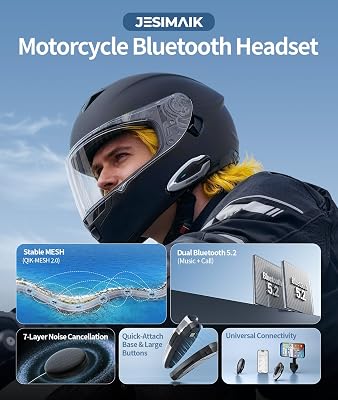
Mesh intercom is the right technology for a big group, because every unit relays for the others and a rider who drops behind a truck rejoins without a re-pairing session, which is something a plain Bluetooth chain cannot do. The listing sells ten riders on the QIK-MESH 2.0 network and auto-reconnection, and at 46.90 per helmet that is a lot of claimed seats for the money.
What the record has not done is ride a group anywhere near that size. The largest crews in the texts are a dune-trip group that reports every function working and a Daytona-bound club that bought a set for Biketoberfest, and neither text names its head count.
Nobody measures range, nobody describes the auto-reconnect firing, and the only at-speed audio note in the whole record is that the sound gets a little gaspy when the group rides fast on the highway. Treat ten as the ceiling the box claims rather than a number owners have used.
For the physics, the standard's documented range tops out around 400 metres open-field for a Bluetooth 5.0-class radio, and helmet products reach further than that with relays and antenna work, not with the base standard, so a group spread across a divided highway is stretching any unit in this price class.
Sound, mics, and the one failure with a good ending
The record averages 4.2 stars from 46 ratings, and the histogram has a shape worth noticing, 59 percent five-star, 19 percent four, 14 percent two, and not a single one-star text among the 17 written ones. Buyers either like this headset or found specific things wrong with it.
The wrong things cluster around the microphone and at-speed volume. One owner has found the mic sounds weird and distant to the people on the other end even positioned at the mouth, and that they can be heard breathing through it, which they rate against their old AirPods as clearly worse. Another reports Siri is not loud enough to hear at speed.
The speaker hardware itself is thin, 8mm, so it fits shallow ear pockets, and one owner with a blown right speaker after the second use got the best support story in the record, an email to the manufacturer produced a free replacement even after they offered to pay shipping. That is one data point, but it is the only warranty-adjacent fact the page or the record provides, because the spec table carries no warranty row at all.
Two smaller usability notes are worth knowing before you buy. The equalizer does not persist, one owner reports re-selecting Voice or Bass mode every time the headset powers on, and the seven-layer noise-cancellation figure in the bullets is a marketing number no owner text tests in either direction.
How much of the five-star record to weigh fully
Six of the 17 written texts carry no purchase badge, and five of those are five-star. Three of them read like they were written from the listing rather than from the road, one calls it a feature-packed communication system in the listing's own phrasing, one claims to have tested it over several rides while praising exactly the bullets, and one awards five stars while openly admitting the owner has not tested the calls, the range, or the noise cancelling.
None of that proves anything improper, and one unbadged text, the blown-speaker account, is the most useful failure record on the page.
But when you average the stars in your head, know that the flattering side of the ledger is where the thin texts live. The verified five-star texts are shorter and plainer, good sound, easy install, worked well on dune trips, and they are the ones I would weight.
What ten riders costs per helmet
The buy box reads 93.79 for the two-pack, down 30 percent from the 133.99 typical price the page itself prints, which works out to 46.90 per helmet. On price per rider that sits in the cheaper third of the 192 intercoms we track, and our table's specs box renders the exact live position, so check it there before you buy, because budget listings in this category reprice often.
For context inside the same brand, the JESIMAIK H6 single is the single-unit magnet-mount sibling, and the JESIMAIK mesh two-pack covers the smaller-crew box from the same maker.
Frequently Asked Questions
Will the magnet mount hold at highway speed?
The listing says the base locks against wind and vibration, and no owner text reports a unit flying off. What the record does report is the one-pad install, so placement quality is the variable you control. The one at-speed complaint in the record is about audio clarity, not the mount.
Does it really work with ten riders?
Ten is the claim and the record never confirms it. The largest groups described are a dune crew and a club purchase, neither with a head count, and nobody has measured the range. Buy it as a mesh headset with headroom, not as a proven ten-way system.
Can I pair it with a Sena or Cardo?
The bullets promise cross-brand pairing over Bluetooth 5.2, and no owner text describes doing it. Cross-brand intercom is a known friction point across this category, so treat it as untested here.
Is it waterproof?
The listing claims IP67, which covers dust and 30 minutes at one metre of depth. The spec table files this headset under headphones and carries no water-resistance row, so the rating is the seller's word, and no owner text mentions rain either way.
You can check the current price on Amazon before you decide, and compare it against the rest of the field on our intercom table.