Folding e-bikes eat rear-rack packs, and the replacement market for them is a wall of near-identical listings with near-identical promises. The CXZCXZ 48V 13Ah is one of those, at 159.99, built for folding bikes and carrying a safety lock. It is the middle rung of a three-size ladder, and it has no ratings yet.
I read the listing, the gallery cards and the review page. What I found is a listing that argues with itself about the one number that matters most, and a family whose track record lives entirely in the two bigger packs we have already reviewed.
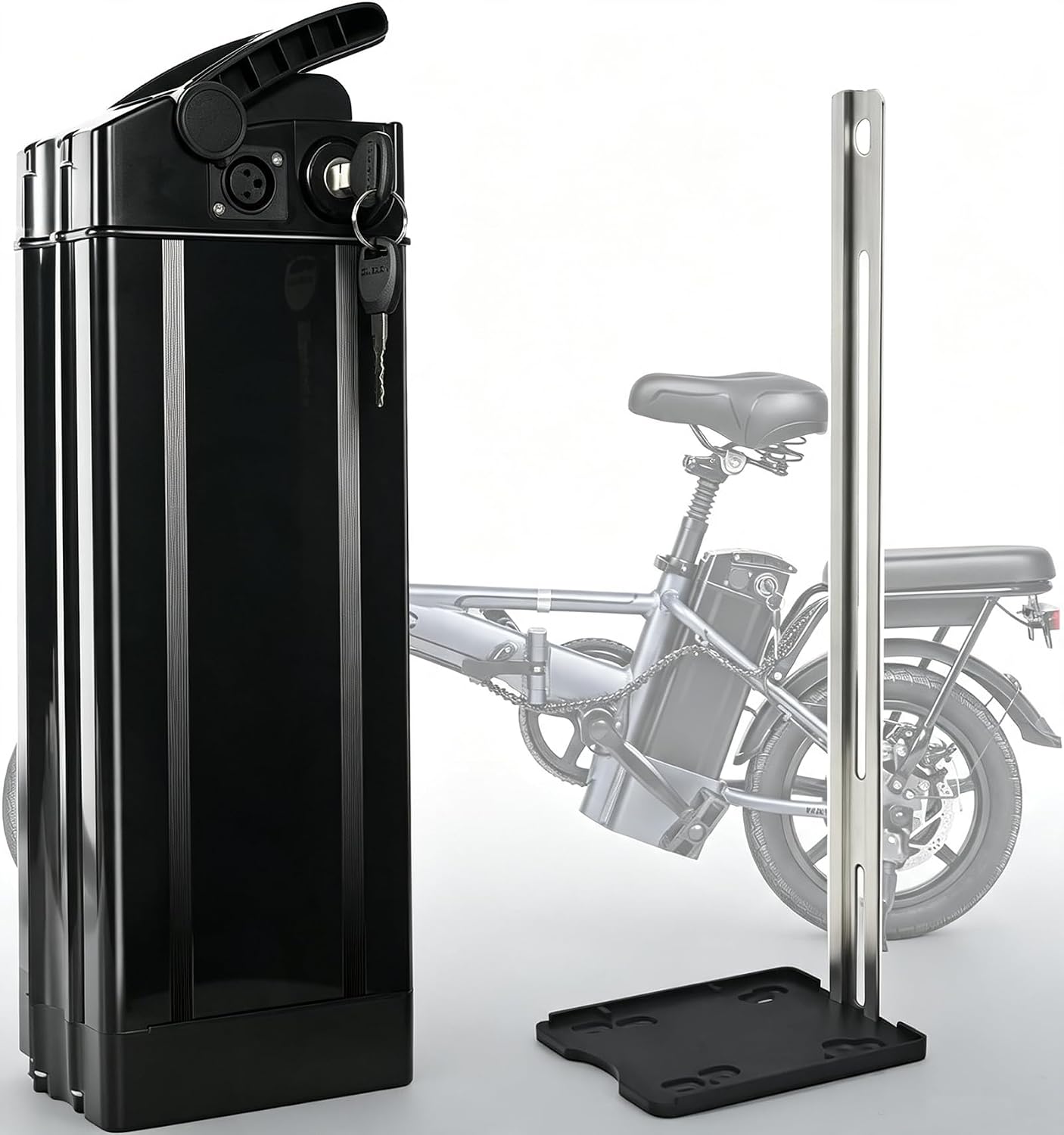
An empty record, and a family history
This listing has no ratings and no written reviews. None. That is not a red flag by itself, because every listing starts at zero, but it means the only track record available is the brand's, and the brand's is thin.
We have reviewed the 20Ah sibling, which carried a two-text five-star record, and the dual-voltage 48V/52V pack, where two buyers split one star and five stars and one reported a pack dead on arrival. That second listing has since left the marketplace.
So the family's public history is two packs with almost no data between them, one of them retired. This 13Ah adds zero new data, and buying it means accepting that.
Two boards on one page
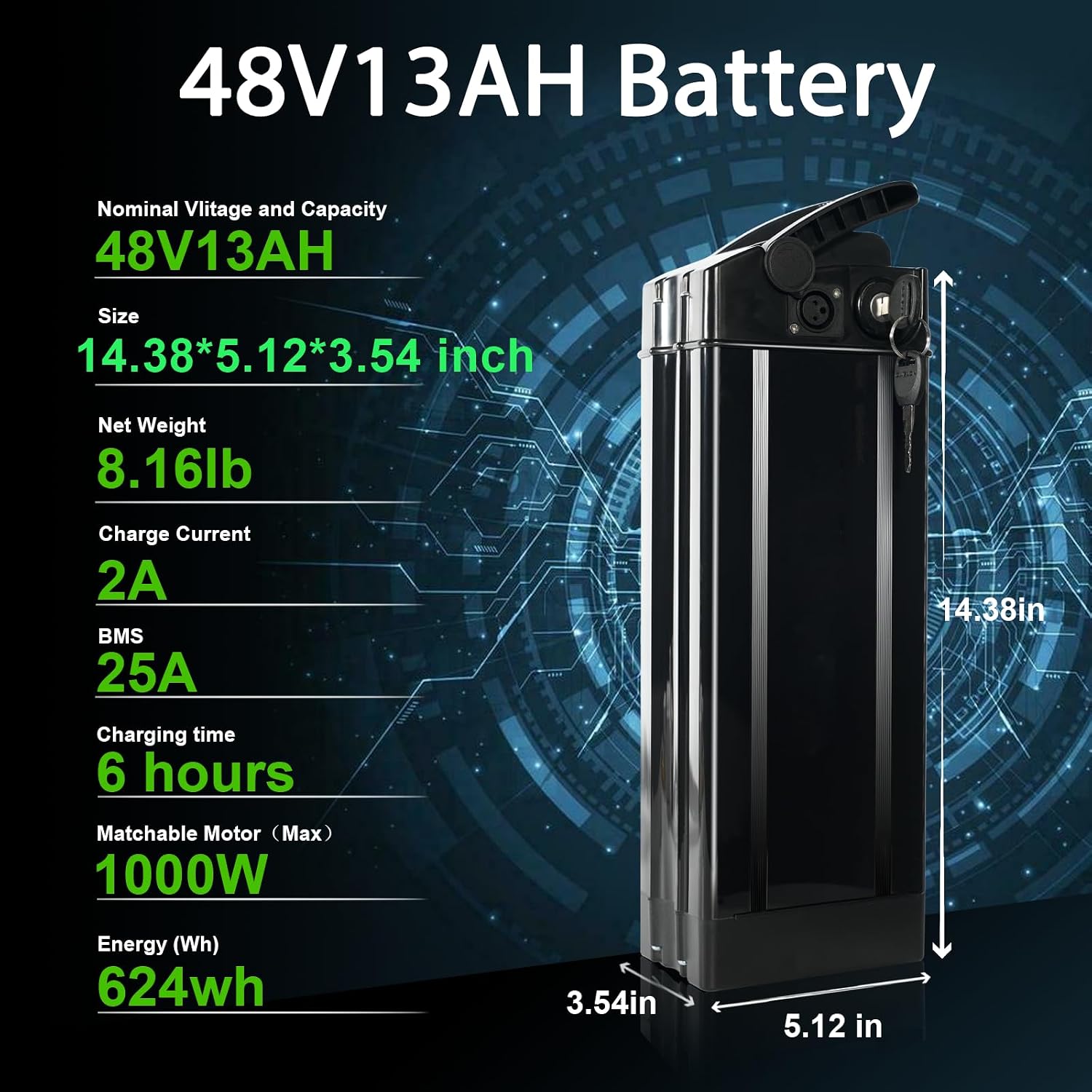
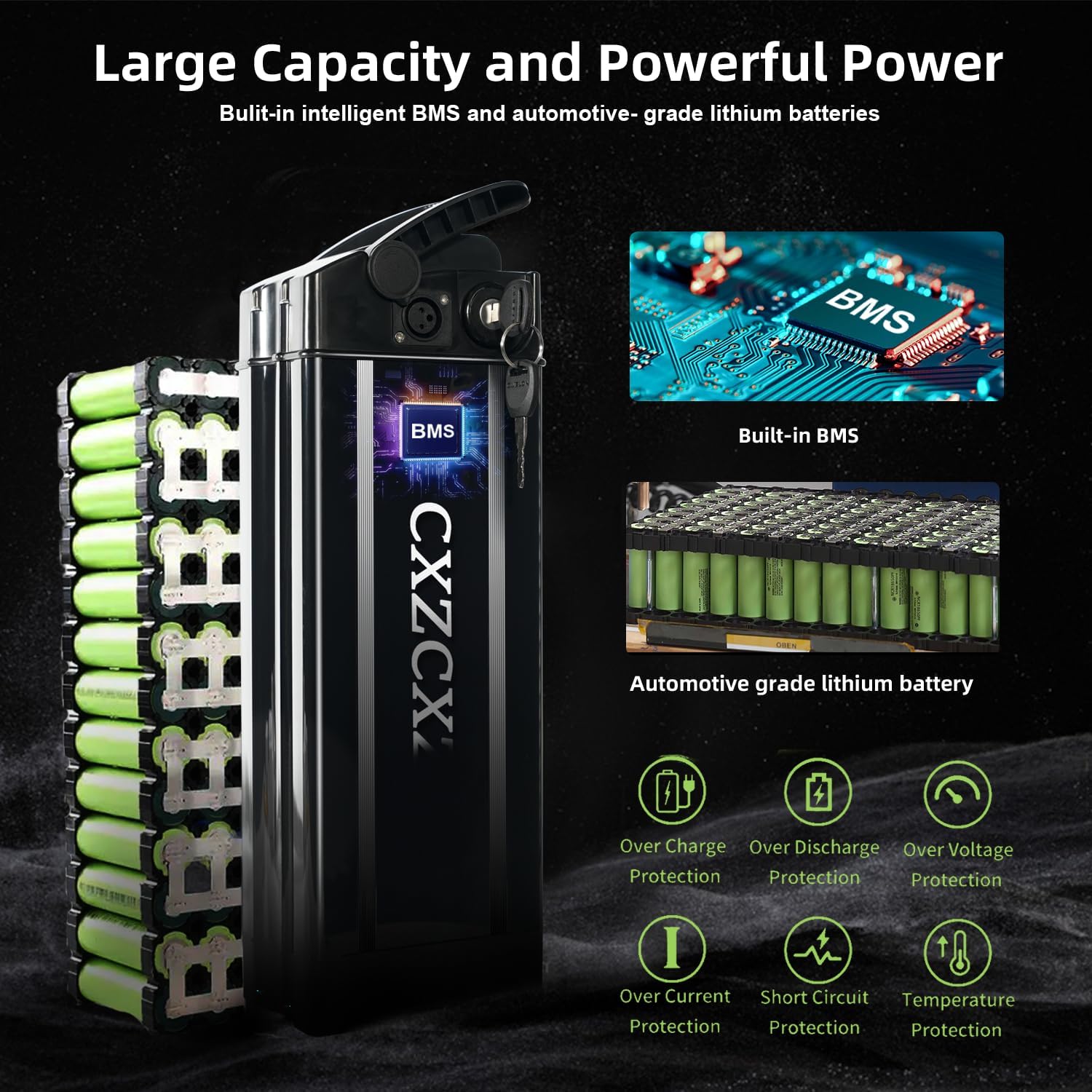
The title says the pack has a 20A BMS. The third bullet says it uses a 25A BMS protection board. The gallery's specification card says 25A again.
One of those numbers is wrong, and the motor claim in the title decides which one matters.
The title advertises compatibility with motors up to 1000W. A 1000W motor at 48 volts draws about 20.8 amps at full load. That is over the ceiling of a 20A board, which caps at 960W, and comfortably inside a 25A board, which caps at 1200W.
So the listing's headline compatibility claim is only true if the bigger number is the real one. If the board is actually 20A, the 1000W figure is marketing, and a full-throttle 1000W build would trip the board or cook it.
Budget listings overstate motors more often than they understate boards, so the practical read is to assume the smaller number until proven otherwise: treat this as a 960W pack, which still covers every motor from the title's 250W to 900W range with room to spare. If you specifically need 1000W continuous, this listing has not earned your trust on that figure.
What the spec card settles, and one row it fumbles
The gallery card is the most useful thing on the page, and it confirms the basics. Nominal voltage and capacity 48V 13Ah.
Energy 624 watt-hours, which matches the arithmetic of 48 times 13 exactly. Size 14.38 by 5.12 by 3.54 inches. Matchable motor 1000W max. A charge-time row, printing the same 5 to 6 hours the bullet claims.
The details table fumbles a row the card gets right. The Model Number field reads 48V10Ah, which is the cheaper sibling rung, not this 13Ah listing. That is the kind of copy-paste sloppiness that suggests the details table was written once for the family and never corrected per variant.
It is harmless on its own, and it is one more reason the card, not the table, is where this listing's real numbers live.
One honest touch: the listing volunteers that the pack is not a Silver Fish shell and won't work on bottom-discharge mounts. Bottom-discharge designs are common on folding bikes, so that sentence is worth more than its length suggests. Check which mount your bike uses before you measure anything else.
The weight sits on the band floor
The details table prints a battery weight of 8.2 pounds, about 3.72 kilograms. For a 624 watt-hour pack, that works out to about 0.17 kilowatt-hours per kilogram at pack level. Wikipedia's standard band for lithium-ion cells states 160 to 300 watt-hours per kilogram, and a finished pack should land below that band once the case, board and wiring are added.
This one lands right at the bottom of the cell band instead. The arithmetic only closes if the cells inside sit well above the band floor, leaving almost nothing for the enclosure. That is not impossible, and cell grades vary, but it is the tightest weight claim we have checked in this class.
The pack weighs what the table says or it does not, and a kitchen scale settles it in a minute when the box arrives.
The charge math is more ordinary. Thirteen amp-hours over 5 to 6 hours implies a charger around 2.2 to 2.6 amps, which the listing never actually prints. Read the brick's label when it lands.
Where the 13Ah rung fits
The ladder runs 48V 10Ah, 13Ah and 20Ah, all in the same case family, and this middle rung is one of the two labeled with charger in its variant name.
At 159.99 for 624 watt-hours, it works out to about 26 cents per watt-hour, which is below the middle of our comparison table. The 20Ah rung sells 960 watt-hours and we have reviewed it separately, and bigger rungs of a ladder almost always buy each watt-hour for less. If your rack has the length for the 20Ah, check its price before settling for the middle.
Capacity-wise, 624 watt-hours at a typical 15 to 25 watt-hours per mile of assist delivers roughly 25 to 41 miles, and nearer 18 to 21 at full throttle on a heavy folding bike. For a commuting folder charged nightly, that is enough.
The decision this listing forces is narrow. If your bike takes exactly this case shape, you ride under 900W, and you accept an unproven record, the card's numbers hang together and the value is fair. Everyone else should want either the bigger rung or a brand with a record.
Frequently Asked Questions
Will the CXZCXZ 48V 13Ah fit my folding e-bike?
Measure first. The card prints 14.38 by 5.12 by 3.54 inches, and the listing says to check suitability before buying. Confirm two things beyond size: your mount must not be a bottom-discharge design, because the listing rules that out, and your bike must not need a Silver Fish shell, which this is not.
Which BMS figure should I believe, 20A or 25A?
Plan around 20A, the title's figure, because it is the conservative one and the motor claim only closes on 25A. A 20A board caps at 960W, which covers the title's 250W to 900W motor range honestly. If the seller confirms 25A in writing, the 1000W ceiling opens up.
How long does the 13Ah pack take to charge?
The listing says 5 to 6 hours from empty, which implies a charger around 2.2 to 2.6 amps. No charger amperage is printed anywhere on the page, so check the label on the brick that ships.
Is 624Wh enough for a commute?
At 15 to 25 watt-hours per mile of assist, 624 watt-hours delivers about 25 to 41 miles. A foldable commuter riding 10 to 15 miles each way charges nightly with margin to spare, even in cold weather when range drops.
What warranty does the pack carry?
The details table reads one year with no conditions printed. No buyer has described a claim on this pack or its siblings, so the window is untested in public. Run a full charge cycle, a fit check and a range check inside your return window either way.