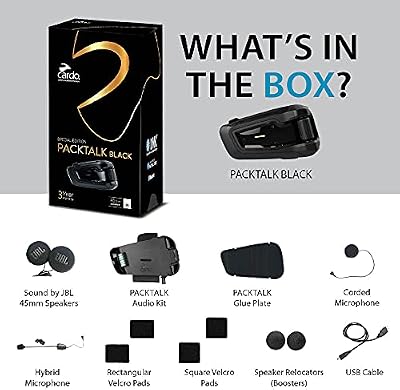
Cardo's current catalog runs on newer generations, and one unit from the older line is still on sale. The Packtalk SE single is the Bold-era headset kept in production, sold with bigger 45mm speakers, an FM radio, and a 3-year warranty printed in the first bullet. It is not a cheap way into a helmet intercom, and this article works out exactly what the money buys.
The record behind it is unusually strong: 1,766 ratings with 81 percent five-star, and every one of the written texts captured for this review is a confirmed purchase. The complaints, where they exist, cluster around support and two-year wear rather than the basics.
The Cardo Packtalk SE is the last single unit you can still buy from this generation, and the listing's own variant data proves it. Four listings share one ladder, and Amazon labels this single Bold Black within it. Two of the four read currently unavailable as of October 31: the Bold dual pack, whose 5,719 ratings made it the family's record holder, and the Bold and 2nd Helmet Kit bundle.
What remains live is this SE single at 341.39 and the Packtalk Slim dual pack at 306.46 with only 19 left in stock. Per unit in the box, the Slim dual works out at about 153 each, so the last available single costs more than the last available pack of two.
What 81 percent five-star rests on
Audio is what owners keep coming back to. One long-term owner reports that people on the other end of a call cannot tell the rider is on a motorcycle, which says more about a helmet mic than any spec row can. Another owner, an earplug user, found the sound better through earplugs than any other system tried, with real bass surviving highway speeds on a naked bike.
A third owner put it above any Sena unit they had heard, at what the owner describes as half the price.
The speakers that ship with the SE are physically large. One owner measured them about half a millimeter too big for the speaker pockets of a Scorpion EXO R-1 Air and closed the gap with 3M tape behind each driver. The same owner stopped needing earplugs for volume protection because the drivers sit close enough to the ear.
Placement decides the outcome: several owners repeat that the volume lives or dies on whether the speakers sit where your ears are.
Two long-record details round the picture out. The most-voted text describes Dynamic Mesh Communication connecting almost instantly on startup, with music fading under conversation and returning when it ends. A commuter running two hours a day charges it about once a week, and an earplug rider counts 8-plus hours at full volume.
One owner does report trouble hearing it over 90mph and calls that fair given the wind.
The warranty line, and the support record behind it
The listing leads with the 3-year warranty, and the record makes that promise the least certain thing on the page. A June 2024 owner quotes the support reply refusing an antenna claim: the antenna, Cardo's answer says, is not covered because it can only be damaged by improper use or a blow from a fall.
The owner says the antenna snapped from simply opening it and had never been dropped. That same text points to a wider pattern the owner says a search will confirm. Two more owners report support silence: one sent three messages through the online form over a speaker crackle and got no answer at all, and another describes the same non-response after pairing problems.
Wear shows up near the two-year mark in three separate texts. Speakers developed a crackle at the first ride of a season. A power button vanished into the housing, leaving the owner to let the battery die as the only way to switch off.
And one unit in a three-unit family set reports low battery at six hours, though it still makes it home. The practical read is not that the hardware fails early. It is that the warranty card is only worth what the support desk behind it delivers, and three owners have described that desk not delivering.
Buying Generation 2 hardware in 2026
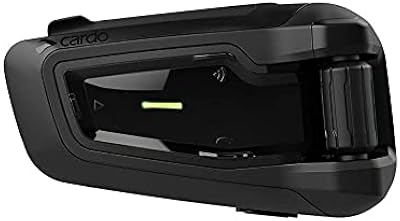
The spec rows settle the generation question: the model is listed as Generation 2 under part number PTB00040, and the record describes an FM radio with a small pop-out antenna, a mark of the older design. That matters because of one July 2024 report.
The owner had used it for music for a year without trouble, then riding friends arrived with second-generation Neo and Edge units, and the owner could only ever connect over Bluetooth, never mesh. Support went unanswered about it.
That is the trade this listing makes quietly. Bluetooth Classic, the fallback when mesh will not pair across generations, holds a 40 to 400 meter band under ideal line of sight, and every unit in a mesh group re-broadcasts for the others, which is where the long-range group claims come from. A link that falls back to Bluetooth loses that relay.
One March 2024 owner puts the split plainly: pilot-to-passenger intercom works great, bike-to-bike is where it gets lame.
Against that, the most-voted owner text describes the mesh itself connecting instantly and holding, so within its own generation the hardware does what the listing says. If your group already runs the Bold generation, the SE slots in. If your group runs current Cardo, check compatibility before spending here.
The decision this price forces
At 341.39 for a single headset, this sits among the most expensive per rider of everything we track, and the intercom comparison table renders the exact live position in the specs box. The buyer who fits is specific: someone whose riding group already runs this same generation, who wants the 45mm speakers and the FM radio, and who prices in a support record with two unanswered contacts and one denied claim behind the warranty banner.
If you are equipping two riders, the Slim dual at 306.46 is the rung that makes arithmetic sense, and our Packtalk Slim dual pack review covers it in depth. If your group is on current-generation Cardo, a current single is the compatible spend, and the Packtalk Edge review is the starting point.
Paying single-unit money for last-generation mesh only pays off if the mesh has someone of its own generation to talk to.
Common questions about the Cardo Packtalk SE
Does the mesh connect across Cardo generations?
One owner has reported that it does not: after friends bought Neo and Edge units, the connection only ever came up over Bluetooth. Another owner with a same-generation group reports instant mesh connects. The honest answer is that cross-generation mesh is the thing to verify with the seller, not assume.
How long does the battery last?
Owners give a spread. One counts 8-plus hours at full volume.
A two-hour-a-day commuter charges about once a week. One unit in a family set started reporting low battery at six hours. Nobody in the record calls the battery a problem, and one owner notes the Packtalk SE works while charging.
Does the 3-year warranty cover everything?
Not per the record. A June 2024 owner quotes the support reply excluding the pop-out antenna on physical-damage grounds, and two other owners describe support that never answered at all.
The warranty is real on paper. The record questions the desk behind it.
How loud is it really?
Loud enough that one earplug rider prefers the sound with plugs in, and one owner of a quiet helmet says half volume is plenty. Another reports trouble over 90mph. Helmet, windscreen, and speaker placement decide this more than the headset does, which is the one point every volume complaint in the record returns to.