Group riding is where cheap intercoms fall apart. Two helmets on a straight road pair fine, but add a third rider, throw in some hills, and the lead rider drops off the chain. Everyone behind them loses the conversation, and the ride turns into a relay of pulled-over catch-ups.
The fix the industry settled on is mesh, where every helmet passes the signal along instead of depending on one link. Cardo built its flagship around that idea, and the Packtalk Edge sits at the top of the price table because of it, not in spite of it.
That price is the hard part. This is a single headset at close to four hundred dollars, and the listing leans on big words, waterproof among them, that its own spec table never quite backs up. Meanwhile 3,465 buyers have scored it 4.5 stars, and the complaints buried in that record tell a more specific story than the star average does.
The record is worth reading closely before spending. Mesh range at highway distance, a waterproof claim with no IP code behind it, and a failure pattern buried under the glow all tell a buyer something the star average does not.
The Cardo Packtalk Edge earns its flagship slot on the one thing budget units cannot fake, a mesh link that heals itself when a rider drops out. Three-season owner reports of instant reconnection back that up.
What it does not earn is a free pass on its own spec sheet. That sheet says waterproof with no IP code anywhere, and calls the rider-to-rider link a ten-meter Bluetooth range. If your group rides are the point, the money buys something real. If you ride two-up on a budget, it doesn't.
The 10-meter row measures the wrong link
The spec table lists a ten-meter Bluetooth range, and taken alone that number would disqualify any intercom.
But it describes the link between the headset and your phone. It says nothing about the distance between two helmets on the road. Bluetooth 5 radios reach roughly forty to four hundred meters depending on how they're built, and the long rider-to-rider distances intercoms advertise come from the mesh link between headsets, which is a different animal entirely.
That difference is the whole pitch. A mesh network is a topology where every node relays for the others, so the network reconfigures itself around a broken path instead of losing everyone behind it, which is what the mesh networking picture of self-healing links describes. The same source carries the caveat that matters for mixed groups.
Mesh vendors haven't agreed on a common standard, so you can't count on the Edge meshing with a Sena or a budget brand. Riders in the same family of hardware, yes. Everyone else falls back to plain Bluetooth phone-style pairing.
The owner record backs the real-world shape of it. The most-endorsed text on the page carries 68 helpful votes and reports a quarter to a half mile between helmets through hills and curves. The two units sync instantly every time, with no re-pairing when the other rider comes back into range.
Another owner chose the Edge specifically for the mesh and says it delivers. That link held solid through a month of motorcycle and scooter rides. Nobody in the captured record has reported the mile-plus figures the category likes to advertise, but nobody has called the link weak either, and that's the more useful signal, in my reading.
Waterproof, with no code behind the word
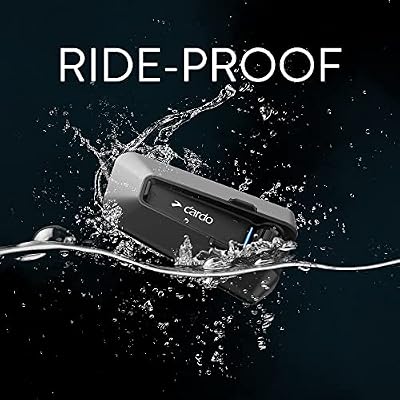
The bullet says the Edge takes rain, shine, mud, dust, or snow, no matter what you throw at it, and the spec table repeats the word Waterproof. Nowhere on the page is there an IP code. That's not a small omission.
The whole point of the IEC 60529 IP code is to replace vague marketing words with a test result, and IP67, the rating most phones carry, means dust-tight plus one meter of freshwater for thirty minutes. A buyer looking at this listing can't check the claim against anything.
No text in the captured record describes a downpour test either, so the waterproof word rests on the word alone. The practical move costs nothing: ask the seller for the code in writing before a storm-season purchase, and treat an answer without a number as a no. It's the first question I'd put to any seller before a wet season.
What 3,465 ratings look like up close
The histogram leans heavily positive, 78 percent five-star against 6 percent one-star, with 9, 5, and 2 percent filling the middle, and every captured five-star text carries a confirmed-order badge. At 3,465 ratings this is one of the deepest records in the category. The average has held at 4.5.
The failures are worth more attention than the praise, because they repeat. One verified owner reports a cradle connector breaking off under normal use, and that text has drawn five helpful votes. The connector is a part hidden under the main unit that sees action only at charging time.
Another says the battery goes bad within a couple of years. A third reports a unit dead after two months and support that went nowhere. All of that sits against a three-year manufacturer warranty printed in the same spec table, which is longer than most of the category offers and will matter to whoever hits one of those failures inside the window.
The sound story splits in a way the star average hides. One owner calls the JBL sound crisp, clear, and louder than expected, with a microphone that beats their phone's. A verified one-star says the opposite, that the sound reminds them of a walkman from the eighties.
And a four-star text praises the mesh and the audio while reporting the microphone falls short on phone calls and group chats. Read together, the speakers look like the strong part. The microphone on calls is the weak link, and it's the thing I'd test inside the return window.
Three texts on the page carry no confirmed-order badge, and one of them is actually a review of the Packtalk Pro, a different model with 45mm speakers, misfiled onto this page. Another compares the interface with Sena's jog wheel and prefers it. Treat the unverified texts as opinions about the family, not evidence about the Edge itself.
Living with it: voice control, the mount, and the install
The daily-use story comes from the spec table and the owners in roughly equal parts.
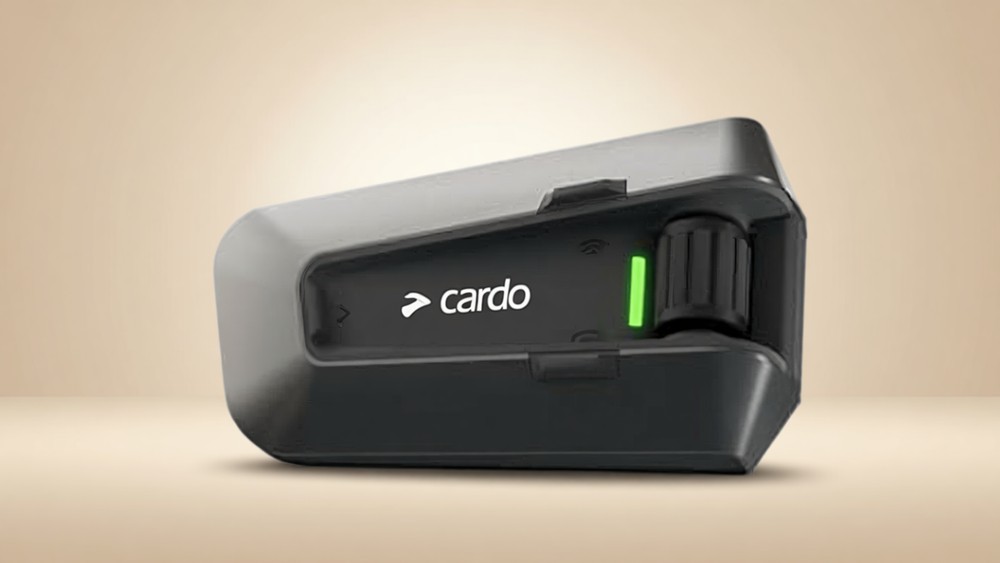
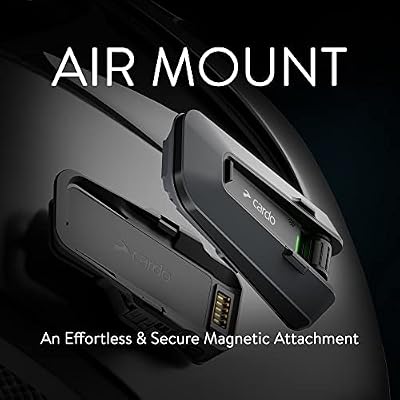
The table lists Natural Voice Operation with a hey Cardo wake phrase, a magnetic Air Mount the headset snaps onto, and a 40mm JBL speaker. Battery life reads 13 hours with a 20-minute charge time, and the box holds boom and wired microphone options. Controls are a ridged wheel plus three buttons on the face of the headset.
Two owners independently describe the same friction point. It isn't the electronics. Fitting the Edge into the helmet took time in both accounts, and one adds that the helmet pads were hard to put back in.
Plan the install for an evening with a beer, not five minutes before a ride. After that, the reports get easier: the three-season owner runs three family units across snowmobile and ski helmets, swapping it between them on the magnetic mount, and says they just work when turned on, reconnecting without re-pairing.
The battery story has one genuinely useful trick in it. One owner points out the Edge charges while it's in use from a USB port on the bike or a portable pack. That text quotes ride times of 4, 10, 18, or 28 hours from its own arithmetic, which is why it never worries about the gauge.
The table's 20-minute charge claim has no confirming owner text, so treat it as a quick-charge figure until someone measures a full cycle.
Pay for the mesh, not for the word waterproof
At 395.96 for a single unit, the price works out to about 198 per rider. That puts the Edge among the most expensive of the 192 intercoms we track on price per rider. The specs box renders the live position, and the band is what it is: this is flagship money for one helmet.
What the money buys over a budget unit is specific, though: the mesh that heals when someone drops out, a 40mm JBL speaker set, a three-year warranty, voice control that leaves the gloves on the bars, and a number-two bestseller slot in Powersports Helmet Communication.
The counterweight comes from the record itself. The most-endorsed owner bought the pair to talk with a wife who was new to riding, loves them, and gets a quarter to a half mile through hills. None of that needed flagship mesh, because a two-rider pair is the one case budget hardware handles well.
Our Moman H2S review covers a rider-to-pillion unit at a fraction of the price, and the FreedConn KY Pro 2-pack equips two helmets from one box for less than half of one Edge. If your riding is phone music plus one passenger, that's the honest comparison, and it isn't close.
The Edge makes sense for the rider whose group is the point, four or five helmets riding together through terrain that breaks single links, who wants the swap-between-helmets mount, and who can pay for the brand's track record. Check today's price with the waterproof question still open, and read the return policy as carefully as the spec table.
FAQ
How far does it really reach?
The table's ten meters is the Bluetooth link to your phone. Between helmets, the most-endorsed owner reports a quarter to a half mile through hills and curves, and that's the mesh doing work Bluetooth can't. No owner in the record has reported anything longer.
Is it waterproof?
The word appears twice and an IP code appears zero times. If the Edge carried IP67, it would be dust-tight and able to sit in a meter of freshwater for thirty minutes. Nobody in the captured record has tested it in rain, so ask the seller for the code in writing before you ride a wet season on it.
How long does the battery last?
The table says 13 hours. One owner charges the headset while riding from a bike's USB port, which stretches a ride day past any gauge, and the 20-minute charge claim on the same table has no confirming owner text. One verified owner says the battery goes bad within a couple of years, which is the one longevity report the record holds.
Does it work with Sena or other brands?
One owner reports Cardo's cross-brand Bluetooth pairing is easier than most, and a Bluetooth call to another brand should behave like a phone call. Mesh is the part that doesn't cross, because the vendors haven't agreed on a standard, so a mixed group falls back to Bluetooth chains.
What breaks?
The most-endorsed complaint on the page is a cradle connector that broke off under normal use, reported by a confirmed buyer. Beyond that, one owner says the battery goes bad within a couple of years, and another reports a two-month failure with support that went nowhere, all against a three-year warranty.
Buying for two helmets? The PACKTALK EDGE 2-pack saves about nine percent against two singles, and the pair math gets its own review. Moving one unit between two of your own helmets is the second-helmet kit's job, and the Edge with second-helmet kit review covers the box that pairs them. The Edge and microphone kit box review covers the cheapest kit-paired way to buy this unit.