The slim headset idea is easy to like. One control unit that doesn't hang off the side of the helmet like a walkie-talkie, a low-profile speaker setup, and a mesh link for the group. Then the price page loads and asks flagship money for hardware one buyer says the maker has stopped updating.
This dual pack's written record runs six years deep, and the two halves disagree. Early owners wrote the kind of accounts that sell a product: a 2,200-mile week on one charge a day, clear talk with a passenger, a waterproof rating that settled a brand choice. The recent ones report dead batteries at the three-year mark, voice commands that quit listening, and firmware that no longer arrives.
Both halves are true and neither is the whole story. The age shows in the spec table, in the charging port, and in the helmet shapes this design no longer fits.
The Cardo Packtalk Slim dual pack sold for 309.95 with an active buy box when I checked, which works out to 154.98 per rider. That puts it among the most expensive per rider of the 192 intercoms in our comparison table, and nothing in this record argues the price down. The rating sits at 4.3 stars from 1,814 ratings with a 67 percent five-star share.
The details table labels this Generation 1, Bluetooth 4.2, Dynamic Mesh Communication with JBL speakers, and a 13-hour battery claim.
The record's two halves split almost perfectly by date, and one May 2026 text states the part the listing never mentions: the maker has discontinued this headset, and firmware updates are no longer available. Say the value part plainly: this is a lot of money for hardware past its update life.
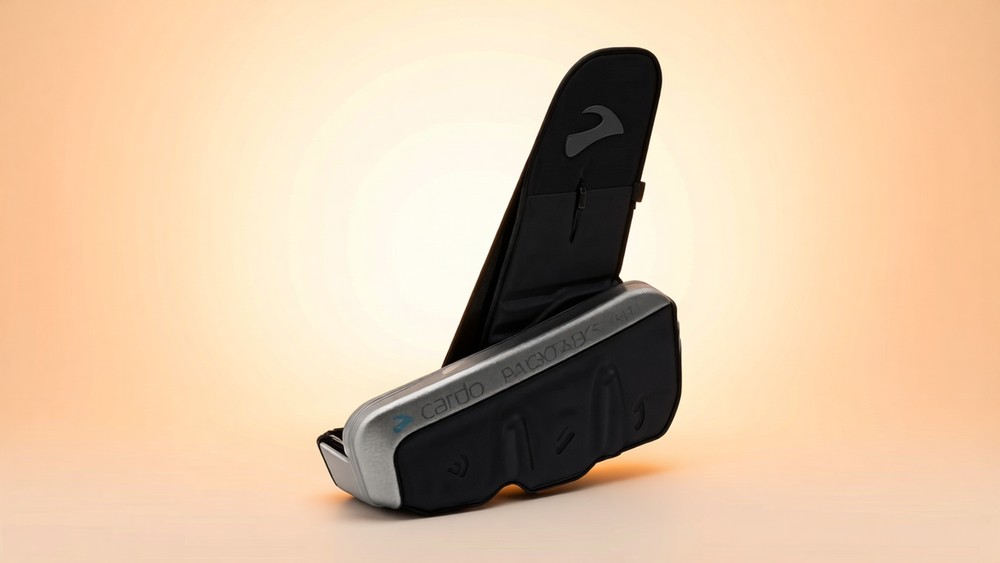
The early record is why these sold at all
Five texts from 2019 and 2020 run long, and every one is positive. They also carry nearly every endorsement in the record, from 23 helpful votes down to 3. The most-endorsed text praises the small control unit, the easy install, and Natural Voice control, after an owner compared notes across many online reviews before buying.
A second owner rode 2,200 miles over seven days, charged once a day, used music all day, and never ran the battery dead. That owner mounted one headset on a Shoei GT-Air and a friend's on a Shoei Neotec 2.
The fit reports from those years are specific. Two HJC owners found the slim body sat close to the helmet and didn't look bulky, one calling it a fit like it was made for the IS-MAX II. A Wing owner reported the mesh link carried a much stronger signal than the Bluetooth link and sounded better, after practice with the voice commands.
Waterproofing came up as a purchase reason too: one 2020 owner chose this over a Sena product because of the waterproof claim, and a 2019 owner states the same comparison in the record's most-endorsed text. These are the accounts that built the brand's name, and they're the reason this design still sells at all.
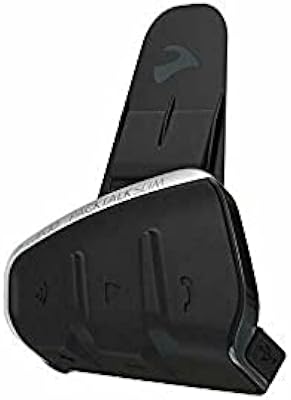
The recent record: batteries, voice commands, mounts
The 2024 through 2026 texts lean hard the other way, and six of the ten most recent are one-stars.
A December 2024 owner bought four of these headsets and reports three lasting three years, all three dying unable to charge, with the fourth expected to follow. A June 2026 list blames constant disconnects, weak sound, rarely-working voice commands and battery life, written by an owner who had already spent an hour perfecting speaker placement.
Voice recognition has its own arc across the record. The 2019 and 2020 owners praise Natural Voice control and hands-free use. A 2022 owner measured success under 5 percent, got forced onto a phone assistant the headset doesn't work with, and demanded a refund after two months.
A 2025 owner gave up after what they describe as nonstop trouble with inconsistent intercom, pairing problems and poor voice recognition, done with riding around yelling at it.
The physical design draws specific complaints too. A 2024 three-star, the most-endorsed recent text, reports zero issues with operation but describes the main unit's plastic clip wedging where it mounts to the helmet, while the battery section's metal clip works fine. One September 2025 arrival had the waterproof flap trapped in the foam on both headsets, packed wrong at the factory, and that owner's pair no longer closes sealed.
A July 2025 owner wanted another set for a different helmet but refused the price while the hardware still charges over micro-USB. The failures cluster on power, voice, mounting and price, and the 2026 list is the only text that blames the link itself.
Discontinued, and the reasons sit in the record
The May 2026 text is one line long and says the important thing: discontinued by the maker, firmware updates no longer available. The listing still sells new with a buy box, so this is a live purchase decision, not archaeology. What buying it means has changed shape.
Firmware freezes at the last release. App support is a question the maker answers for current models first. The 2-year manufacturer warranty row is the one paper promise left, and it doesn't cover the update pipeline.
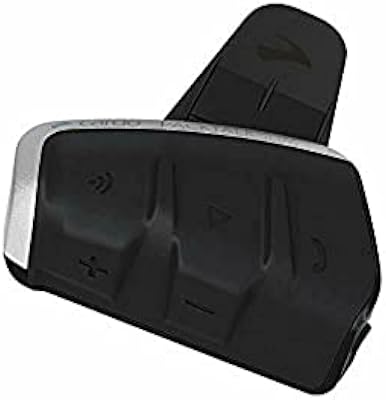
An April 2026 five-star explains why the design got retired, and it reads like a fit report. That owner calls it great for a discontinued item but realized quickly why Cardo stopped making it: the slim body only fits certain helmets, and modern helmets carry flares at the bottom that this can't slide under.
The HJC owners of 2020 never met that problem, because their helmets were the shapes this was drawn around. One May 2025 owner already voted with the return window, sent the Slim back, and bought the Packtalk Edge instead, calling it the nicer headset.
The details table backs the age reading from its own side. The Generation 1 row sits next to a Bluetooth 4.2 radio, and the charging row lists a USB-C port that a 2025 owner, the only person to describe the port at all, says is still micro-USB on the hardware they held.
What the page claims against what the page lists
Start with the water rows, because they disagree with each other. The Water Resistance Level row says Waterproof. The same table's Additional Features row says only Water Resistant.
No owner in 19 texts reports riding in rain, so the stronger word rides on no testimony, and one arrival's trapped flap shows how the seal can fail before any rain does.
Then the certification row, which claims DOT Certified, a motorcycle-helmet standard, on a headset. The control rows contradict each other five ways: one says the control method is voice, one counts four buttons, one counts three, one counts six, one describes a three-button pad.
The Bluetooth Range row is the honest one, at 10 meters. That matches what the standard delivers in its common mode, typically under 10 meters with up to 100 for high-power class hardware, and Bluetooth 4.2 predates the 5.0 range figures entirely, per Wikipedia's Bluetooth revision of 20 October 2026.
The long-range claims belong to the mesh link, where every helmet passes the signal along instead of one radio holding the connection.
Nobody in the record has ridden a group larger than two, and the one owner who addresses group size says exactly that. Nobody reports a range figure in any unit. Nobody reports using the Cardo Connect app beyond setup.
So the decision comes down to this: two riders who want proven mesh audio between them, and accept frozen firmware, have a defensible buy. Voice-command buyers should read the recent record again before paying.
Owners of modern flared helmets should expect a fit fight. Test the mount clip, the voice control and the charging port on arrival, inside the return window. The comparison table shows the price band against everything else we track, including the newer Packtalk Neo mesh sibling.
Frequently Asked Questions
Is the Packtalk Slim discontinued?
A May 2026 owner says the maker discontinued it and firmware updates are no longer available. The details table's Generation 1 row agrees the hardware is old. The listing still sells new with an active buy box, so you can buy it, but treat the software record as closed.
Is it waterproof?
The Water Resistance Level row says Waterproof while the Additional Features row says Water Resistant, and no owner reports rain exposure. One September 2025 arrival had the waterproof flap trapped in the packing foam on both headsets, so the seal can fail before the first storm. Read the weaker row as the promise.
How long does the battery last?
The spec table claims 13 hours with a 4-hour charge. The best owner account is a 2,200-mile week charged once a day, from 2019.
The worst is three of four units dead at three years, unable to charge, from 2024. The newer account is the one to plan around.
Does the voice control work?
The 2019 and 2020 owners praise Natural Voice control and hands-free use. The 2022 owner measured under 5 percent success and got pushed onto an assistant the headset doesn't support.
The 2025 and 2026 owners call it rarely working or awful. Plan on the buttons as your main control.
Is 309.95 for the pair worth it?
At 154.98 per rider it sits among the most expensive per rider of the 192 intercoms we track, and the specs box on the comparison table shows the live figure. The early record is the argument for paying it. The discontinued status, the age of the radio, and a newer mesh sibling in the same brand are the arguments against.